

LCGC North America
The HPLC Troubleshooting app is designed to help beginner HPLC users with HPLC troubleshooting.
LCGC North America
The HPLC Troubleshooting app is designed to help beginner HPLC users with HPLC troubleshooting.

LCGC North America
Temperature affects not only retention but also relative retention in gas chromatography (GC) and therefore, when we change temperature, we also change the selectivity of the separation. This is true as we alter the isothermal separation temperature, but also as we change the slope of the temperature program gradient.
The Application Notebook
Enhanced-fluidity liquids are organic solvents or organic–aqueous solvents mixed with high proportions of liquefied gases, such as carbon dioxide.

Special Issues
Introduction from the Guest Editor.

Special Issues
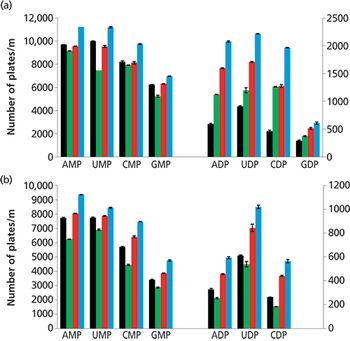
A liquid chromatography–electrospray ionization tandem mass spectrometry (LC–ESI–MS–MS) method has been developed to determine multiple preservatives in cosmetics and personal care products.
Special Issues
The capabilities of enhanced-fluidity liquid chromatography for highly polar compounds is described and the value of using the entire continuum of 0–100% carbon dioxide solvent systems is discussed in terms of changes in mobile‑phase properties and applications.

Special Issues
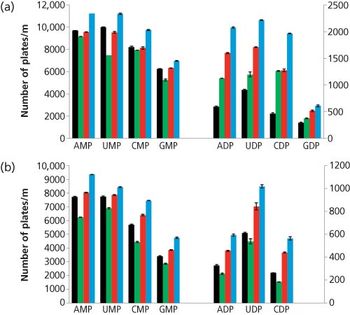
A novel approach to enhancing the selectivity of ionizable compounds using superficially porous particles that are stable in a wider pH range is reported here.

Special Issues
Internal standard methods are used to improve the precision and accuracy of results where volume errors are difficult to predict and control. A systematic approach has been used to compare internal and external standard methods in high performance liquid chromatography (HPLC). The precision was determined at several different injection volumes for HPLC and ultrahigh‑pressure liquid chromatography (UHPLC), with two analyte and internal standard combinations. Precision using three methods of adding the internal standard to the analyte before final dilution was examined. The internal standard method outperformed external standard methods in all instances.
LCGC Asia Pacific
Click the title above to open the LCGC Asia Pacific June 2015 regular issue, Vol 18, No 2, in an interactive PDF format.
LCGC Europe
Click the title above to open the LCGC Europe June 2015 regular issue, Vol 28, No 6, in an interactive PDF format.
LCGC North America
Click the title above to open the LCGC North America June 2015 regular issue, Vol 33 No 6, in an interactive PDF format.
The Application Notebook
Click the title above to open the LCGC North America June 2015 Application Notebook, Vol 33 No s6, in an interactive PDF format.
VUV Analytics (Texas, USA) has announced that Dr. Jean Andino of Arizona State University (Arizona, USA) is the recipient of their summer 2015 academic grant.
LCGC Asia Pacific
The CAMAG TLC-MS Interface allows for rapid and contamination-free elution of TLC/HPTLC zones with online transfer to any given HPLC-MS system. Depending on the MS, substances can be identified within a minute.

The Column
Stereoisomers of chiral compounds - two different forms (isomers) that are identical in composition but are non‑superimposable mirror images of one another - can have dramatically different effects in the human body making it important to ensure the purity of enantiomeric mixtures produced in drug development.
The Column
Gyula Vigh, Emeritus Professor of Chemistry and inaugural holder of the Gradipore Chair in Separation Science at Texas A&M, has been awarded the Arnold O. Beckman Award for Outstanding Scientific Achievements in the field of electrodriven separation techniques sponsored by Sciex Separations, a division of AB Sciex (Massachusetts, USA).
The Column
The 21st International Symposium on Separation Sciences (ISSS) will be held at the Grand Hotel Union in Ljubljana, Slovenia, from 30 June–3 July 2015.
The Column
VWR, a global distributor of analytical products headquartered in Pennsylvania, USA, has announced its acquisition of the analytical instrumentation manufacturer Hichrom Limited based in Berkshire, UK.

The Column
Researchers from the University of Toronto in Canada have developed a novel approach using digital microfluidics to analyze multiple steroid hormones in small tissue samples (1–10 mg) collected using core-needle biopsy (CNB) sampling.
The Column
Click the title above to open The Column May 22, 2015 Europe & Asia issue, Volume 11, Number 9, in an interactive PDF format.
The Column
Click the title above to open The Column May 22, 2015 North American issue, Volume 11, Number 9, in an interactive PDF format.

The Column
LCGC blogger Tony Taylor describes how to easily transfer column dimensions and particle morphology using three equations.

In developing countries, access to medicine is often limited. To make matters worse, widespread counterfeiting often means that even when patients get access to drugs, the drugs are of poor quality. Dr. Mélisande Bernard, of the Agence Générale des Equipements et Produits de Santé, the technical and pharmaceutical service of the public hospital system of Paris, France (Assistance Publique–Hôpitaux de Paris), is helping to address this problem by developing chromatographic methods to detect substandard cardiovascular drugs in Africa.
The first Virtual Symposium on Applied Separation Science (VSASS) will be held on 25–29 May 2015 on-line. Accessible via a web link (www.vsass.org), the entire symposium will be held on-line including posters, workshops, and sessions.