

The Column
This article describes how to prevent the loss of sample analytes by understanding the factors responsible for poor recoveries.
The Column
This article describes how to prevent the loss of sample analytes by understanding the factors responsible for poor recoveries.

The Column
Agilent Technologies has awarded Paul Bonnington and Kimbal Marriott an Agilent Thought Leader Award in support of their innovative research into data analytics, machine learning, artificial intelligence, and information visualization.

The Column
Researchers from the Medical University of Lublin, Poland, have investigated the presence of KYNA in alcoholic beverages and the significance of its presence using HPLC.

The Column
Researchers from the University of Washington, USA, have developed an ultrafast separation using pulse flow valve modulation to enable high peak capacity in GC×GC and GC×GC×GC.
The Column
Knauer has been ranked as one of the top employers in Germany for 2019, according to a study by 3.works GmbH, a Düsseldorf-based employment research institute.

Virtually exclusively, liquid chromatography–mass spectrometry (LC–MS)-based assays for protein quantitation rely on bottom-up strategies, where the protein is initially digested into constituent peptides during sample preparation. Top-down intact protein quantitation, especially using affordable, low resolution triple quadrupole (QQQ) mass spectrometers, has been largely unexplored.
LCGC Asia Pacific
Click the title above to open the LCGC Asia Pacific March 2019 regular issue, Vol 22, No 1, in an interactive PDF format.

LCGC Europe
The offerings of commercially available columns for reversed-phase liquid chromatography (LC) continue to expand. Are these columns similar or different compared to what is already available?
LCGC Europe
Click the title above to open the Chromatography and Sample Preparation Terminology Guide, Vol 32, No s3, in an interactive PDF format.

LCGC Europe
Solid-phase microextraction (SPME) was introduced nearly 30 years ago and since that time has matured into a widely used tool in the arsenal of sample preparation techniques. Simultaneously, it has spawned a host of related techniques where sorbent coatings are placed on stir bars, magnetic particles, vial walls, and so on. Over the past few years, several advances in SPME have been developed, including increasing the sorbent surface area available for extraction, accommodating direct analysis by mass spectrometry (MS), and sorbent overcoating to resist fouling by sugars, lipids, and other macromolecules present in some sample types. These advances are discussed in this month’s instalment. The use of SPME for microsampling of biological systems, so-called bio-SPME, will be the focus of Part 2.
LCGC Europe
Click the title above to open the LCGC Europe March 2019 regular issue, Vol 32, No 03, in an interactive PDF format.
LCGC Europe
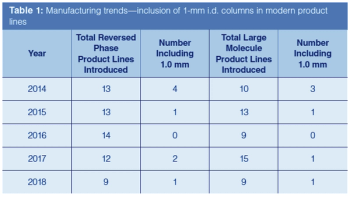
One millimetre internal diameter liquid chromatography columns are available from many manufacturers. In this article, the utility of 1.0-mm internal diameter (i.d.) columns, and the arenas in which they play a relatively strong role, are investigated. Further, the advantages and disadvantages of 1.0 mm diameter columns are contrasted with both larger- and smaller-bore formats.

LCGC Europe
The 48th International Symposium on High Performance Liquid Phase Separations and Related Techniques (HPLC 2019) will be held 16–20 June 2019 at the Milano-Bicocca University, Milan, Italy. This is the first time that this symposium will be held in Italy.
The Application Notebook
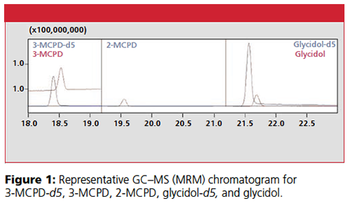
In the present study, a novel GC–MS TQ method was developed and validated for the simultaneous analysis of 2-MCPD, 3-MCPD, and glycidyl fatty acid esters in edible oil. This method was subsequently applied to quantitation of these contaminants in commercial edible oil samples.

The Application Notebook
In this study, we aimed to use a charge modulated HILIC stationary phase (iHILIC®-Fusion) to separate different siderophores of the Pseudomonas taiwanensis VLB120 bacteria.

The Application Notebook
This application note outlines a simple three-step method for the extraction of loperamide and its main metabolite, N-desmethyl loperamide, from blood. UCT’s Clean Screen® XCEL I column provides users with the same level of sample clean-up as traditional SPE while allowing the elimination of timely conditioning and wash steps.

The Application Notebook
For your highly sensitive UHPLC–MS analyses, how can you reduce noise and additional signals to a minimum?

The Application Notebook
Antibody-dependent cell-mediated cytotoxicity (ADCC) is a crucial mechanism of action (MoA) of anti-tumour therapeutic antibodies and FcγIIIa receptor plays a key role in this process by interacting with the N-glycans of IgG Fc regions. Hence, affinity chromatography on Fc receptor ligands can deliver valuable information about expected ADCC activity and mAb glycoform distribution.

The Application Notebook
This application note shows how to achieve robust chromatographic results for two commercially available mAbs: Adalimumab (Humira®) and Bevacizumab (Avastin®).

The Application Notebook
Branching affects macroscopic polymer properties such as crystallinity, melting temperature, toughness, ductility, and optical clarity. Two types of branching are long-chain branching (LCB) and short-chain branching (SCB), wherein the molar mass of the branches is larger or smaller than the entanglement molar mass, respectively.
LCGC North America
Click the title above to open the LCGC North America March 2019 issue, Volume 37, Number 3, in an interactive PDF format.

The Column
The Column spoke to Jane Hill from Dartmouth College, USA, about her group’s development of a breath analysis method for tuberculosis diagnosis using multidimensional GC×GC–TOF-MS.

The Column
Pittcon celebrates its 70th year with thousands of chromatographers from around the globe and a range of industries taking over the Pennsylvania Convention Center in Philadelphia, Pennsylvania, USA, from 17–21 March 2019 for a week of education, research, instrumentation, and networking.
Special Issues
Click the title above to open the Current Trends In Mass Spectrometry March 2019 special issue in an interactive PDF format.
LCGC Asia Pacific
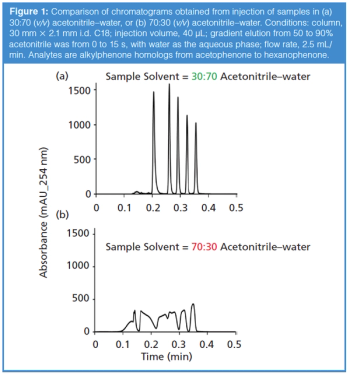
The challenges we face in troubleshooting problems with liquid chromatography (LC) separations are highly diverse. This month we take a closer look at topics that have garnered more attention recently.
LCGC Asia Pacific
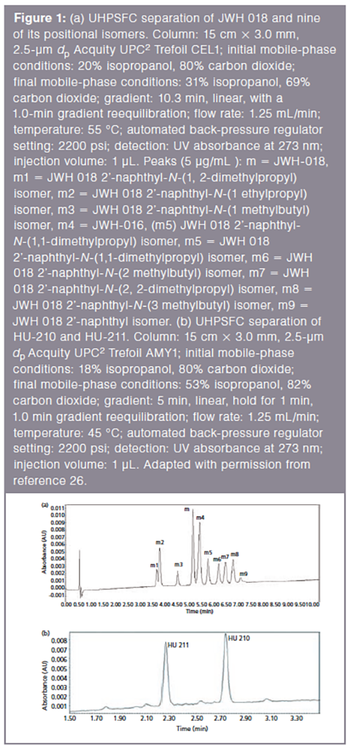
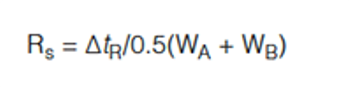
This article discusses the use of emerging technologies that are complementary to established techniques, to significantly reduce these shortcomings for both synthetic cannabinoids and synthetic cathinones. In this vein, the utility of recently reported approaches including ultrahigh performance supercritical fluid chromatography (UHPSFC)–photodiode array (PDA) ultraviolet (UV)–MS, and GC–vacuum UV is discussed. To increase the specificity of analysis, multiple chromatographic techniques are commonly used. For the analysis of emerging drugs, a combination of GC and UHPSFC is recommended. The utility of a previously unreported coupled-columns approach for UHPSFC to significantly enhance resolution of synthetic cathinones is presented.
LCGC Asia Pacific
Biotherapeutics have become the hottest topic in pharmaceutical research over the past decade. With the increased interest in biotherapeutics, there has been a concomitant increase in new analytical methods for characterizing these large, complex molecules. This installment of “Column Watch” discusses advances in “bottom-up” analysis of monoclonal antibodies, while highlighting the role and importance column chemistry still plays in developing highly selective high-performance liquid chromatography (HPLC) methods for peptides.

LCGC Asia Pacific
A discussion of hydrophobic interaction chromatography (HIC) theory and its application to the analysis of proteins and biomolecules is presented.
Special Issues
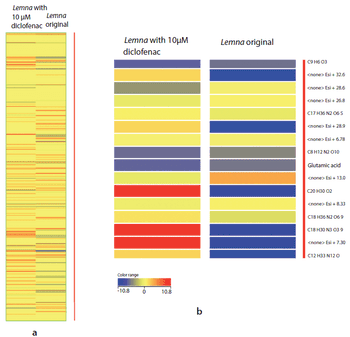
In plant metabolomics, molecular fingerprints and additional molecular descriptors can be identified using recent developments in polarity-extended separations with serial coupling of reversed-phase LC and HILIC combined with ESI-TOF-MS.

Special Issues
A new high-throughput LC–MS/MS method meets the challenge of eliminating matrix effects for monitoring, with high specificity, polar organic pesticides such as glyphosate in food and water, while meeting targeted limits of detection.