






Data Analysis, Statistics, and Chemometrics
Latest News
Advertisement
Advertisement

LCGC Europe
We have entered a new stage in the era of accelerations. Moore’s law continues its expansion, increasing exponentially the computer power available. Other accelerations are remarkable, particularly easy access to cloud computing and the expansion and influence of artificial intelligence to practically all sectors of our society.

LCGC North America
Derringer desirability functions are a great favorite of mine because they are very simple and flexible. They may be applied to a variety of problems: whenever you need to select the “best” (sample, method, operating conditions etc.) from a set. It is also a convenient way to compare apples and oranges, whenever totally unrelated features must be ranked. They were first described by Derringer and Markham1 to select polymeric materials based on varied properties.
LCGC North America
Part V of this series takes a closer look at discriminant analysis (DA). Discriminant analysis is a supervised method, meaning that it involves some previous knowledge of your samples.

LCGC North America
Part IV of this series takes a closer look at clustering. Clustering can be very useful at observing your data when the sample dimensionality is large. This is a barbarian term meaning that diversity among your samples may be wide. In that case, the space reduction provided by principal component analysis (PCA) is not always convincing, because the simplification provided by a single two-dimensional plot erases too much information. Clustering allows you to preserve more information.

LCGC North America
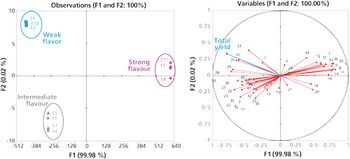
Part III of this series takes a closer look at principal component analysis (PCA). PCA can be very useful for observing your data when the observations you wish to compare are described by many variables. It is a relatively easy way to obtain a simplified image of the data, while trying to maintain as much information as possible.

LCGC North America
This is part two of a series of tutorials that explain, in the simplest manner, how statistics can be useful, even to chromatographers who normally find statistics difficult, with a minimal understanding of its features. This part explains linear regressions.

LCGC North America
This is part one of a series of tutorials that explain, in the simplest manne, how statistics can be useful, even to chromatographers who normally find statistics difficult, with a minimal understanding of its features. Part I explains how to collect and examine your data.

The Column
Jan Christensen from the University of Copenhagen, Denmark, and LCGC Europe Editorial Advisory Board member, spoke to The Column about his research in chemometrics and its practical applications in oil spill analysis.

LCGC Europe
The concluding part of the article from last month's "Question of Quality" on what "complete data" actually means in practice.

LCGC Europe
This article will explore what is meant by "complete data" in the context of a chromatography data system and, with an analysis of FDA 483 citations, explore the problems when a laboratory fails to understand this phrase.

The Column
The requirements for GPC/SEC data analysis to obtain precise, reproducible and accurate results are very specialized. Therefore, often dedicated software tools offering flow-rate correction or different calibration options need to be employed. This instalment of Tips & Tricks looks at these requirements.
Special Issues
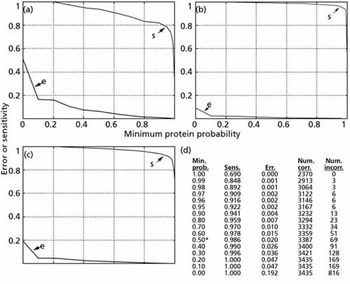
This new data-management method is specifically designed to handle the large amounts of data produced in proteomics studies. Experimental methods and data are presented from a recent study conducting proteomics profiling of Schizosaccharomyces pombe to demonstrate the effectiveness of the data management solution. The results demonstrate enhanced data search speeds as well as effective data analysis.

LCGC Europe
Part two of the column on response surface designs looks at data analysis and various approaches to simultaneously optimize multiple responses

LCGC North America
HPLC with ELSD continues to grow in popularity as a "quasi- universal" detector. Improvements in ELSD instrument design, including low temperature evaporation, have recently been commercialized...

Part I of this series of articles provides an overview of a chromatography data system, including the life cycle, key functions, and problems.

Data management using database management system software has become a mainstream desktop application because of its ease compared with spreadsheet programs.
Advertisement
Advertisement
Trending on LCGC International
1
Py-GC/MS Detects Microplastics in Pediatric Asthma Patients
2
Industry Roundup: Shimadzu Unveils New High-End UHPLC System Aimed at Reducing Laboratory Downtime
3
Industry Roundup: Thermo Fisher Unveils Orbitrap Isora IRMS System
4
Industry Roundup: Gerstel Showcased New Twister Phases and Automated Liner Exchange Technology at EPRW 2026 in Rotterdam
5