

The Application Notebook
Agilent Technologies Application Note
The Application Notebook
Agilent Technologies Application Note
The Application Notebook
Thermo Fisher Scientific Application Note

The Column
Waters has launched a programme to support scientific innovation in the fields of health and life science research, food safety and environmental protection.
Special Issues
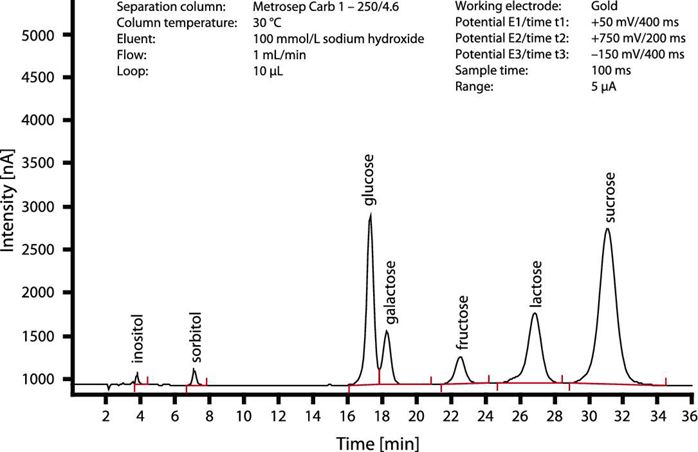
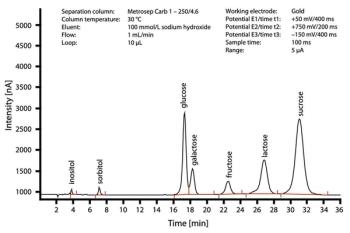
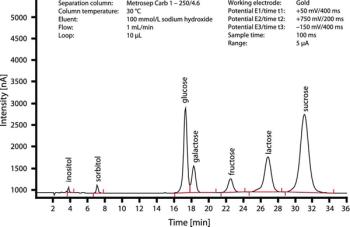
This article describes a straightforward ion chromatographic method that uses isocratic elution and pulsed amperometric detection (PAD) to sensitively determine water-soluble polyols and sugar alcohols as well as mono-, di- and oligosaccharides in essential and nonessential foodstuffs.
Special Issues
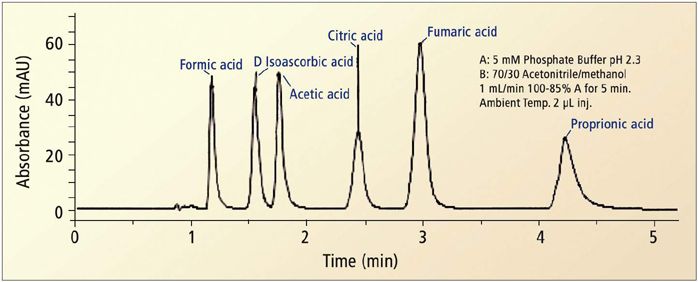
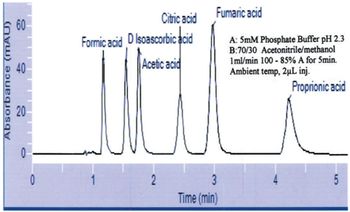
In food, organic acids originate from the natural biochemistry processes or are added as preservatives, acidulants and stabilizers.
Wyatt Technology?s instruments are to be used by the Biological Macromolecules Joint Research Unit of the Université de Provence and Université de la Méditerranée in Marseille, France, to eliminate bacteriophage infections in dairy production.

LCGC Europe eNews
Gerry Broski, food safety marketing director for Thermo Fisher Scientific speaks about two new analytical screening methods that have recently been developed at the company's food safety response centre.

The Column
A study into the composition of krill oil may offer new insights into the complexity of this source of omega-3.

The Column
Beer is one of the world?s oldest and most widely consumed alcoholic beverages, and a recent study of its proteome may provide brewers with ways to make it even better.
The Column
A simple and rapid test for cobalt in leguminous plants has been developed that Spanish and Venezuelan chemists claim could provide an alternative to more expensive methods.
The Column
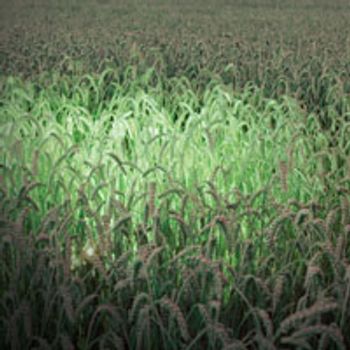
Following the accident at Chernobyl Nuclear Power Plant in 1986, the surrounding area remains substantially contaminated with radioactive isotopes. A study into the adaptations of the surrounding plant life has suggested that the plant proteomes remain largely unchanged by the radio contamination.

LCGC Asia Pacific
AB Sciex Application Note
LCGC Asia Pacific
Metrohm Application Note

LCGC Asia Pacific
PerkinElmer Application Note
The Application Notebook
Agilent Technologies Application Note

The Application Notebook
A robust, selective and sensitive separation method for the determination of four steviol glycosides in stevia plant matrix is demonstrated. In addition to the two calibrated substances two more glycosides could be found in stevia plant extracts by LC–MS. Using a popular Eurospher NH2 phase and applying moderate separation conditions results in an inexpensive and precise analysis method.

The Application Notebook
PerkinElmer Application Note

LCGC Europe
Using narrow-bore column fast GC combined with rapid scanning qMS to analyse flavours and fragrances is described.

LCGC Europe
Practical HPLC, HILIC and RP-LC methods of analysing common food and beverages containing polyphenols are presented.
Phenomenex Application Note
The Column
We spoke to Waters about the development of an international food safety training laboratory set to open next year and how this will help specialists meet global standards.

The Application Notebook
Furan is naturally occurring at low levels in many foods and drinks (1).

LCGC Asia Pacific
An overview of current chromatography-based food toxicant screening is presented.

The Application Notebook
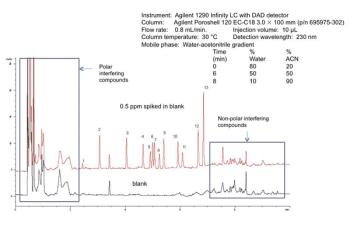
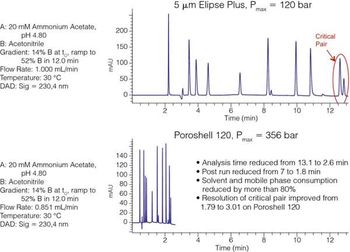
Agilent Poroshell 120, a superficially porous particle column, offers resolution and speed similar to columns packed with 1.8-µm totally porous particles, without generating high back pressure.

LCGC Asia Pacific
AB SCIEX Application Note