



Special Issues
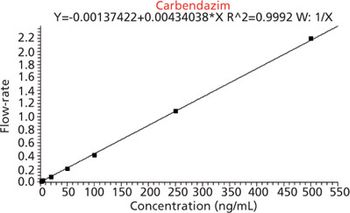
This article describes how a food testing laboratory can transition routine high performance liquid chromatography (HPLC) methods to microflow LC for improved sensitivity, throughput, and robustness of analysis.

Special Issues
This article describes how a food testing laboratory can transition routine high performance liquid chromatography (HPLC) methods to microflow LC for improved sensitivity, throughput, and robustness of analysis.

The Application Notebook
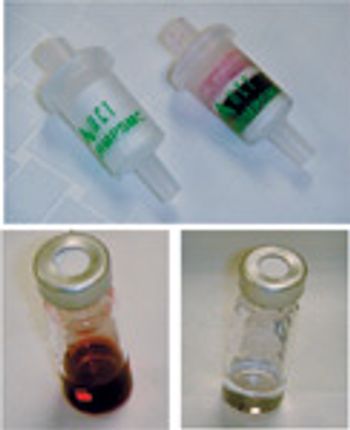
One fast, simple QuEChERS extraction for a broad range of pesticides.


The Application Notebook
Levels of benzene, toluene, ethylbenzene, xylenes, and styrene (BTEXS) are a concern in olive oil. These compounds find their way into olive trees and hence into olives and olive oil mainly as a result of emissions from vehicles, bonfires, and paints into ambient air near orchards. This analysis uses a PerkinElmer? TurboMatrix? 110 Headspace (HS) sampler with a Clarus? SQ 8 gas chromatograph–mass spectrometer (GC–MS) to achieve detection limits below 5 ng/g and concentrations up to 100 ng/g.

LCGC Europe
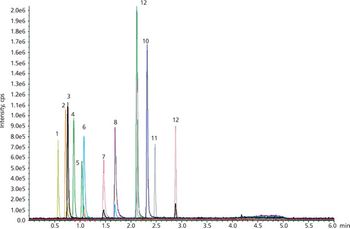
A sensitive and selective liquid chromatography spectrometry mass spectrometry (LC–MS–MS) method to determine clenbuterol-like beta agonist residues in human hair was developed and validated.
The Application Notebook
Phenomenex Application Note
The Application Notebook
UCT Application Note

Perkin EU - VOCs in Beer Production by Headspace Trap-GC–MS
E-Separation Solutions
Monday afternoon’s “Food and Environment†session will take place in Grand Ballroom F-K, starting at 4:30 p.m. The Session Chairs will be Andy Dang of San Jose University (San Jose, California), and Frantisek Svec of Lawrence Berkeley National Laboratory (Berkeley, California).

LCGC Europe
A novel "green chromatography" method for analysing melamine in milk is described. The method uses 100% water as the eluent and in the sample preparation stage and is reported to be a reliable and cost-effective method for laboratories in developing countries.

LCGC North America
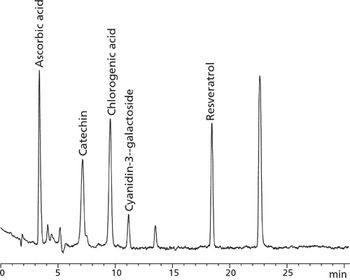
HPLC with diode-array and electrochemical-array detection overcomes sensitivity and specificity limitations in natural products analysis.
The Application Notebook
Antioxidants protect cells from the damaging effects of free radicals and offer numerous benefits for human health. Many phenolic compounds found in plants, as well as some vitamins, exhibit antioxidant activity. Several colorimetric assays exist to measure the total antioxidant capacity, typically expressed as Trolox or Gallic acid equivalents.
LCGC Europe eNews
HPLC with diode-array and electrochemical-array detection overcomes sensitivity and specificity limitations in natural products analysis.

The Application Notebook
Red wine is a challenging matrix that contains organic acids, sugars, phenols, and pigments such as anthocyanins. This application note describes a simple, fast, novel, and effective method to clean up red wine co-extractives.

The Column
The monomer bisphenol A (BPA) is used to make polycarbonate plastic and epoxy resins and has been present in many plastic bottles and metal food and drinks cans since the 1960s.
E-Separation Solutions
Shirley O. Corriher, who is well known for her books explaining the science of cooking and baking, will be sharing some of her secrets in tomorrow?s plenary lecture.

LCGC Europe eNews
Janet Kelsey of The Column spoke to Joe Anacleto, Vice President of Applied Markets, AB Sciex, and Sky Countryman, Manager, Applied Markets Research Team, Phenomenex, about the impact their companies? joint collaboration project will have on the food safety testing market.
The Column
Janet Kelsey of The Column spoke to Joe Anacleto, Vice President of Applied Markets, AB Sciex, and Sky Countryman, Manager, Applied Markets Research Team, Phenomenex, about the impact their companies? joint collaboration project will have on the food safety testing market.

The Column
Veterinary drugs have become an integral part of livestock production and play an important role in animal welfare maintenance, mainly for preventing disease, curing infection, controlling the risk of disease transmission to humans and for increasing the productive capacity of animals.
The Column
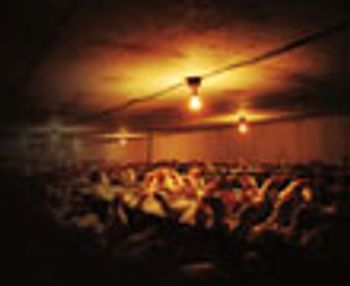
It is well established that food-producing animals are exposed to toxic micropollutants via environment and feeds, and that micropollutants entering the animals are transferred to edible tissues, thus representing a chemical human health hazard.
Special Issues
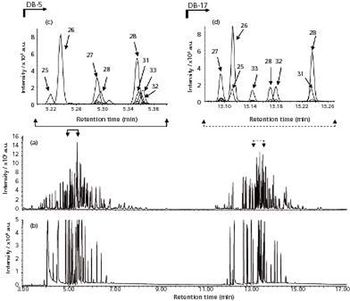
An overview of important GC–MS techniques currently used in food analysis is described. Considerable attention is devoted to the use of the mass spectrometer, in relation to its poptential for separation and identification. The importance of comprehensive GC?GC is also discussed.

Special Issues
Sample preparation is a crucial part of the analysis of foodstuffs. Current sample preparation techniques used in food analysis are reviewed and the advantages and drawbacks of each one are discussed.