Why do some peaks front when others don't - in the same method?

Why do some peaks front when others don't - in the same method?

A fully automated solution was developed for the determination of THC and its metabolites THC–OH and THC-COOH in serum.

How to evaluate a calibration curve and calculate the lower limit of calibration.

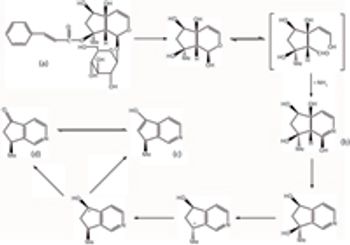
A new chromatography-based method for analyzing a traditional Chinese medicine and its metabolites.

An interview with Hans-Gerd Janssen of Unilever Research and Development Vlaardingen and the University of Amsterdam. Janssen is involved with method development for gas chromatography, liquid chromatography, and mass spectrometry; the development of instrumentation for multidimensional chromatography for food analysis and biomacromolecular characterization; and problem solving and efficient routine analysis of foods (particularly oils and fats). This interview discusses the challenges encountered in the analysis of fats and oils, how multidimensional chromatography can be applied to the analysis, 2D LC for food-related compound analysis, the analysis of natural antioxidants in edible oils, and future steps in his research.

Click here to view the complete E-Separation Solutions newsletter from October 17, 2013.

Click here to view the complete E-Separation Solutions newsletter from October 3, 2013.

A look at liquid chromatography in the past, what it has become today, and where it is going in the future

A number of popular myths or half-truths in UHPLC are described and data are provided that contradict some of these commonly held beliefs.

Recent advances in sampling techniques in the pharmaceutical industry sparked significant interest in applying improvements to extraction methods for greater analyte detection and quantitation.

Click here to view the complete E-Separation Solutions newsletter from September 24, 2013.

Click here to view the complete E-Separation Solutions newsletter from September 12, 2013.

This article examines the problem of dermorphin doping in horse racing and presents an effective method for its detection using LC–MS TQ.

This article reviews some of the main developments that have led to recent advances in liquid chromatography–mass spectrometry (LC–MS).

An excerpt from LCGC's e-learning tutorial on HPLC methods at CHROMacademy.com

This troubleshooting study of a problem of retention time variation provides a good example of how to track down the source of a problem and how to speculate on probable cause.

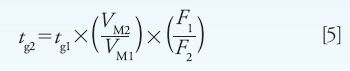
When transferring HPLC methods between instruments, many parameters need to be considered. Knowledge of underlying principles and a few key equations will help you.

A review of the advances and trends in technology and applications discussed at the HPLC 2013 conference, including a summary of the awards presented.

In new research, separation scientists from the University of Lyon, France, have compared different configurations of on-line two-dimensional liquid chromatography (2D LC) for the separation of charged compounds such as peptides.

An automated liquid chromatography (LC) method with on-line enrichment was successfully developed for the analysis of eight chlorinated phenoxyacid herbicides in water.

Recently, LCGC asked a panel of experts (listed in the sidebar) to assess the current state of the art of liquid chromatography (LC) columns and methods and to try to predict how the technology will develop in the future.

Liquid Chromatography

Where do all those extra peaks come from?

"HPLC Particle Pioneer" Joseph Jack Kirkland answers questions from Gert Desmet on his pioneering career in chromatography and his interest in superfi cially porous particles (SPPs).

A set of extended chiral separation screens using HPLC and SFC has been tailored to meet the specific and changing needs of customers in a pharmaceutical development setting.