



Special Issues
When choosing the articles to include in this supplement, my selection was based on a very simple criterion. My invitations went to the researchers that typically have something to say that I am interested in learning.
Special Issues
When choosing the articles to include in this supplement, my selection was based on a very simple criterion. My invitations went to the researchers that typically have something to say that I am interested in learning.
Special Issues
This article discusses useful approaches for the resolution of overlapping and superimposed peaks in HPLC.

LCGC North America
A summary of new HPLC systems, modules, and software, focusing on innovations and unique features from a user's perspective.

LCGC North America
Is it possible to get the same separation under isocratic and gradient conditions?
LCGC Europe
The first instalment of the Perspectives in Modern HPLC column highlights some of the new HPLC systems, accessories and related technology introduced at Pittcon this year.

The LCGC Blog
A number of retention time issues can cause problems in HPLC. Here's advice on how to handle common ones, such as retention time drift, temperature variability, problems arising from column equilibration, and difficulties validating a method.
LCGC Asia Pacific
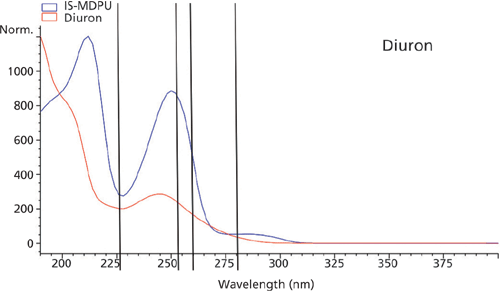
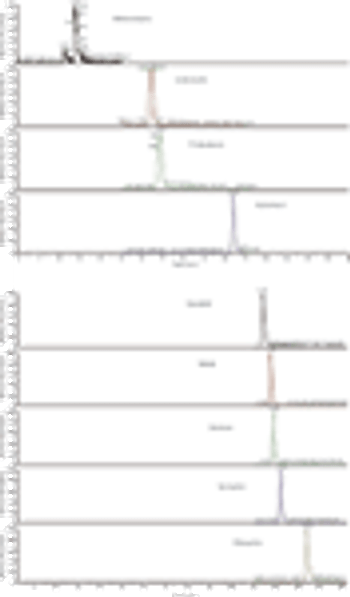
A novel, simple, rapid and effective method to determine pesticide residues in red wine samples is described.

The Column
Incognito found a 2D LC solution to a tricky separation problem but this technique did not meet the client's requirements. The magnanimous columnist admits to a rare defeat on this occasion but praises the thrill of seeking a solution to a perplexing method development problem. Could any readers suggest a more straightforward solution?

E-Separation Solutions
Click here to view the complete E-Separation Solutions newsletter from February 7, 2013

LCGC Europe
It is important to consider the influence of the sample matrix when setting up an analytical method

LCGC North America
How to account for the sample matrix when developing a method
LCGC North America
A description of how refractive index detectors work and some good practices to get the most out of this powerful detector

LCGC Asia Pacific
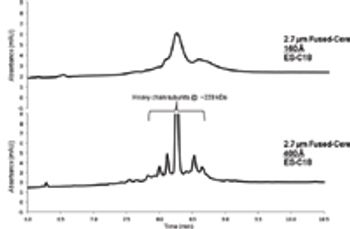
Two promising wide-pore stationary phases were recently introduced for the fast and high resolution separations of large biomoleculaes: the recently launched widepore 3.6?m superficially porous particle and the hybrid-type sub 2-?m fully porous particle. This article focuses on the achievable throughout and resolution for the characterization of biomolecules.

LCGC Europe
An improved liquid chromatography tandem mass spectrometry (LC–MS–MS) method for the screening and confirmation of clenbuterol in human urine in sports doping applications was developed and validated.

LCGC Europe
Quinine- and quinidine-derived anion-exchanger chiral stationary phases have proven to be versatile in enantiomer separation of acidic compounds in HPLC. In this article, the authors demonstrate their performance in specific HPLC applications involving enantiomer resolution and topoisomer separation.
LCGC Europe
How can we tell if a liquid chromatography method is working properly? How can a compendial method be adjusted to speed up the run time?

E-Separation Solutions
The HPLC 2012 conference was abuzz with talk of "slip flow" following the talk given by Mary Wirth of Purdue University about her groundbreaking work involving protein column efficiency. In this interview, Wirth explains how “slip flow†works and what this discovery can contribute to the application of LC-MS to disease research.
E-Separation Solutions
Click here to view the complete E-Separation Solutions newsletter from October 11, 2012.
E-Separation Solutions
Click here to view the complete E-Separation Solutions newsletter from October 4, 2012.

LCGC Europe
Two promising wide-pore stationary phases were recently introduced for the fast and high-resolution separations of large biomolecules: the recently launched wide pore 3.6 ?m superficially porous particle and the hybrid-type sub-2-?m fully porous particle. This article focuses on the achievable throughput and resolution for the characterization of biomolecules.

Special Issues
How ethylene-bridged hybrid inorganic-organic (BEH) particles are prepared, and how their special quallities can be used to improve separations.
Special Issues
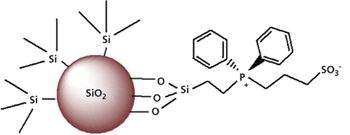
Some of the newer hydrophilic interaction liquid chromatography (HILIC) columns are reviewed, and experiments performed to categorize columns for optimized performance.

Special Issues
A discussion of new column packing materials– including sub-2-?m particles, superficially porous particles and second-generation monoliths– and their impact on instrumentation and laboratory productivity.