



A critical part of troubleshooting is understanding how the system should behave so that irregular behavior can be spotted. The more rules we know, the easier troubleshooting becomes. Learning these six rules is a great place to start.
A critical part of troubleshooting is understanding how the system should behave so that irregular behavior can be spotted. The more rules we know, the easier troubleshooting becomes. Learning these six rules is a great place to start.

The traditional bonding techniques used to manufacture silica-particle-based HPLC stationary phases provide many benefits, but can emerging technologies tackle unmet needs? We assess current approaches and the potential for improvements.
A handful of approximate rules about the behaviour of reversed-phase liquid chromatography (LC) can facilitate more efficient work, both during method development and in troubleshooting problems that arise with LC systems.

Here we provide an overview of the fundamentals and best practices on the development of stability-indicating HPLC methods for drug substances and products. We explain both traditional and easier modern approaches to developing stability-indicating HPLC methods—including using a universal generic method for new chemical entities—and address regulatory considerations and life cycle management strategies.
LCGC North America
If you are analyzing metal-sensitive biomolecules, and a bioinert instrument is unavailable, or insufficient, passivation or mobile-phase additives may help. Here’s how to use those solutions, with tips for avoiding potential pitfalls.

LCGC North America
Taking a systematic approach to restarting liquid chromatography instrumentation following the COVID-19 shutdowns will save money and time in the long run.

LCGC North America
After a few months of the coronavirus shutdown, the author has found some effective approaches to teaching and holding research meetings remotely.

This is seventh in a series of articles exploring hot topics in high performance liquid chromatography (HPLC).

The Column
This article describes advances in portable and sustainable high performance liquid chromatography (HPLC) systems.

The Column
The nature of surface silanol groups is very important to determine the selectivity of a stationary phase. This article illustrates what analysts should be looking at on the silanol surface to asess the separation mechanism.

Special Issues
Click the title above to open the Recent Developments in LC Column Technology special issue in an interactive PDF format.
Special Issues
Is the desired goal of “shrinking down” capillary liquid chromatography (LC) from large laboratory systems to accurate portable field instruments realistic? This article explores recent progress in the miniaturization of LC components-such as capillary LC columns, micro- and nano-flow pumps, detectors, and other essential system components-and the future outlook for operating capillary LC instruments in remote settings.

Special Issues
Pretreatment of complex samples remains a key step in the analytical workflow, critically impacting the overall accuracy of results. Pretreatment methods have been a challenge for food, biofluids, and environmental samples. Here, the development and evolution of biocompatible solid-phase microextraction (bio-SPME) as a sample pretreatment method are discussed for use in liquid chromatography and direct mass spectrometry applications.
LCGC North America
When you restart liquid chromatography (LC) instrumentation that was idle during the COVID-19 shutdown, you need to follow a systematic approach. Otherwise, problems may appear in days or weeks following startup.

LCGC Europe
This article quantifies the progress in speed and efficiency that has been made in the area of liquid chromatography (LC) over the past 50 years. After a decade of groundbreaking advances in the 1970s, the progress in chromatographic performance over the ensuing four decades (1980–now) follows Moore’s law relatively closely. This is characteristic of technological fields that are of an evolutionary nature (that is, driven by the need for better performance).
LCGC North America
There are still many methods in use that have been developed for use at “room temperature.” With such a method, can one reasonably expect to obtain the same separation in Anchorage, Alaska, as in Mumbai, India?
Special Issues
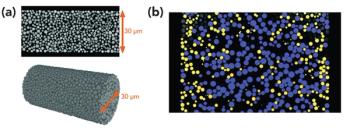
A series of theoretical, visualization, and simulation tools that are used to improve the structure and chemistry of the next generation of liquid chromatography (LC) columns is briefly reviewed.

Special Issues
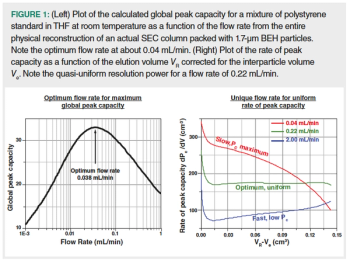
On-line comprehensive two-dimensional liquid chromatography (on-line LC×LC) provides much higher separation power (higher peak capacity) than one-dimensional liquid chromatography (1D-LC). However, it is also often thought that a larger peak capacity should be obtained at the expense of a higher dilution (lower peak intensity). From a theoretical approach, it is demonstrated that both demands can go hand-in-hand in on-line reversed-phase LC×reversed-phase LC (higher peak capacity and higher peak intensity). Examples involving “sub-hour” separations of a tryptic digest show how this approach can be applied in practice.
Special Issues
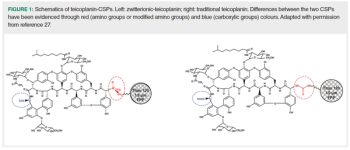
This article reports on a recently developed zwitterionic-teicoplanin chiral stationary phase (CSP). As a result of the innovative chemistry used to immobilize the chiral selector, the CSP is characterized at neutral pH by the simultaneous presence of both a negative (carboxylate) and a positive (quaternary ammonium) charge. This feature has proved to be pivotal in efficiently and productively resolving very challenging problems. It is worth mentioning the simultaneous separation of chiral active pharmaceutical ingredients (APIs) from their counterions and the separation of neutral-nonpolar, neutral-polar, acidic, and basic N-Fmoc chiral amino-acids. Examples of highly-efficient ultrafast chiral separations achieved on this CSP, as a result of use of effective superficially- and porous-particles, are provided.

LCGC North America
The hydrophobic subtraction model has been very successful. Nevertheless, the accompanying public database, which has parameters for 750 commercially available columns, is an underutilized column characterization tool. Here is some guidance on how to use both the model and the free database.

LCGC North America
We explore what’s new in the liquid chromatography columns and accessories commercially released over the past year.
LCGC North America
Our annual review of new high performance liquid chromatography and mass spectrometry instruments, chromatography data systems (CDS), and related products, including a summary of their significant features and user benefits.
LCGC North America
How do I know when bioinert liquid chromatography columns, systems, or components are needed for my separations of biomolecules?
LCGC North America
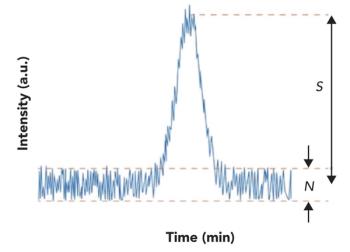
To avoid producing data not fit for purpose, chromatographers need to know how to identify worrying symptoms from HLPC instrument output.

LCGC Europe
Kevin Schug discusses the advantages of using mobile phases with different pH values in the first and second dimension when using comprehensive two‑dimensional liquid chromatography (2D‑LC) methods for top‑down protein analysis.