




E-Separation Solutions
Click here to view the complete E-Separation Solutions newsletter from September 13, 2012.
E-Separation Solutions
Click here to view the complete E-Separation Solutions newsletter from September 13, 2012.
E-Separation Solutions
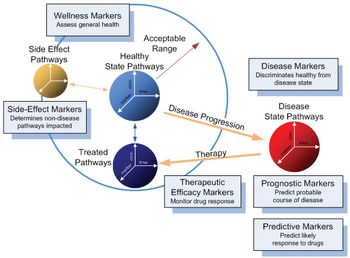
LCGC recently spoke with Fred E. Regnier, the John H. Law distinguished professor in the Department of Chemistry at Purdue University (West Lafayette, Indiana) and a member of LCGC's editorial advisory board.

LCGC North America
A review of the trends at this year&s symposium, including discussions of column technology, sample preparation, and detector usage.
LCGC Asia Pacific
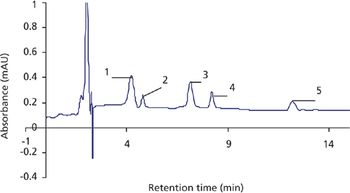
A simple and sensitive high performance liquid chromatography (HPLC) method with ultra-violet (UV) detection has been developed for the analysis of phenylurea herbicides.

LCGC North America
Questions from the e-mail bag are considered this month.

LCGC Europe
A sensitive and selective liquid chromatography spectrometry mass spectrometry (LC–MS–MS) method to determine clenbuterol-like beta agonist residues in human hair was developed and validated.

LCGC Europe
A panel of experts give their opinions about the current trends in high performance liquid chromatography (HPLC) instrumentation and how the technology could develop in the future.

LCGC Europe
Questions from the e-mail bag are considered in this month's instalment.

The Column
A look at the role of micro-LC–MS to reduce the environmental impact of chromatography laboratories.

LCGC Europe
This article describes the GC–MS and LC–MS screening methods developed by the Environment Agency for England and Wales for the analysis of both low-volumn water samples and extracts obtained from various designs of passive samplers.

LCGC North America
In honor of LCGC's celebration of 30 years covering the latest developments in separation science, we asked a panel of experts (listed in the sidebar) about the current state of the art of high performance liquid chromatography (HPLC) instrumentation and how the technology will develop in the future.
LCGC Europe
Retention-time drift, temperature control and broad peaks from a new column are the topics of this month's discussion.

The Column
This article will shed some light on recent developments of micro-LC and the possibility of applying fast separations while reducing toxic and costly solvent waste.
The Column
The Column spoke to Martin Giera of Leiden University Medical Centre, Leiden, The Netherlands, about developments in biomarker discovery.

LCGC Europe
The article investigates the ELSD response variation with supercritical carbon dioxide-based mobile phases and compares the response with HPLC.
LCGC Europe
What do you do when the peak shape changes?
LCGC Europe
The use of interactive liquid chromatography using porous graphite as a stationary phase and gradients of long chain alcohols and chlorinated aromatics to separate olefin-based elastomers according to their chemical composition is discussed.

The Column
A method for the assay of an active pharmaceutical ingredient (API) and five known and unknown impurities was developed in accordance with Quality by Design (QbD) principles.

LCGC Europe
A novel "green chromatography" method for analysing melamine in milk is described. The method uses 100% water as the eluent and in the sample preparation stage and is reported to be a reliable and cost-effective method for laboratories in developing countries.
LCGC Europe
Will an internal standard always improve data quality?

LCGC Asia Pacific
What happens when the same method gives different retention times on different instruments?

Special Issues
In this review, the most recent LC–MS approaches are discussed, as well as the technical requirements for linking an LC system to a mass spectrometer. The advantages of on-line 2DLC in the "comprehensive" mode are also illustrated and selected applications for the analysis of common foodstuffs, such as triacylglycerols, carotenoids and polyphenols, are described. Finally, future trends for LC–MS in food analysis are reported.

Special Issues
On-line heart-cut LC–GC and, more recently, comprehensive LC–GC (LC?GC) are very powerful analytical techniques because of the combination of the selectivity features of LC with the high efficiency of GC. This article presents an overview of the most recently used interfacing systems, as well as applications in the food analysis.
LCGC Europe
What do you do when an unexpected peak appears in the chromatogram?
Special Issues
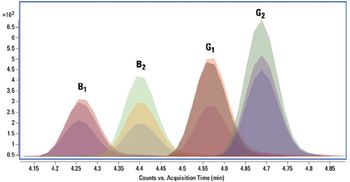
Triple quadrupole LC/MS analysis of aflatoxins in food samples eliminates the need for expensive immuno-affinity cleanup columns and reduces the probability of false positives to almost zero.