

Special Issues
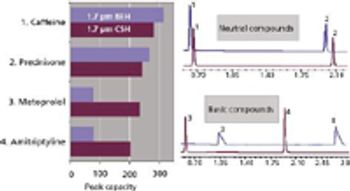
How ethylene-bridged hybrid inorganic–organic (BEH) particles are prepared and how their special qualities can be used to improve separations
Special Issues
How ethylene-bridged hybrid inorganic–organic (BEH) particles are prepared and how their special qualities can be used to improve separations

Special Issues
Some of the newer hydrophilic interaction liquid chromatography (HILIC) columns are reviewed, and experiments performed to categorize columns for optimized separations are described.
Special Issues
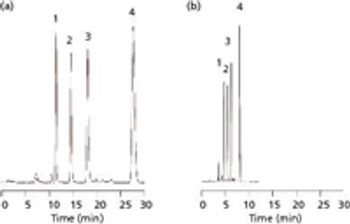
Monolithic columns feature both high column efficiency and high column permeability. This article discusses their preparation, applications, and future prospects.
Special Issues
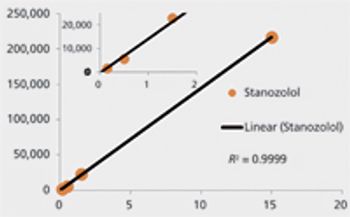
A proof-of-concept application for detecting abused steroids in urine samples collected from an antidoping surveillance program

LCGC Europe
Changing to a "better" liquid chromatography column may not always produce the expected results.

LCGC Asia Pacific
No matter where LC is used, it is never immune to problems.
LCGC Asia Pacific
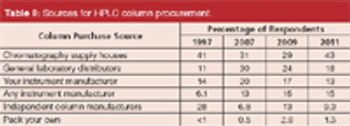
The results of a recent survery on stationary phases used in high performance liquid chromatography (HPLC) are revealed.
LCGC Europe
A mysterious autosampler problem is solved.

The Column
A systematic way to develop HPLC methods consists of building up and running a useful set of experiments (DOE, design of experiments) to evaluate the influence of several factors or method conditions on the selectivity of a chromatogram. The crucial part here is the peak tracking between the chromatograms.
LCGC Europe
Liquid chromatography is never immune to unexpected problems.

LCGC North America
The 23rd International Symposium on Chiral Discrimination (Chirality 2011) was held in Liverpool, UK, this past July.

LCGC North America
A look at situations in which retention times are too long, too short, or inconsistent

LCGC North America
Phenazepam is becoming a drug of interest in forensic laboratories. This new procedure will enable forensic toxicologists to analyze phenazepam in biological fluids quickly and easily.
LCGC North America
The practical aspects of hollow-fiber liquid-phase microextraction in the three-phase mode (HF3LPME) are described.

LCGC North America
A discussion of how UHPLC is used to conduct intact protein–antibody analysis and glycoprofiling to characterize biopharmaceutical drugs

LCGC Europe eNews
Janet Kelsey spoke to Stephen Luke, Product Manager at Thermo Fisher Scientific about the developments in HPLC columns and methods and the effect the growing tendency to use UHPLC has on the development of HPLC columns
The Column
Reversed-phase ultra high performance liquid chromatography (RP-UHPLC) columns are the most widely used UHPLC columns in analytical separations. As with other reversed-phase columns, analytes are separated in RP-UHPLC columns due to their differences in the degree of hydrophobic interaction with the stationary phase.

LCGC North America
Too much variability in your liquid chromatography method?

LCGC Europe
Describes a new method to address the challenges of detection, analysis and characterization of low-abundant metabolites in metabolomic studies.

LCGC Asia Pacific
How to react to symptoms that indicate that your liquid chromatography column has major problems.
LCGC Europe
Too much variability in your liquid chromatography method?

The Column
Analysis of natural compounds is becoming increasingly important. One thriving area is the evaluation and application of environmental biopolymers, such as humic substances (HSs) in various applications, including medicine, industry, agriculture and environmental protection.

The Column
The optimum in proteomics research today is in validating the performance of promising biomarkers across large biological sample sets. Many new strategies have been developed in recent years to improve and accelerate targeted MS verification assays.

The Column
Liquid chromatography–electrospray ionization–mass spectrometry (LC–ESI–MS) is often used for the identification of proteins from complex peptide mixtures made from enzymatic digests of selected proteomes.
