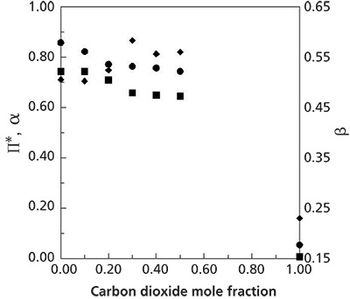

Enhanced-fluidity liquids are organic solvents or organic–aqueous solvents mixed with high proportions of liquefied gases, such as carbon dioxide.


Enhanced-fluidity liquids are organic solvents or organic–aqueous solvents mixed with high proportions of liquefied gases, such as carbon dioxide.

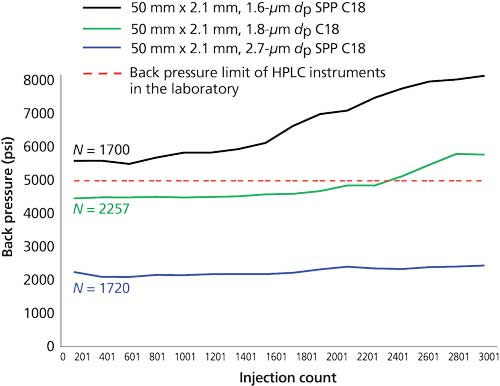
The most significant recent advancement in liquid chromatography (LC) column technology is the new generation of superficially porous silica particles.

Internal standard methods are used to improve the precision and accuracy of results where volume errors are difficult to predict and control.

Due to the highly polar nature of saccharides, the analysis of sugars is typically achieved using Hydrophilic Interaction Chromatography (HILIC). Using a high polarity packing material, separation is based on the hydrophilic interactions of the sugars on the stationary phase surface typically using an eluent with a majority of polar organic solvent.

Cooking at high temperatures causes a chemical reaction between certain sugars and asparagine which causes acrylamide formation. In this technical note, we explore how to use Novum™ SLE tubes to clean up a coffee matrix in order to quantitate known acrylamide levels. The recovery is especially significant when you consider the polar nature of the acrylamide (LogP -0.27). In addition to high recoveries (>90 %), the low values for the standard deviation and %CV indicates method reproducibility.

Cooking at high temperatures causes a chemical reaction between certain sugars and asparagine which causes acrylamide formation. In this technical note, we explore how to use Novum™ SLE tubes to clean up a coffee matrix in order to quantitate known acrylamide levels. The recovery is especially significant when you consider the polar nature of the acrylamide (LogP -0.27). In addition to high recoveries (>90 %), the low values for the standard deviation and %CV indicates method reproducibility.

Have a problem with your LC system? Maybe applying a little "DDT (Don't Do That)" may help.

The ideal UV detector would allow us to monitor the presence of our target analytes without influence from the background eluent and sample matrix components that may be present in the detector measuring cell at the same time

LCGC recently spoke with the 2014 LCGC Emerging Leader in Chromatography award winner, Andre de Villiers, an Associate Professor of Science at Stellenbosch University in South Africa, about his current research analyzing natural products, his various interests and collaborations in analytical chemistry, and his role as a teacher.

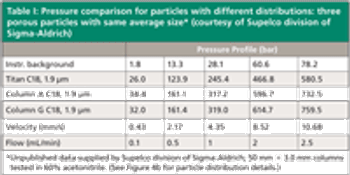
Controlling particle size distribution is examined as a possible route to further improve the performance of particle-based columns.

A review of LC methods and strategies for the chromatographic separation of short RNA oligonucleotides

Noteworthy new HPLC systems and related products

If scaling isocratic separations is so simple, why is gradient scaling so confusing?

The mechanisms of mixed-mode chromatography are explained, with reference to the parameters that are used to optimize selectivity and retention.

This article focuses on the progression that chiral stationary phases (CSPs), specifically developed for HPLC, are currently undergoing because of the pressing need of an easy switch to UHPLC.

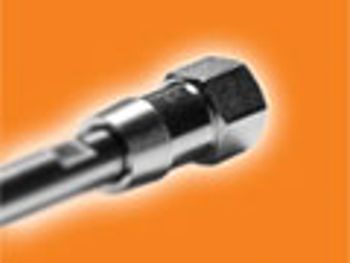
For proper column installation it is important to be familiar with column characteristics such as solvent compatibility, maximum flow rate, and maximum operating temperature.

What kind of adjustments need to be made when scaling an isocratic method?

A simple and fast ion-pair chromatography method to detect sodium alkyl sulphates in environmental samples using conductivity detection is described.

Joe Pesek answers questions about IEX, HILIC, polar-embedded, and polar-endcapped columns, and aqueous normal phase chromatography.

What kind of adjustments need to be made when scaling an isocratic method?

Click here to view the complete E-Separation Solutions newsletter from January 17, 2014.

To ensure an efficient, reliable, and sensitive determination of all corkiness-related off-flavour compounds in wine samples, the DLR Mosel in Germany has successfully turned to GC–MS combined with stir-bar sorptive extraction.

This article provides examples of the robustness of monolithic HPLC columns and how they can be used to help overcome the inherent challenges presented when analytes are in complex matrices.

What good is that big, ugly peak at the beginning of the chromatogram?

Secondary parameters in the interface and mass analyzer can often have a major impact on sensitivity and reproducibility. This column considers how and when to consider optimizing these parameters through a study of the working principles of LC–MS analysis.