
HPLC

Latest News


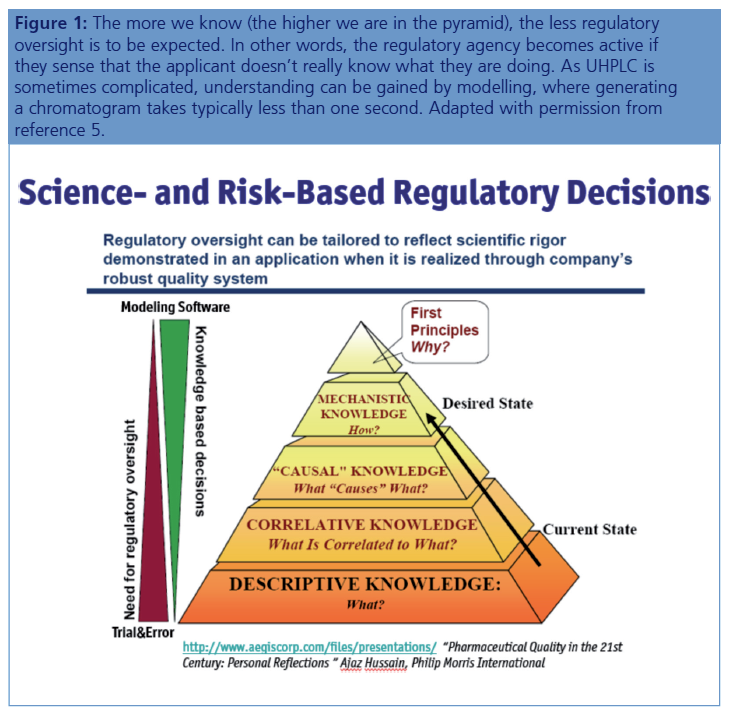
figure 1 L.png

This instalment describes high performance liquid chromatography (HPLC) and related products introduced at Pittcon 2018 in Orlando, Florida, USA, and in the year prior. It highlights new HPLC and mass spectrometry (MS) systems, modules, chromatography data systems, and other HPLC-related software and provides brief descriptions of their significant benefits and innovative features.

equation 1.png

Chromatographic principles and best practices for obtaining highly precise retention time, peak width, and resolution predictions for the optimization of reversed-phase liquid chromatography (LC) separations using retention modelling software will be discussed. The importance of fully characterizing the LC instrumentation, how to generate accurate input data, the selection of appropriate models, and peak tracking will be addressed along with a suggested workflow. Adhesion to a few basic rules and simple precautions and the use of modern retention modelling software programmes can assist the rapid development of highly accurate retention models to enable the development of robust and optimized reversed-phase LC separations using either ultrahigh-pressure liquid chromatography (UHPLC) or high performance liquid chromatography (HPLC) conditions. Examples of retention modelling for small and large molecules will be highlighted.

equation 1.png

The drug discovery process can be accelerated by chromatographic profiling of analogs by measuring their nonspecific binding to proteins and lipids and then by modelling in vivo distribution. A balanced potency and chromatographically determined membrane and protein binding ensure the selection of compounds with the highest probability to show the desired in vivo distribution behaviour for efficacy and reduced toxicity. The first part of the article will discuss the high performance liquid chromatography (HPLC)-based measurements of lipophilicity and biomimetic properties, while the second part will discuss the models derived from the measured data of known drug molecules and drug discovery compounds.

figure 1 L.png

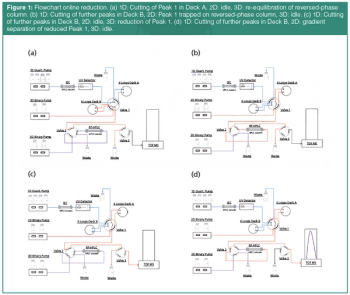
Characterization of protein modifications is an essential aspect of biopharmaceutical development. Traditionally, the characterization process of chromatographic peaks involves manual, larger-scale fractionation to obtain a sufficient amount of material for further analytical studies. This article presents a fully automated process for online peak fractionation and reduction of therapeutic antibodies with subsequent quadrupole time-of-flight mass spectrometry (QTOF-MS) characterization. This innovative technique significantly accelerates MS peak characterization compared to traditional approaches and avoids the risk of unintended modifications of the variants as a result of the isolation process, for example, deamidation during storage of isoforms. This approach considerably reduces the required sample amount and can be used for the characterization of product-related impurities during early stage development.

What are the most useful chromatography books on your bookshelf? What are the most useful web-based resources (such as websites, downloadable documents, videos) about separation science? What are the most useful tools supporting your work (such as calculators and simulators)? In this installment, Dwight Stoll compiles input from the separation science community (both individuals and vendors) to guide you to the resources that people find most useful.

Ron-Majors_web.jpg

LCGC, the leading resource for separation scientists, is proud to announce that Ronald E. Majors and Zachary S. Breitbach are the winners of the 11th annual LCGC Lifetime Achievement and Emerging Leader in Chromatography Awards, respectively. Majors and Breitbach will be honored in a symposium as part of the technical program at the Pittcon 2018 conference in Orlando, Florida, on February 26, 2018.

1.jpg

Polyphenols are a well-known group of antioxidants widely diffused as secondary metabolites in plants, vegetables, and fruit. The Column spoke to Nicola Marchetti from the Department of Chemistry and Pharmaceutical Sciences at the University of Ferrara in Ferrara, Italy, about his research into the characterization of polyphenols in red chicory using high performance liquid chromatography–tandem mass spectrometry (HPLC–MS/MS).

figure 1 L1510068392255.png

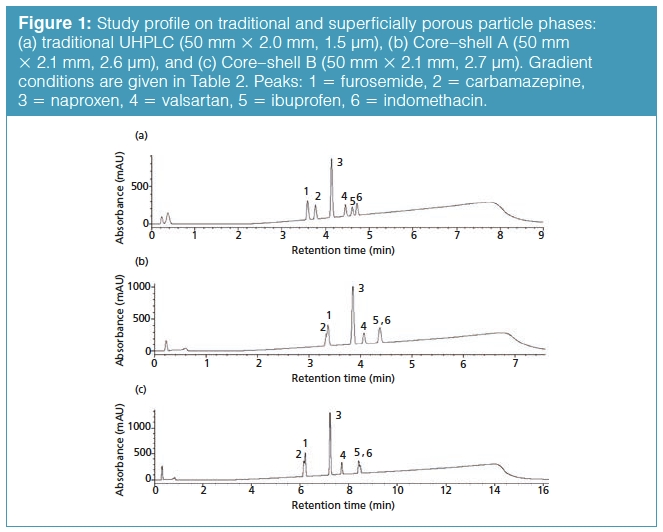
High performance liquid chromatography (HPLC) methods are used today to control the quality of many chemical and pharmaceutical products. The methods are usually developed by optimizing the properties of the mobile phase with a specific column. However, if the original column is no longer in production, the result will often change when a different column is used. In this case, we were interested in finding one or two equivalent columns that can replace the original column without changes in selectivity and robustness. This study demonstrates a new way to compare columns and select suitable replacement columns. The presented method will also allow the evaluation of different columns with the same method, as well as the evaluation of the robustness of the common method with different columns.

figure 1 L.png

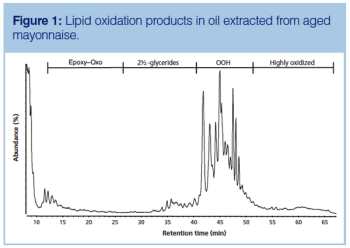
Monitoring lipid oxidation during the shelf life of lipid-containing food emulsions, such as mayonnaise, is challenging. It is, however, essential for the development of improved, consumer-preferred products. Determining the nonvolatile lipid oxidation products (NONVOLLOPS), the precursor compounds for rancidity, is required to determine the effectiveness of product stabilization technologies. A method based on normal-phase liquid chromatography with atmospheric pressure photo ionization-mass spectrometry (LC–APPI-MS) was developed for this purpose. The inclusion of a size-exclusion chromatography (SEC) step was needed to remove interfering diacylglycerides and free fatty acids from the samples. The combined SEC and normal-phase LC–APPI-MS method allowed the identification of a wide range of oxidized species including hydroperoxides, oxo-2½ glycerides, epoxides, and other oxidized species. The method was found to be more suitable for the analysis of large sample sets.

Dave Bell (S).jpg

In this extended special feature to celebrate the 30th anniversary edition of LCGC Europe, leading figures from the separation science community explore contemporary trends in separation science and identify possible future developments. We asked key opinion leaders in the field to discuss the current state of the art in liquid chromatography column technology, gas chromatography, sample preparation, and liquid chromatography instruments. They also describe the latest practical developments in supercritical fluid chromatography, 3D printing, capillary electrophoresis, data handling, comprehensive two‑dimensional liquid chromatography, and multidimensional gas chromatography.

equation 1.png

The last decade has witnessed how liquid chromatography columns and instruments changed from long bulky columns with relatively large fully porous particles operated at modest pressures (100–200 bar), to short compact columns with small superficially porous particles operated at ultrahigh pressures (1200–1500 bar). This (r)evolution has resulted in a tremendous increase in achievable separation performance or decrease in analysis time, but requires a good knowledge of optimal chromatographic conditions for each separation problem and, concomitant, the right instrument configuration.

In his final column before retirement, John Dolan reflects on the changes he has seen during his 34 years as the author of “LC Troubleshooting,” and shares his short list of best practices that still hold true today.

LCGC6_i1.jpg

Dwight Stoll, who will take the reins of “LC Troubleshooting” next month, spoke with John Dolan to get some insight on the current state of chromatography with John Dolan to get some insight on the current state of chromatography training, future troubleshooting problems, John’s toughest troubleshooting challenge, and the most common chromatographic mistakes.

figure 1 L.png

This instalment in our series on ultrahigh-pressure liquid chromatography (UHPLC) highlights its benefits in fast analysis, high-resolution separations, high performance liquid chromatography (HPLC) method development, reduced solvent and sample usage, and enhanced sensitivity and precision performance.