






LCGC North America
This process can improve efficiency in a drug discovery laboratory.
LCGC North America
This process can improve efficiency in a drug discovery laboratory.

LCGC North America
Here's how these new reference standards were characterized.

The Column
The Canadian National Research Council?s Institute for Marine Biosciences (NRC-IMB) has signed an agreement with AB SCIEX that will enable researchers worldwide to benefit from the insitute?s experience in the detection and identification of marine and freshwater biotoxins and the creation of certified reference materials.

The Column
In 1958 the University of Chicago zapped a simulated primordial earth atmosphere with a series of electrical discharges to demonstrate the way in which organic compounds may have been originally synthesized on Earth. Archived and unreported samples have recently been uncovered and submitted to modern analytical techniques, which have revealed even more abundant amino acid and amine yields than previous experiments.

The Column
What fuels our enthusiasm and transforms what on first appearance may seem a boring technique into something that offers inspiration?
The Column
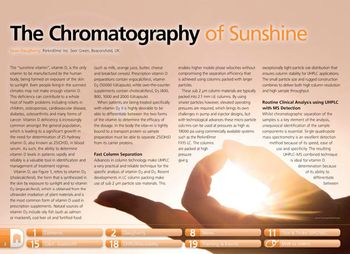
The ability to determine vitamin D levels in patients rapidly and reliably is a valuable tool in identification and management of treatment regimes.

LCGC North America
Often, what you remember most about your career is the great people you met along the way.

LCGC North America
Can pressure alone affect the appearance of a chromatogram?

LCGC North America
A high performance thin-layer chromatographic (HPTLC) method was developed for the determination of aflatoxin B1 in cereals.

LCGC North America
A high performance liquid chromatography (HPLC)–UV method was developed for the analysis of phenylurea herbicides and applied successfully to the analysis of herbicides spiked in three soft drink brands and tap water.

The Column
Sergio Guazzotti speaks to Janet Kelsey about the advantages of UHPLC over HPLC and issues to consider when selecting this technique.
The Column
Phenomenex and Shimadzu Scientific Instruments today announced a marketing collaboration for LC and GC systems. Through this collaboration, Shimadzu systems and Phenomenex columns will be offered together in the United States.

LCGC Asia Pacific
A review of the development of superficially porous particles and what the latest advances in this technology offer chromatographers in practice.
LCGC Asia Pacific
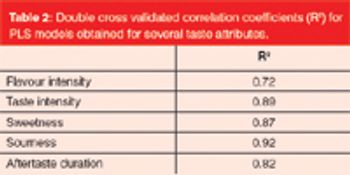
This article describes important aspects of food metabolomics using tomato paste as an example of this approach in practice.

LCGC North America
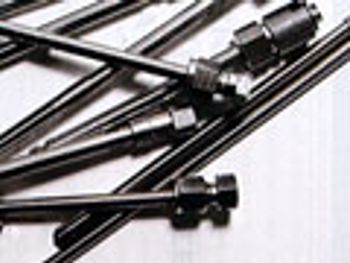
A review of the liquid chromatography columns and accessories for analytical and preparative chromatography to be unveiled at Pittcon 2011
LCGC North America
What challenges occur when using hydrophilic interaction liquid chromatography (HILIC), and what options are available for analysis?
LCGC North America
Comparisons between different C18 columns and the best way to select which one to use
LCGC North America
A few simple calculations and estimates can provide insight into a troublesome chromatogram.

LCGC North America
High recovery, reproducibility, and cost savings are among the advantages of this environmentally friendly method.

The Column
The Detection and Quantification of Multi-mycotoxins in Beer Samples using Orbitrap Technology with UHPLC.

The Column
To protect the unique trappist brews, a programme funded by the European Commission has attempted to develop methods that would identify the real thing.

LCGC Europe
It is expected that new developments in analytical chemistry will increase the value of food metabolomics in the future.
LCGC North America
Chiral chromatography is now the fastest way to access large amounts of enantiopure pharmaceutical compounds.
Global Industry Analysts (GIA) has released a global report on the biotechnology instrumentation markets that predicts that it will reach $5.8 billion by the year 2015.
The Column
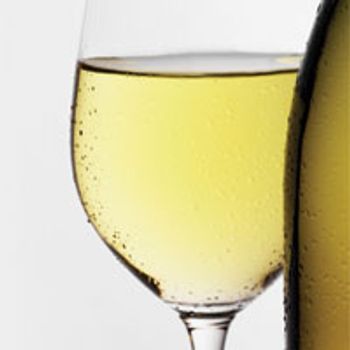
If you are suffering from headaches after a night of wine drinking there is a chance it may be more than the usual hangover. A study published in the Journal of Proteome Research has identified similarities between grape glycoproteins and known plant allergens.