


LCGC North America
A practical step-by-step guide to setting up an HPLC instrument with hints and tips to avoid common pitfalls.
LCGC North America
A practical step-by-step guide to setting up an HPLC instrument with hints and tips to avoid common pitfalls.

LCGC North America
Detectors based on ultraviolet absorbance are the most common detectors in use for liquid chromatography.
LCGC North America
There can be significant benefits by standardizing HPLC columns in a pharmaceutical development laboratory. Here is a story of how one organization attempted to encourage its staff to develop HPLC methods using fewer column brands and dimensions to reduce waste and efforts in method transfers downstream.
LCGC North America
A reliable autosampler is one key requirement for unattended operation of a liquid chromatograph.

The Column
A simple, rapid, and robust ultrahigh-performance liquid chromatography (UHPLC) method has been developed for the simultaneous determination of natural and artificial vanilla flavouring substances as well as some precursors has been developed using an automated method scouting or method optimization workflow. The most suitable mobile phase and stationary phase combination was identified in a scouting run. These conditions were used to create a two-dimensional model in computer simulation software. Temperature and gradient time were varied to establish the optimum fast and robust separation conditions. This approach resulted in a 5.5 min gradient method that allowed for fast screening of 11 compounds of interest.

LCGC North America
Put yourself in their spot: How would you tackle analyzing a bag of gummy bears that showed up on your lab bench? Here, we offer some insights from the very capable finalists at The Conference on Small Molecule Science (CoSMoS), which was held in August 2015 in San Diego, California.
The Column
Structural, bioanalytical, characterization, and quality control studies are critical for successful drug development. These studies must be as accurate, sensitive, and selective as possible, and liquid chromatography coupled to tandem mass spectrometry (LC–MS–MS) has been the technique of choice for many areas of small molecule analysis for the past 30 years. During that time, rapid improvements in analytical technologies have supported the development of more sensitive and robust methods. However, the pharma and biopharma industry continues to need more powerful instruments and more diverse methods, particularly as therapeutics have expanded to include large molecules. This work follows on from an earlier article that explored the limitations of LC–MS–MS for bioanalysis of biologics. This article considers some of the current issues for analysis of small and large molecules, and emerging trends in method development.

LCGC Europe
Appropriate analytical methods are required to evaluate the presence, metabolism, degradation, and removal of specific compounds in complex mixtures. There is an increasing demand to analyze samples with a wide range of polarities in a variety of applications, including environmental analysis, biomarker discovery, and proteomics. Multiple analyses on complementary columns are often needed to cover the separation of all compounds with a large difference in polarity. This article describes a generic method involving an ultrahigh-pressure liquid chromatography (UHPLC) system equipped with two external switching valves to connect hydrophilic interaction liquid chromatography (HILIC) and reversed-phase LC columns in series for the sequential analysis of polar and apolar compounds. The method was successfully applied to separate 32 pharmaceutical compounds with a wide range of polarities, which could be useful for analyzing pharmaceutical compounds in the environment.

As a result of advances in multilevel state-of-the-art mass spectrometry (MS) methods, combined with chromatographic and electrophoretic techniques, very precise characterization of biotherapeutics such as monoclonal antibodies (mAbs) and antibody drug conjugates (ADCs) is now possible. Until recently, however, these techniques were considered suitable only for research use. With the advent of robust and user-friendly solutions, these techniques are now amenable for routine use, as illustrated by examples of applications of the characterization of mAbs and ADCs. This is the fourth in a series of four articles exploring topics that will be addressed at the HPLC 2016 conference in San Francisco, from June 19 to 24.

Until recently, mass spectrometry (MS) was limited in the information it could supply regarding proteins larger than 40 kDa. The most recent instruments have broken through that limit, but proteins smaller than 40 kDa are still more easily detected in MS and can suppress the collection of data from larger proteins. This situation has created a demand for better separation of proteins upstream from the MS orifice. At present, though, this separation of proteins is something of a bottleneck. Methods such as reversed-phase chromatography that involve mobile phases compatible with MS are not compatible with many proteins. Alternative modes of chromatography include size-exclusion chromatography, ion-exchange chromatography, hydrophilic interaction chromatography (HILIC), and hydrophobic interaction chromatography (HIC). We decided to take another look at HIC. This is the third in a series of articles exploring topics that will be addressed at the HPLC 2016 conference in San Francisco, from June 19 to 24.
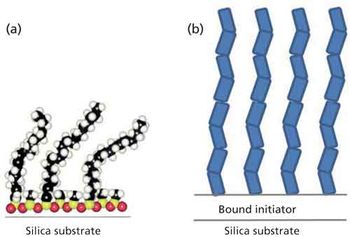
Separations of intact proteins play many roles in drug discovery and development. A variety of separation techniques are used, from immunoprecipitation for study of a single protein of interest, through various types of column chromatography for detecting a handful of proteins at once, all the way to proteomics for studying hundreds to thousands of proteins. What all of these techniques and applications have in common is that the power of protein separations is limited by the fact that proteins are large, slowly diffusing, sticky molecules. This article discusses various chromatographic approaches to addressing this challenge. This is the second in a series of articles exploring topics that will be addressed at the HPLC 2016 conference in San Francisco, from June 19 to 24.
LCGC North America
Retention times drop from one injection to the next. A systematic approach to troubleshooting can help to quickly identify the problem source.
Special Issues
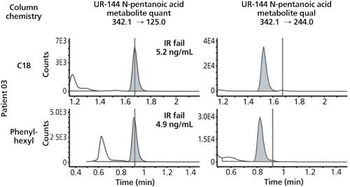
In recent years, synthetic cannabinoids (or “spice”) have experienced a boom in popularity. The negative health effects of these drugs coupled with their increasing popularity led to placement onto Schedule I by the DEA. In response, the chemists behind these illicit compounds frequently invent new compounds to circumvent the law. Thus, new classes and new examples within classes of “spice” continue to become available for illicit use. In this paper, we examine the use of two different column chemistries (C18 and phenyl-hexyl) in an effort to definitively identify synthetic cannabinoid compounds in patient samples.

Special Issues
HPLC–MS-MS is the go-to technique for high throughput analysis of small molecule therapeutics, metabolites, and biomarkers. Through technological advancements in the last decade, developing quality methods for a novel analyte in the contract research environment has become easier and faster than ever. Increasingly shorter run times, higher sensitivity, and greater separation have all become possible in a standard method. This is, in part, due to column technologies that have enabled the standardization of the method development process. Method efficiency and productivity are also improving because of emerging column technologies such as sub-2 µm particle size coupled with UHPLC–MS-MS, superficially porous particle columns, and microflow HPLC–MS-MS. Increasing efficiency and productivity in high throughput bioanalysis is becoming more important as the applications for HPLC–MS-MS expand to large molecules such as peptides, proteins, and oligonucleotides.

Special Issues
This article gives a brief overview of just some of the chiral environmental studies carried out recently that cover the differing enantiomeric activity of pesticides, their environmental transformation, and the degradation of pollutants in general. They highlight some of the recent advances in chiral stationary phases (CSPs) that have enabled higher efficiency and faster separations than previously seen in this area.
Special Issues
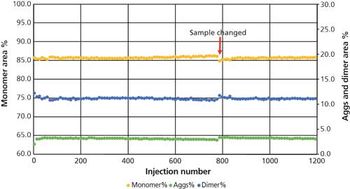
With many new biopharmaceuticals now being developed, robust analytical methods are needed to ensure that these protein-based drugs are of high purity and safe with a minimum amount of side effects. Size-exclusion chromatography is an important technique in investigating purity and is useful to identify and monitor protein aggregation, which can have economic and immunogenicity effects. This article discusses those column parameters that are most important in the selection of the optimum phase for SEC separations.
LCGC North America
This installment describes high performance liquid chromatography (HPLC) instruments and related products introduced at Pittcon 2016 held in Atlanta, Georgia, or in the year prior. We highlight innovative features and benefits of new HPLC systems, modules, software, and product extensions.
LCGC North America
Our annual review of new LC columns and accessories introduced at Pittcon and through the previous year.

In proteomics studies, proteins are digested into hundreds of thousands of peptides, thus creating very large and complicated mixtures. Simultaneous electrospray ionization of these complex mixtures, however, results in suppression of ion formation. Therefore, it is essential to have effective chromatographic methods to separate the peptides before analysis with mass spectrometry, to relieve ion suppression and to allow the mass spectrometer sufficient time to collect tandem mass spectra of peptide ions. The challenges involved in developing such separations are great, however. This is the first of a series of articles exploring topics that will be addressed at the HPLC 2016 conference in San Francisco, from June 19 to 24.

LCGC North America
How suitable is the column plate number for system suitability testing?
LCGC North America
The silica-based packing in reversed-phase columns is not inert. Here we consider what happens when the mobile phase pH is too high or too low.


LCGC North America
Pavel Jandera discusses building his own LC instrument, the birth of modern HPLC, the importance of exploring (and understanding) earlier research papers, and current trends in contemporary chromatography. He also offers inspiring advice for young chromatographers.

LCGC North America
Glycosylation of monoclonal antibody (mAb) therapeutics is widely recognized by the regulators and the industry as a critical quality attribute (CQA). Hence, it is necessary that glycosylation is measured and adequately controlled during production. This installment reviews the various process parameters and raw material attributes that affect glycosylation, as well as the different analytical tools that are used for characterization, with greater emphasis on the chromatographic methods of analysis. Key recent advancements that have occurred in the past five years are also discussed briefly. While significant progress has been made in the monitoring of glycosylation, its real time control has yet to be demonstrated.

LCGC North America
An unusual source of contamination was found in the reversed-phase LC analysis of a 0.4% (w/w) drug product during the development stability studies at levels much greater than the 4 ppm limit of quantitation. System-related sources (mobile phase, injector carryover and contamination), formulation components (drug substance, excipients), and the sample-handling procedure were studied by a systematic approach. The evaluation of the sample-handling procedure identified extractables from the sample vial (different from that specified in the analytical method) and the rubber-lined vial cap, and incidental transfer of residue from commonly used nitrile gloves as the sources of unintended contamination in sample analysis.