


LCGC North America
This month's "LC Troubleshooting" looks at some different calibration models, how to decide if a calibration curve goes through zero, and some problems that can occur if the wrong choices are made.
LCGC North America
This month's "LC Troubleshooting" looks at some different calibration models, how to decide if a calibration curve goes through zero, and some problems that can occur if the wrong choices are made.

Agilent Technologies Inc. (Palo Alto, California) and Healex Systems Ltd.(Wilmington, Delaware) announced that Agilent now fully supports Healex's ChemLaunch remote instrument access and control module for Agilent's ChemStation chromatography software.
The Pittsburgh Conference announced a recent co-operative venture with the Professionals' Net Work in Advanced Instrumentation Society (PAI-NET).
In a study, presented at the Society for Maternal-Fetal Medicine's (SMFM) annual meeting, researchers unveiled findings that show distinct differences in protein detection between IVF and spontaneous pregnancies in the first half of gestation.
Waters Corporation (Milford, Massachusetts) has acquired Thar Instruments (Pittsburgh, Pennsylvania), a supercritical fluid chromatography (SFC) manufacturer.
Researchers from Queen's University (Kingston, Ontario, Canada) developed porous polymer capillary columns with varied flurous content for chromatography of tagged analytes.
LCGC North America
This month's "LC Troubleshooting" discussion will center on the recommendations of the CDER document, especially in terms of what it means from a practical method performance standpoint.

LCGC North America
Guest columnist Dick Henry traces the history of HPLC back more than 40 years, starting with his days at DuPont.

LCGC Europe
Using a fixed length-variant of the kinetic plot method, it is illustrated how an analysis that is performed near the optimal flow-rate of a given commercial column can, in many cases, be performed between 50–200% faster by switching to a longer column and operating it at a higher pressure - at least, if the available instrument pressure admits so. The present article aims to show that short columns are not always the best choice to get the fastest separation.
LCGC Europe eNews
Dionex has entered into an agreement with Caliper Life Sciences to purchase Caliper's AutoTrace line of products...
Italian researchers in Rome (Universita Cattolica and Consiglio Nazionale delle Ricerche) and Cagliari (Universita di Cagliari) have used reversed-phase high performance liquid chromatography with electrospray ionization mass spectrometry to analyze naturally occurring salivary peptides from subjects with autism and compare the profiles with those obtained from age-matched control subjects.
LCGC North America
At the beginning of the year, it is good to look back in time- are there things that we can learn from the past? After a series of troubleshooting and method development seminars in Istanbul, Turkey, and Amman, Jordan, John Dolan looks back.

LCGC North America
This second part of the series describes the data loss inherent in most early method development experiments due to coelution, peak exchange, and the general difficulty of accurately identifying peaks across the experiment trial chromatograms.

LCGC North America
Guest authors show how mixed modes can be used successfully in the optimization of protein purification, and discuss how various experimental parameters can be used to regulate the binding of proteins to mixed-mode sorbents.
Dr. Philip J. Wyatt, the CEO and founder of Wyatt Technology Corporation (Santa Barbara, California) has been awarded the 2009 Prize for Industrial Application of Physics by the American Physical Society (APS).
Phenomenex Inc., (Torrance, California), will present a workshop, "A Critical Analysis of Fast LC Technologies," at the 2009 Pittsburgh Conference in Chicago.
Pittcon announced the recipients of 11 prestigious awards recognizing the significant contributions of leaders in analytical chemistry and applied spectroscopy.
The Application Notebook
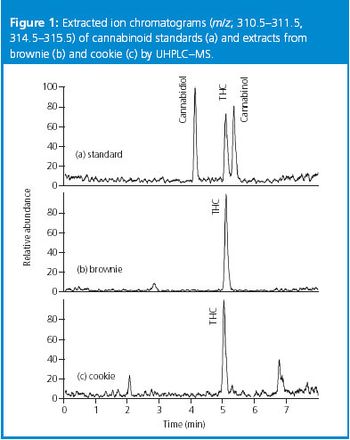
Goal: Positively identify trace amounts of cannabinoids in a complex food matrix quickly, with minimal sample preparation and no chemical derivatization.

The Application Notebook
A highly sensitive analytical method for the analysis of tamsulosin in human plasma has been developed for use in bioanalytical studies. The solid-phase extraction (SPE) and UPLC–MS–MS methodologies are described, as well as performance against validation parameters.
The Application Notebook
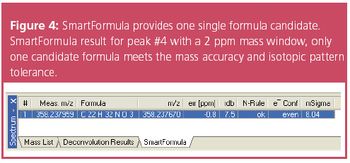
An ultrafast gradient LC separation method was developed to separate a 5-component drug mixture in 30 seconds, with peak widths of 1 second. maXis mass accuracy at sub-ppm levels and true isotopic pattern of the spectra from the peaks lead to a confident elemental formula assignment for each drug compound with the SmartFormula algorithm.
LCGC Europe
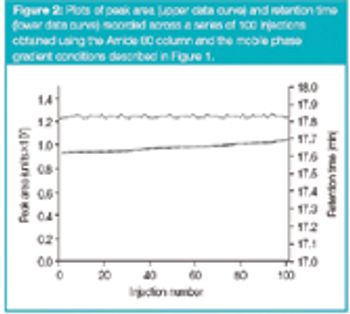
Cytosine (chemical name 4-amino-2-hydroxypyrimidine) is a pyrimidine derivative with a hetereocyclic aromatic ring and two substituents (amine and keto groups) attached and is a polar compound of significant biological and pharmaceutical interest. In response to the intended use of bulk cytosine as a raw material in pharmaceutical manufacturing, a method for the determination of the purity of cytosine was developed.
Scientist Cornelia Kasper and colleagues from the Gottfried Wilhelm Leibniz University of Hanover (Hanover, Germany) thought that a liquid chromatography method with short monolithic columns would be a quicker alternative to measure proteins in culture while also having had the potential to separate different proteins.
Thermo Fisher Scientific Inc., (San Jose, CA) has launched a program focused on assisting government and commercial food testing laboratories in the development and implementation of methods for the analysis of melamine in food products imported from China.
LCGC North America
This month's "LC Troubleshooting" installment will take a look at the design of these durable pumps and also examine some of the potential weaknesses and how to overcome them.
LCGC North America
This installation of "Validation Viewpoint" describes how statistically rigorous quality-by-design (QbD) principles can be put into practice to accelerate each phase of liquid chromatography (LC) instrument method development.