

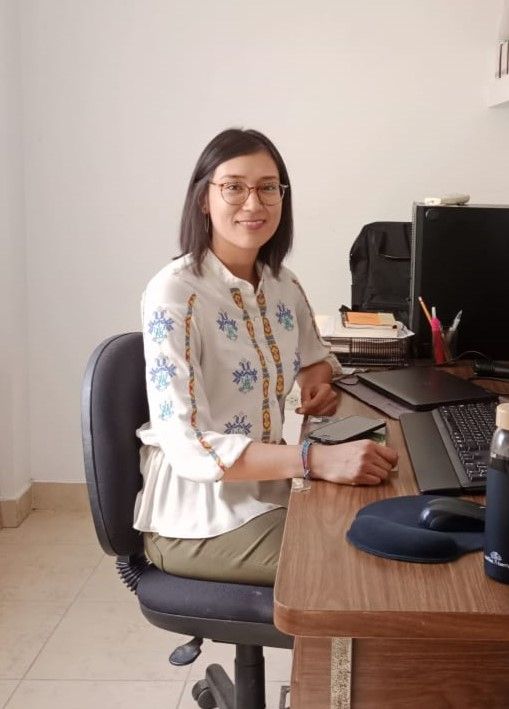

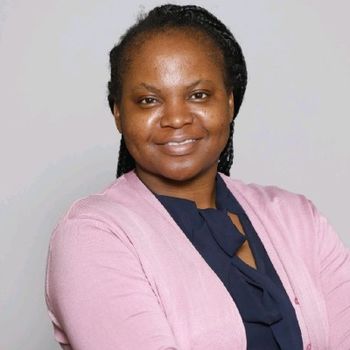
LCGC International sat down with Kemi Osho of the University of Nevada, Reno (UNR) to discuss her career and work with the Females in Mass Spectrometry (FeMS) group.
LCGC International sat down with Kemi Osho of the University of Nevada, Reno (UNR) to discuss her career and work with the Females in Mass Spectrometry (FeMS) group.

On July 11th, the American Chemical Society will hold a virtual networking session about career pathways for aspiring scientists.
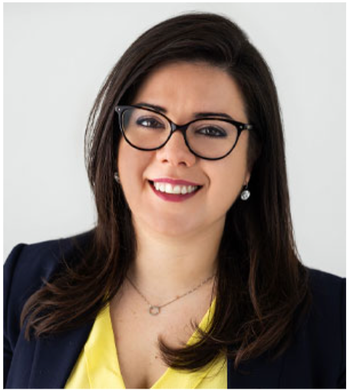
In this edition of The LCGC Blog, Emanuela Gionfriddo discusses the two world-class scientists and trailblazer women in separation chemistry and the awards they received at Pittcon 2024.

Here are the top five articles that the editors of LCGC International published this week.
Here are the top five articles that the editors of LCGC International published this week.

Joycelyn Tan of the University of Cambridge recently won the Darlene Solomon Award for her notable research into mass spectrometry.

Metrohm USA announced Katelyn Michael as the 2024 winner of its Young Chemist Award for her work on the degradation of perfluorooctanesulfonic acid (PFOS).

What is the state of separation science in UK and what steps can be taken to promote the importance of the subject?

In this LCGC Blog, André Striegel discusses common rumors about what and what not to do at academic conferences, to educate first-time attendees on what to expect.

This past spring, we convened a panel of six phenomenal separation scientists, where they gave their best advice for separation scientists, newcomers and veterans alike.

Better sample preparation and miniaturized separations are enhancing these analyses.

New sample preparation workflows for intact proteins in biological matrices are needed. We hope that others will join in this important field of research.

Two-dimensional LC, with advanced modulation techniques, can advance the analysis of advanced polymeric materials, assisting in characterizing copolymer composition heterogeneity and identifying ingredients in complex products.

Examples from food science illustrate the usefulness of chemometrics techniques like pattern recognition, regression, and classification.

HPLC is emerging as the preferred analytical method for potency testing of cannabinoids, but fundamental work is needed to solve critical issues and contribute to advancing knowledge.
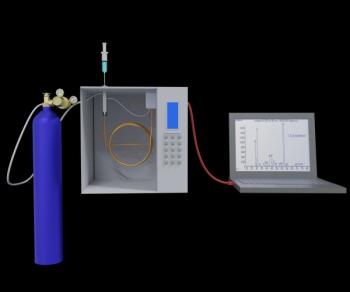
Compact instrumentation offers important advantages for many workflows, as illustrated by these examples.