

Liquid chromatography-mass spectrometry (LC–MS) plasma nicotine data trains machine learning (ML) models for vaping exposure.
Liquid chromatography-mass spectrometry (LC–MS) plasma nicotine data trains machine learning (ML) models for vaping exposure.

Nikoline Juul Nielsen from the University of Copenhagen, Denmark explores deprotomer formation for accurate CCS prediction and metabolite identification and the potential of implementing these workflows for routine use.
LCGC International spoke with Nikoline Juul Nielsen from the University of Copenhagen, Denmark on the benefits of RPLC×HILIC–cIMS for data-independent profiling of phenolic constituents in plant extracts. In this episode she explores practical aspects of cIMS and the potential for routine analysis.

Wallman explains how spectral library accuracy, retention time prediction, and instrument-specific variation make deep learning essential yet difficult in data-independent acquisition proteomics.

Gas chromatography–mass spectrometry (GC–MS) was used in the profiling of links between gut bacteria and metabolites to myasthenia gravis.
LCGC International spoke with Nikoline Juul Nielsen from the University of Copenhagen, Denmark about the benefits of comprehensive two-dimensional liquid chromatography (RPLC×HILIC)—cyclic ion mobility-time-of-flight mass spectrometry (cIMS) for analyzing plant extracts.

Practical GC in gas chromatography: learn how PEG column bleed affects MS sensitivity, and when polar analytes still quantify reliably.

AI promises to solve cost, labor, and regulatory challenges, but a shortage of deployment expertise means it can create more problems than it solves.

High performance liquid chromatography (HPLC) and inductively coupled plasma mass spectrometry (ICP-MS) reveal how diet and sunlight shape grey parrot nutrient levels.

Discover LC–MS chromatography strategies that tackle PFAS at ppt levels in soil, serum and food, boosting sensitivity, selectivity and confidence.
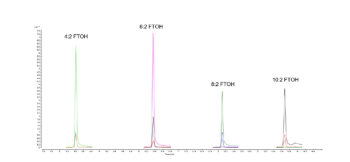
Learn how TD–GC–MS tracks volatile PFAS in air and emissions, meeting OTM-50 and ASTM D8591 limits for safer compliance.
Wallman details PeptDeepKontext, a model built to predict peptide properties across diverse instruments and PTMs by embracing rather than eliminating inter-laboratory variability.

High performance liquid chromatography (HPLC) reveals sugar, acid, and phenolic differences in varieties of grapes.

Restek's three certified reference material (CRM) mixes deliver all native and labeled furans needed for AOAC/EU-compliant food safety analysis.
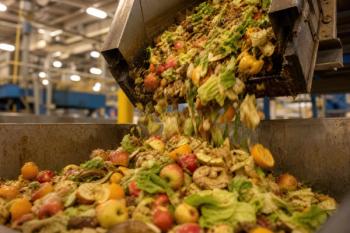
Gas chromatography-mass spectrometry (GC-MS) and gas-chromatography with flame ionization detection (GC-FID) identify volatile organic compound (VOC) emissions from yard and food waste compost.

High-performance liquid chromatography (HPLC) reveals how burn pit smoke disrupts blood vessels, lungs, and the brain.

Gas chromatography–mass spectrometry (GC–MS) identifies 27 sugar compounds across sweet corn kernel development.

Liquid chromatography-tandem mass spectrometry (LC–MS/MS) testing reveals preservative limit breaches in Danish shampoos and soaps.

Researchers have developed an advanced gas chromatography-mass spectrometry (GC–MS)-based chromatographic method for faster and more sensitive detection of volatile and semi-volatile PFAS in soil, improving environmental monitoring of “forever chemicals” and related contaminants. LCGC International spoke to Maria Chiara Corviseri and Flavio A. Franchina of the University of Ferrara, two of the authors of a paper presenting their method.
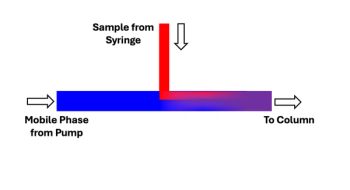
This "LC Troubleshooting" column discusses how inline mixing and feed injection mitigate solvent mismatch and peak distortion in liquid chromatography.

Exact mass, isotopic distribution, and MS/MS library matching are used together to differentiate PFAS hits from sulfur-rich food compounds that share a similar mass defect range.

Ion-exchange chromatography (IEC) revealed tree species-driven differences in soil carbon and microbial life.

This week, Chromatography Online compiled peer-reviewed research, expert interviews, and news articles spanning chromatography and spectrometry in food analysis.

Liquid chromatography-tandem mass spectrometry (LC-MS/MS) revealed vitamin D deficiency strongly linked to childhood obesity.

Antonio Ferracane addresses regulator concerns about cleanup-free PAH methods, noting cleanup isn't mandatory if matrix validation proves reliable.
The approach remains non-targeted by prioritizing PFAS-like ions in the first DDA pass; the tunable mass tolerance window can be adjusted to capture structurally unusual PFAS subclasses.
Christine Fisher describes her method using mass defect filtering at the data acquisition stage to improve non-targeted PFAS detection in complex food matrices.

Headspace-gas chromatography-ion mobility spectrometry (HS-GC-IMS) combined with machine learning accurately detected fruit juice adulteration.

Blood markers reliably shifted toward healthy diet patterns after counseling.
Antonio Ferracane explains how each sample prep step adds error and can strip target PAHs, so skipping cleanup can improve recovery, accuracy, and precision.