

At Pittcon 2024, He Nan of AbbVie gave a lecture on how to monitor N-nitrosamines via gas chromatography–electron capture detection.
At Pittcon 2024, He Nan of AbbVie gave a lecture on how to monitor N-nitrosamines via gas chromatography–electron capture detection.

A recent study from the United Kingdom Centre for Ecology & Hydrology shows how gas chromatography–mass spectrometry can be used to detect 6PPD, a common additive used in the production of car tires, in water environments to combat environmental pollution.

The company is also incorporating AILANI, an advanced semantic search tool, into its LIMS and analytics tools.
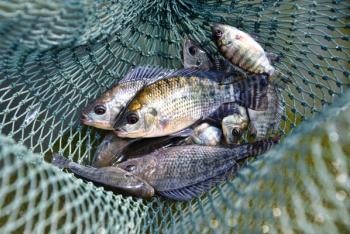
A research collaboration between researchers from Denmark and Brazil used gas chromatography–mass spectrometry (GC–MS) to determine levels of taste and odor compounds in Nile tilapia.

Knauer and his wife launched the namesake company in October 1962.

You may have noticed over the past year the LCGC International editorial team has been writing more news.

The laboratory offers a collaborative space for students, faculty, and industry partners to explore complex chemical samples.

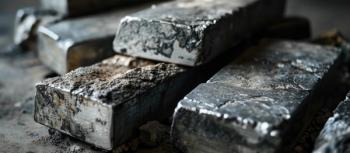
A recent study out of Jeonbuk National University evaluated data integration methods for the isotopic analysis of lead at ultratrace levels.

Kaveh Kahen returns to Phenomenex parent Danaher Life Sciences after having begun his career at SCIEX.

Chromatographic techniques such as supercritical fluid chromatography and high-performance liquid chromatography was used to conduct chiral separation for metconazole, which is used as a fungicide to treat wheat diseases.

A recent study examined using liquid chromatography methods for determining analytes in antioxidative molecules.

Bill Arrowsmith takes over for Bryan Wolcott, who retired from the position at the end of last year.

A study from Spain delves into the Folin–Ciocalteu assay, and why the method is effective at quantifying polyphenols in various agricultural food products.

Distinguishing between viable and non-viable seeds requires an advanced chromatographic technique. A study conducted by researchers from China Agricultural University highlights how HS-GC-IMS can be used to help solve this frequent problem in the agricultural industry.

We preview the "Advancing Agriculture for Future Generations" content series, which is set to launch on February 1st.

We preview the "Advancing Agriculture for Future Generations" content series, which is set to launch on February 1st.

A recent study from the Shangdong Academy of Chinese Medicine examined chicory using a novel UHPLC–HRMS technique and rats as the test subject.

The ACHEMA 2024 trade show will take place this year in Frankfurt, Germany, from June 10–14th, 2024.
Herbert Knauer founded his namesake laboratory equipment company with his wife Roswitha in Berlin in 1962.

The editors of LCGC International are seeking high-quality contributed blogs, technical articles, and peer-reviewed research from analytical scientists around the world.

In our second edition of “Inside the Laboratory,” Zhibo Yang, PhD, an associate professor of chemistry at the University of Oklahoma, discusses his group’s most recent work in single-cell mass spectrometry (MS) and MS tissue imaging.

The UK-based Chromatographic Society (ChromSoc) has announced its two 2024 recipients of its most prestigious honor, the Martin Medal, in addition to three professors who have been chosen for the organization’s Silver Jubilee Medal.

A recent study explored using gas chromatography (GC) to assess relative response factors in quality control measures for alcoholic beverages.

Stawick has been a member of AOAC for more than 20 years and has held multiple senior management positions in biology, food science, and business administration.

In addition, the company gained nearly 400 square meters of office space thanks to the renovation of a building adjacent to its Berlin headquarters.
Scientists are publishing their work more frequently. We want to cover the most relevant stories for you. Here’s how we’re doing it.

The research conducted by Jing Dong and team unveils a pioneering approach that not only unravels the complexities of Valeriana jatamansi, but also showcases the potential of advanced analytical techniques in comprehensively studying natural compounds.

A recent lipidomic study explored how 3-methyl-1-p-tolytriazene (MTT) can be an alternative solution when conducting quantitative phospholipid (PL) methylation.

Metabolite characterization can be complex. In this study, researchers at Yeungnam University used feature-based molecular networking (FBMN) to further understand glutathione (GSH) adducts.