
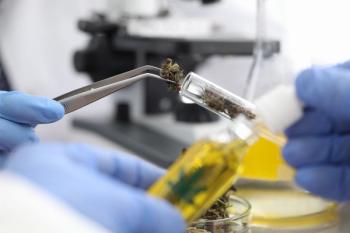
Chromatographic and spectroscopic techniques alike were reviewed for their current effectiveness and future potential in this lecture session at Analytica 2024.
Chromatographic and spectroscopic techniques alike were reviewed for their current effectiveness and future potential in this lecture session at Analytica 2024.

At Analytica 2024, four speakers tackled the issue of water quality and how the detection of what is contained therein continues to evolve.

Researchers from the Massachusetts Institute of Technology (MIT) used three-dimensional printing to develop new electrospray emitters to improve medical diagnostics.
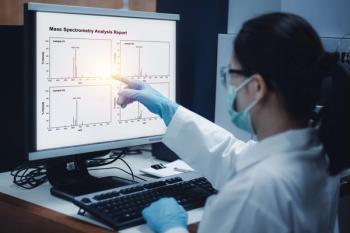
Scientists at the Analytica conference in Munich, Germany, spoke about clinical mass spectrometry and its use in metabolomics and lipidomics.

The discovery of a novel lipid not yet seen in plants was found in four herbal teas using multivariate principal component analysis.
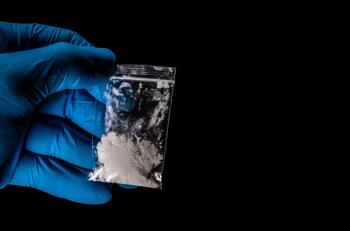
A recent study in the Journal of Forensic Science reveals a significant improvement in the identification of fentanyl-related substances by using GC–infrared (GC–IR) libraries to combat the opioid crisis.

In this interview, Kevin Schug discusses his work using untargeted analysis and differentiation of psilocybin mushroom strains.

A recent study out of Auburn University sought to further understand biological mechanisms at the molecular level using ion mobility spectrometry (IMS).

A recent review article highlights the current analytical techniques being used to detect illicit drug use in sports.

In this edition of “Inside the Laboratory,” Emanuela Gionfriddo, PhD, an associate professor of chemistry at the University at Buffalo, discusses her group’s current research endeavors, including using solid-phase microextraction (SPME) coupled to liquid chromatography (LC) and gas chromatography (GC) to further understand the chemical relationship between environmental exposure and disease and elucidate micropollutants fate in the environment and biological systems.

This upcoming, one-day online event will focus on the latest chromatographic research in environmental analysis and sustainability.

A recent article examines how the coupling of liquid or gas chromatography to mass spectrometry has advanced the development dielectric barrier discharge ion sources.

This study explores the feasibility of using human skin volatile organic compounds (VOCs) analyzed through comprehensive gas chromatography–time of flight–mass spectrometry (GCxGC-TOF-MS) and chemometric techniques, to potentially serve as biomarkers for tuberculosis diagnosis.
In this edition of “Inside the Laboratory,” Kevin Schug, PhD, a full professor of chemistry at the University of Texas at Arlington, discusses his laboratory’s group work in environmental monitoring around water and soil quality near oil and gas extraction, using techniques such as liquid chromatography (LC), gas chromatography (GC), supercritical fluid chromatography (SFC), and coupling these techniques with mass spectrometry (MS).

A recent study examined using high performance liquid chromatography coupled to mass spectrometry (HPLC–MS/MS) to optimize this key class of drugs that are used for the treatment of the common cold and flu.
In this review article, we showcase some of LCGC International’s recent coverage of mass spectrometry.

In a recent review article, researchers from Concordia University examined recent advancements in LC–MS workflows for tissue lipidomics.

A recent study used two-dimensional liquid chromatography (2D-LC) to study the therapeutic characteristics of Arnebiae Radix (“Zicao”), a traditional herbal medicine.

A multidisciplinary study was conducted to increase our understanding of thiosuccinimide linkers in bioconjugates.
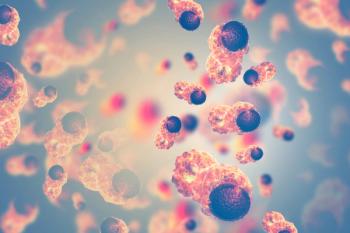
In a recent study, researchers from the Chinese Academy of Medical Sciences and Peking Union Medical College used liquid chromatography–mass spectrometry (LC–MS) to gain further insight into tumor metabolism.

The trade fair, which is held every two years in Europe, will focus on laboratory innovation and sustainability.

A new study from the University of Tübingen presents a new Python-based open-source software tool for PFAS detection.

Here are the top five articles that the editors of LCGC International published this week.

A recent study looks at wastewater generated by power plants, using large-volume injection ion chromatography to accurately assess corrosive anions and cations in wastewater.

A recent study published in Analytical and Bioanalytical Chemistry examined a new detection method for natural bioactive compounds.

A recent study explores how chromatographic methods are being used to detect new psychoactive substances (NPS).

Analytical chemists often aren’t recognized for their contributions to the scientific community, authors of a recent article argue.

At Pittcon 2024, LCGC International editor Patrick Lavery sat down with Tom Linz of Wayne State University to talk about the work his laboratory group is conducting.
At Pittcon 2024, LCGC International editor Patrick Lavery sat down with Michael Marty of the University of Arizona to talk about the ongoing work in his laboratory.

Nominate a colleague for the 2025 LCGC Emerging Leader in Chromatography Award!