

Nominate a colleague for the 2025 LCGC Lifetime Achievement in Chromatography Award!
Nominate a colleague for the 2025 LCGC Lifetime Achievement in Chromatography Award!
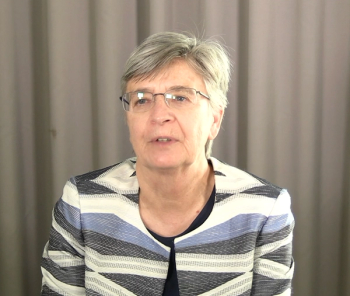
At Pittcon 2024, LCGC International editor Patrick Lavery sat down with Susan Olesik of The Ohio State University to talk about her group’s current work.

LCGC International sat down with John Luck, CCO, and Dirk Bontridder, CEO, of the instrument manufacturer PerkinElmer to discuss trends in the analytical and life sciences industry.

At Pittcon 2024, LCGC International editor Patrick Lavery sat down with John R. Yates of the Scripps Research Institute to talk about his work in mass spectrometry and proteomics.

Kaveh Kahen, PhD, has been appointed president of Phenomenex, the Torrance, California-based separation science technology company.

Dusty TLP Ltd., the owner of Peak Scientific, has acquired Wirac Automation Ltd, a company that trades as Noblegen and specialises in the design, development, and manufacture of specialist gas and cryogenic solutions.
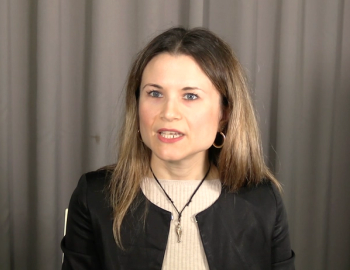
At Pittcon 2024, LCGC International editor Patrick Lavery sat down with Martina Catani of the University of Ferrara to talk about the work her laboratory group is conducting.

A recent study from the Cantonal Laboratory Zürich examined using micro solid-phase extraction for pesticide analysis.

A recent review article examines how solid-phase microextraction–comprehensive multidimensional gas chromatography (SPME-GC×GC) has contributed to food analysis over the past 20+ years.

This year’s conference highlighted how analytical scientists are exchanging research to tackle some of the world’s most critical problems.
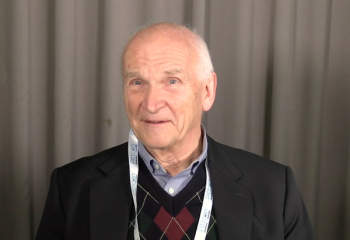
At Pittcon 2024, LCGC International editor Patrick Lavery sat down with Wolfgang Lindner of the University of Vienna to talk about his career in liquid chromatography (LC).

A recent study conducted protein analysis using matrix-assisted laser desorption/ionization-mass spectrometry (MALDI-MS) and a platform that utilizes copper oxide particles.

In this column, a fast, simplified procedure for determining simple sugars in fruit juices is described.

At Pittcon 2024, LCGC International editor Patrick Lavery sat down with Omowunmi Sadik of the New Jersey Institute of Technology (NJIT) to talk about the importance of sustainability in future scientific research.

This year’s conference highlighted how analytical scientists are exchanging research to tackle some of the world’s most critical problems.

A new study from Guangxi Normal University examines biogenic amine (BA) detection in food samples by using surface-assisted laser desorption/ionization–time-of-flight mass spectrometry (SALDI–TOF-MS) in conjunction with a molecularly imprinted polymer (MIP).

At the conference in San Diego, experts presented on a variety of trends in mass spectrometry for pharmaceuticals.

What analytical chemists in both industry and academia can do to make their experiments greener was a common thread throughout this milestone run of the annual conference.

The founder of Wyatt Technology was presented with the 2024 Heritage Award at Pittcon in San Diego, California.

This year's awards were presented to Martina Catani and Wolfgang Lindner.

A recent study examined how capillary electrophoresis (CE) could identify new 4-aryl-pyrido[1,2-c]pyrimidine derivatives in human serum.

Dusty TLP Ltd., the owner of PEAK Scientific, recently announced the acquisition of Wirac Automation Ltd., positioning itself as an emerging leader in gas generation technology.

These lectures focused on method development and applications of mass spectrometry for bioanalytical, natural product, and agricultural studies.

Patrick Quinlan, CEO of the lab information management systems provider, spoke about the new company’s strategy during a press conference at Pittcon in San Diego, California.

Professor Omowunmi Sadik’s address officially opening the conference ran the gamut from pain to PFAS.

A session focusing on important developments in high-throughput analysis in the pharmaceutical sector using LC–MS kicked off Monday morning at Pittcon 2024.

Agilent announces the appointment of Padraig McDonnell as CEO-elect and chief operating officer (COO), succeeding the incumbent President and CEO, Mike McMullen.

At Pittcon 2024, Pittsburgh Analytical Chemistry Award winner John Yates headlined a symposium focusing on perfecting proteome research down to the single-cell level.

Alyssa Sanchez of Florida International University presented her research on profiling the decomposition of heroin from South America, Mexico, Southwest and Southeast Asia.

The award recognizes outstanding contributions to the field of separation science by a young chemist or chemical engineer from academia, industry, or national laboratories.