

LCGC North America
Analysis by mass spectrometry (MS) of integral membrane proteins and those associated with membrane is an important aspect of proteomics.
LCGC North America
Analysis by mass spectrometry (MS) of integral membrane proteins and those associated with membrane is an important aspect of proteomics.

LCGC North America
Peptide mapping is one of the preferred techniques for the comprehensive characterization of biopharmaceutical products and is often the analytical method of choice for studying a protein's primary structure.
LCGC Europe
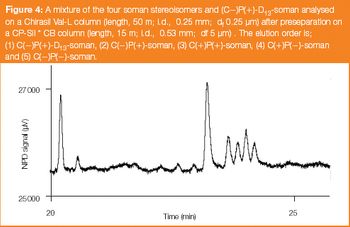
The complexity of the systems that are used vary from standard GC configurations to assess the effectiveness of protective clothing to trace analysis of biomedical samples with complex GC configuration.

LCGC North America
This installment of "Sample Prep Perspectives" discusses techniques for the reduction/depletion of high-abundance proteins.
LCGC Europe
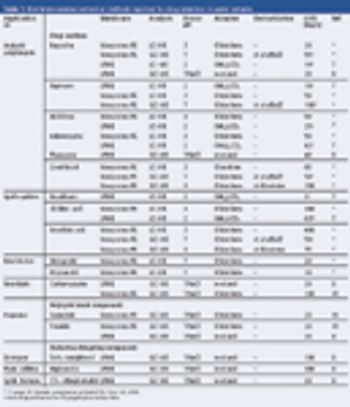
The concept of membrane-controlled processes is widespread in nature. Nearly all biological mechanisms concerning mass transport and exchange are regulated by membrane barriers and a variety of technical and biotechnological applications have been devised based on this mechanism. Membrane applications in analytical chemistry are geared towards the enrichment of target substances from an aqueous solution or the separation of compounds from a complex matrix. This article describes membrane-assisted extraction processes to separate traces of polar pharmaceutical substances the so called emerging micropollutants from aqueous samples. Basic prospects and examples of membrane-supported extractions are presented.

LCGC North America
Emerging as a complementary analytical tool to LC-MS, LC-ICP-MS brings added value to the determination of inorganic element containing molecules of biological importance.

Special Issues
Enabling targeted quantitative proteomics applications and hypothesis-driven inquiries will help researchers to understand how proteins function in living systems. The discovery and validation of small molecule and protein-based biomarkers, and the eventual translation of these discoveries from the research lab to the clinic, involves robust mass spectrometry (MS) systems and software that make it easier for technicians to perform routine sample analyses on liquid chromatography (LC)–MS-MS systems, which continue to be used in an increasing number of both protein and small molecule analysis applications.

Special Issues
This article demonstrates the improved robustness of a liquid chromatography–tandem mass spectrometry assay achieved by utilizing the combined selectivity of high-field asymmetric waveform ion mobility spectrometry and highly selective reaction monitoring.

Special Issues
Serum protein profiling using mass spectrometry (MS) is one of the most promising approaches for biomarker identification.
Special Issues
Mass spectrometry has long been a preferred tool for protein identification and biomarker discovery, but preparation of biological samples remains a challenge. Hindrances include the wide range of protein concentrations, sample complexity, and loss or alteration of important proteins due to sample handling. This article describes recent developments in sample fractionation technologies that are overcoming these challenges in interesting ways and are enabling in-depth proteomic studies that were not possible in the past.

LCGC North America

LCGC North America
September 2006. In analytical chemistry, the continual quest for enhanced sensitivity and specificity - in gas chromatography (GC), this can be equated to separation power - remain the common goal in the development of new analytical methodologies. Today, GC is still the most widely used method for the analysis of volatile and semivolatile organic compounds. When coupled with the right choice of detector for the specific application, a wide linearity range and low limit of detection (LOD) can be met. For GC analyses, many approaches can be used to achieve greater sensitivity and lower LOD. They can be classified broadly into four categories: improved sampling (sample preparation) strategies; sample introduction methods; improved chromatographic performance; and alternative (selective–sensitive) detection transducers. This article provides an up-to-date review of existing and emerging chromatographic innovations, based upon these four strategies, that will improve sensitivity and detection limits of trace..

LCGC Europe
Applied Biosystems has joined the Genographic Project as a supporting sponsor for the generation of one of the world's largest databases of information, which will reveal the sources of humankind's diversity. The company has signed a multi-year agreement to provide laboratory research equipment and services to each of the ten participating global research centres. The terms of the agreement were not disclosed.

The Column
Midazolam is a central nervous system depressant that is commonly used as a sedative before surgical or other medical procedures.

LCGC Europe
This article looks at current practices in bioanalytical chemistry by examining and critically assessing the various parameters that can be altered to achieve high-speed results with high resolution in LC–MS applications. The decision to opt for gradient or isocratic elution is also discussed.
LCGC Europe
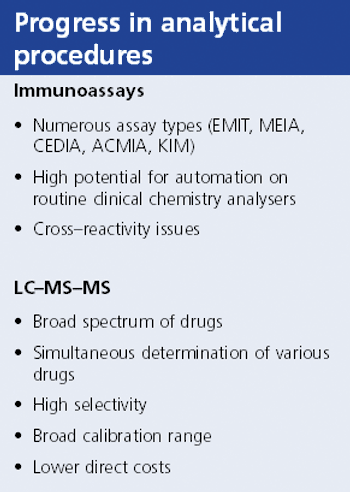
An increasingly available and attractive clinical analysis method, LC?MS nevertheless fails to directly benefit from the knowledge and experience of clinicians steeped in the immunoassay tradition.

LCGC North America
This installment of "Milestones in Chromatography" discusses the events leading to the development of the amino acid analyzer near the end of the 1950s at the Rockefeller Institute of Medical Research by Moore, Stein, and Spackman.

LCGC Europe
Biologists entering liquid chromatography?mass spectrometry (LC?MS) from a background of general LC rarely use their mass spectrometer to its full potential. Isotope peaks offer huge possibilities both in semi-quantitative interpretation of structure and in quantitative labelling studies. This article examines charge state, "easy" isotopes, such as chlorine, the slightly harder problem of sulphur compounds, and finally looks at a method for improved measurement of heavy labels in a metabolic study.

LCGC Europe
The two most popular mechanical techniques for sample preparation for large-scale protein production are concussion and liquid shear.

LCGC North America
Protein unfolding and aggregation can be serious considerations when designing laboratory and preparative chromatographic purification steps. This problem has been studied most thoroughly within the contexts of reversed-phase chromatography and hydrophobic interaction chromatography. However, there are currently no robust methods for resin selection capable of predicting adsorbed-phase protein stability as a function of amino acid sequence, secondary or tertiary structure, or resin characteristics.

LCGC North America
The authors discuss a solid-phase extraction (SPE) clean-up procedure for drugs present in biofluids.
LCGC North America
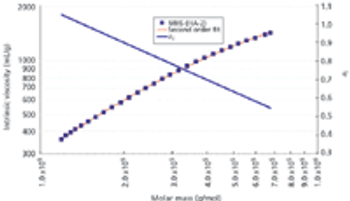
Hyaluronic acid (HA) is a naturally occurring, unbranched polysaccharide that consists of alternately repeating D-glucuronic acid and N-acetylglucosamine units. This biopolymer is present throughout all mammalian systems but occurs primarily in synovial (joint) fluid, vitreous humor, and various loose connective tissues (such as rooster comb) (1). HA is of enormous commercial interest for ophthalmic, medical, pharmacological, and cosmetic applications.
LCGC North America
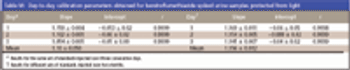
A simple HPLC procedure is described for the determination of bendroflumethiazide (BMFT) in pharmaceutical formulations and urine samples. No interferences from common additives or other drugs frequently administered with BMFT or from endogenous compounds in urine samples were found. The lack of an organic solvent in the mobile phase reduces the risk of environmental contamination and human toxicity.

LCGC North America
A new detection method based upon aerosol charging was examined for its applicability and performance with high performance liquid chromatography (HPLC). Our results demonstrate universal detection of nonvolatile analytes with response magnitude that is independent of analyte chemical properties, four orders of magnitude dynamic range, low nanogram, lower limits of detection, and < 2% relative standard deviation response variability. Broad applicability was demonstrated for a range of methods including those using gradient elution, reversed phase, hydrophilic interaction, and ion chromatography; normal and narrow bore column formats; and in combination with other detectors (for example, UV detectors, evaporative light-scattering detectors, and mass spectrometers).
LCGC North America
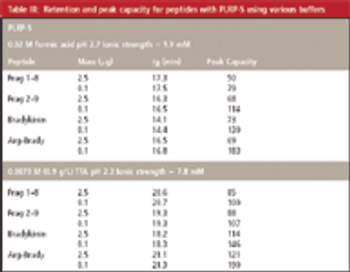
Formic acid often is used for the analysis of peptides in proteomic studies by HPLC-MS, due to its volatility and reduced signal suppression. However, poorer chromatographic performance can be obtained in comparison with trifluoroacetic acid or nonvolatile phosphate buffers due to increased overloading, which can occur even for extremely small sample masses. Comparison of a highly inert silica-ODS and a wholly polymeric phase indicated that overloading effects on both are very similar and caused by the mutual repulsion of solute ions on the hydrophobic column surface.