





Dipeptide profiles have an important role in detecting disease, and a recent study has made it much more accessible to study them.

Dipeptide profiles have an important role in detecting disease, and a recent study has made it much more accessible to study them.

A new buffer management system that automates most processes will further how biopharmaceuticals are produced, helping save more lives in the process.

Solid-phase extraction holds an important role in identifying and improving the effectiveness of antibiotics.

By improving fluorescent labeling, scientists can find new ways to help treat and prevent influenza.

The "Deep Proteome" project is helping to advance our understanding of the vast world of human proteomics.

The current challenges and future perspectives of the purification of cannabinoids from cannabis extracts are presented in this review article.

This simple, rapid, and accurate HPLC-UV method can facilitate routine therapeutic drug monitoring in neonates.

Barry L. Karger and James P. Grinias are the winners of the 15th annual LCGC Lifetime Achievement and Emerging Leader in Chromatography Awards, respectively, for 2022. Here, we review their achievements.
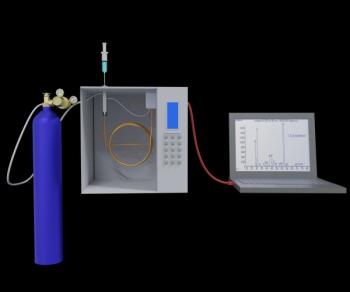
Compact instrumentation offers important advantages for many workflows, as illustrated by these examples.

Reducing matrix effects during LC–MS/MS bioanalysis is paramount. Improving sample preparation techniques is the best way to combat this issue.

Research conducted in Norway carried out the first screening of legacy and emerging contaminants in multiple tissues of killer whales to shed light on the impact of persistent chemical contaminants in the wild.

GC and TLC methods are demonstrated for quantification of stigmasterol 3-O-β-D-glucopyranoside (S3G), the main active component in the herbal nutraceutical Balanites aegyptiaca, an antihyperglycemic in Egyptian folk medicine.
This concise yet comprehensive overview of sample preparation for bioanalysis looks at sample preparation fundamentals, best practices, and modern trends—all illustrated with a case study.

We present the main analytical techniques for performing functional characterization of biotherapeutic products. Such assessments are particularly critical for biosimilars, where analytical testing must ensure functional comparability with the innovator product.

This is the first article in a four-part series exploring the quantitative assessment of drugs and their metabolites in biological fluids (such as blood, plasma, and urine) and tissue homogenates using liquid chromatography–mass spectrometry (LC–MS).

This article is the first of four on the bioanalysis of small-molecule drugs and metabolites by liquid chromatography–mass spectrometry (LC–MS). In this article, we provide an overview of the fundamentals, workflow, regulations, and modern trends on these quantitative assays.

A simple and rugged method to determine psychoactive drugs using automated SPE–LC–MS/MS is described.

The Column spoke to Martin Giera of Leiden University Medical Center about his innovative research using GC–MS in bioanalysis applications.

A look at the LC and LC–MS methods that are helping to overcome challenges in sample analysis, and how this can make adeno‑associated virus (AAV)–based gene therapy more accessible.
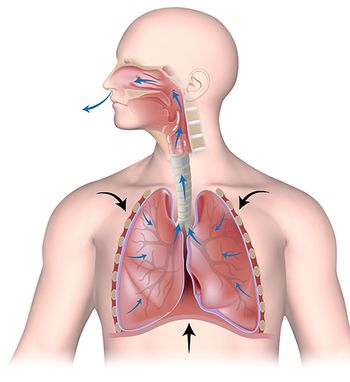
Biomarker studies using exhaled breath are rapidly emerging as a technique for early disease detection and precision medicine. By offering a completely non-invasive experience for patients as an alternative to painful biopsy procedures. A new approach has the potential to enhance patient compliance, while making clinical workflows simpler. Exhaled breath analysis, however, requires a highly sensitive analytical technique capable of accurately measuring the broad range of volatiles present in breath. In this article, we present a proof-of-concept study to demonstrate a reliable and sensitive method to detect analytes in breath samples. Using high‑resolution accurate mass (HRAM) mass spectrometry (MS), the method validates how low- and high-abundance biomarkers can be quantified from exhaled breath.

The Column
A novel modular bioreactor for dynamic in vitro studies has been set-up, connecting two-dimensional (2D) scaffolds and mimicking a multi-organ model, to study the absorption/metabolization of compounds. The effect of dietary methylglyoxal, a potentially exogenous and endogenous toxic compound, on a dynamic gastro-intestinal system has been evaluated. Bioreactors represent a powerful advance in comparison with conventional in vitro static assays and could be a potential alternative to animal testing in the future.

The Column
The Column spoke to Nelson Roberto Antoniosi Filho, a professor at the Chemistry Institute of the Federal University of Goiás (UFG), in Goiânia, Brazil, about his development of a gas chromatography–mass spectrometry (GC–MS) method for cancer diagnosis using cerumen.
The Column
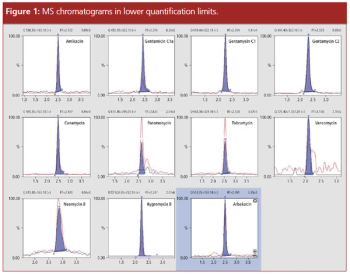
Therapeutic drug monitoring (TDM) is an important method for determining both dose and optimal effective level of a drug in the blood, preventing side effects such as kidney damage. Using the antibiotic classes aminoglycoside and vancomycin as examples, an analysis method is presented that combines fully automated sample preparation with ultrahigh-pressure liquid chromatography–triple quadrupole-mass spectrometry (UHPLC–TQMS).

The Column
The Column spoke to Arcadius V. Krivoshein, Assistant Professor of Chemistry at the University of Houston–Clear Lake, USA, about his work developing EPP, an experimental anticonvulsant that can help to stop convulsions during epileptic seizures, and the role of chiral HPLC in this research.
LCGC Europe
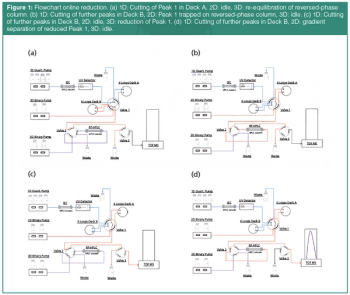
Characterization of protein modifications is an essential aspect of biopharmaceutical development. Traditionally, the characterization process of chromatographic peaks involves manual, larger-scale fractionation to obtain a sufficient amount of material for further analytical studies. This article presents a fully automated process for online peak fractionation and reduction of therapeutic antibodies with subsequent quadrupole time-of-flight mass spectrometry (QTOF-MS) characterization. This innovative technique significantly accelerates MS peak characterization compared to traditional approaches and avoids the risk of unintended modifications of the variants as a result of the isolation process, for example, deamidation during storage of isoforms. This approach considerably reduces the required sample amount and can be used for the characterization of product-related impurities during early stage development.