

Inert GC inlet liners for sample protection are easy to install. Touchless packaging provides protection from cuts or breakage, reducing contamination during installation process.

Inert GC inlet liners for sample protection are easy to install. Touchless packaging provides protection from cuts or breakage, reducing contamination during installation process.

We look at the fast and accurate GC–MS analysis of polycyclic aromatic hydrocarbon (PAHs) in rubber and plastic using a Zebron™ ZB-PAH-EU GC column.

The ZB-DHA-PONA GC column has excellent response and peak symmetry for polar oxygenates - for DHA, PONA, PIONA, PIANO, ASTM methods (D5134, D5441, D5501, D6729, D6730, D6733).

In this application, we look at the determination of residual solvents and terpenes in cannabis by GC–FID using the Zebron™ ZB-624plus™ GC column.

Incognito observes some unexpected emerging trends at Pittcon 2020.

LCGC Europe sponsored the 2020 HTC Innovation Award to highlight innovation in separation science. The winner, Ryan Kelly, from Brigham Young University, in Utah, USA, has introduced an impressive array of innovative approaches to advance proteomics research using nano-liquid chromatography–mass spectrometry (nano‑LC–MS), LC–MS, and two‑dimensional (2D)-LC–MS, including the development and application of nanodroplet processing in one pot for trace samples (nanoPOTS). This platform, when combined with nano-LC–MS/MS, can identify more than 3000 protein groups in 10 cells, a greater level of proteome coverage than was previously possible for samples containing 5000 cells.

How can I use the hydrophobic subtraction model of reversed-phase selectivity to help me in method development? A recent Pittcon symposium discussed the history and practical use of the model, as well as insights into recent research that may enable expanded use of the model in the future.

In-depth knowledge of GC setup is a significant advantage for the user. Here, a checklist is provided for preparation of a GC or GC–MS system prior to analysis work- referencing the actions, checks, tools, and consumable items that might be required.

This instalment describes newly introduced high performance liquid chromatography (HPLC), mass spectrometry (MS), chromatography data systems (CDS), and related products at Pittcon 2020 and the year prior, and summarizes significant features and user benefits.

Our annual review of new liquid chromatography (LC) columns and accessories, introduced at Pittcon and other events.

This critical review describes recent applications and instrumental trends in comprehensive two-dimensional gas chromatography (GC×GC), with particular (though not exclusive) attention to the period 2018–2019 and that the concept of GC×GC is inherently simple. The maturity of GC×GC and future developments are also discussed.

Successful GC analysis requires careful control of carrier gas. Here, we explain how to measure and control flow rate, use constant pressure vs. constant flow, and more.

The 36th International Symposium on Microscale Separations and Bioanalysis (MSB2020) will take place at the Conference Center Le Grand Large in the city of Saint‑Malo, France, from 5–8 April 2020.

The 44th International Symposium On Capillary Chromatography (ISCC) and 17th GC×GC Symposium will be held at the Palazzo dei Congressi, in Riva del Garda, Italy, from 24–29 May 2020.

Organosulphur compounds are important substances in the food industry because they can contribute to the flavour impression of a product. The human olfactory system’s sensitivity to sulphur leads to low flavour threshold values, making the analysis of these substances a challenging task. Gas chromatography (GC) with sulphur chemiluminescence detection (SCD) is a highly sensitive and selective technique for the analysis of sulphur compounds in various matrices. Using a range of different beers as an example, an approach is presented to reliably qualify and quantify sulphur components in beverages using headspace sampling and GC–SCD.

After 32 years as a columnist, John Hinshaw writes his final “GC Connections” article, examining how GC has changed over the years and considering where it might go in the future.

Multidimensional chromatography combining HPLC and GC, or LC–GC, sounds simple, but several factors complicate this combination, including solvent compatibility, separation time, and sample concentration.

An essential tool for troubleshooting and tuning GC–MS instruments is the tune report; this article explains the meaning and uses of this report when combined with a tuning compound.

Although manufacturers ship gas chromatographs with a collection of consumable parts and accessories, a number of other essential items should be on hand in every GC laboratory. What items are needed and how can they be used most effectively?

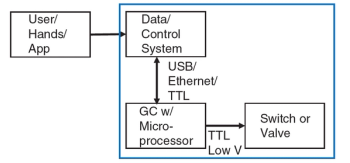
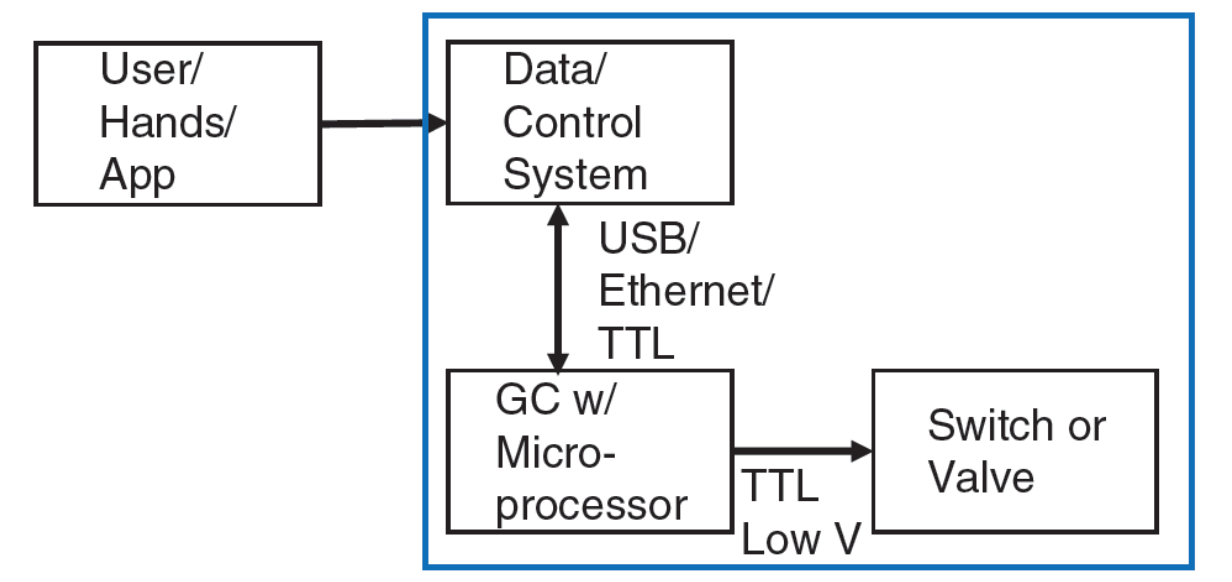
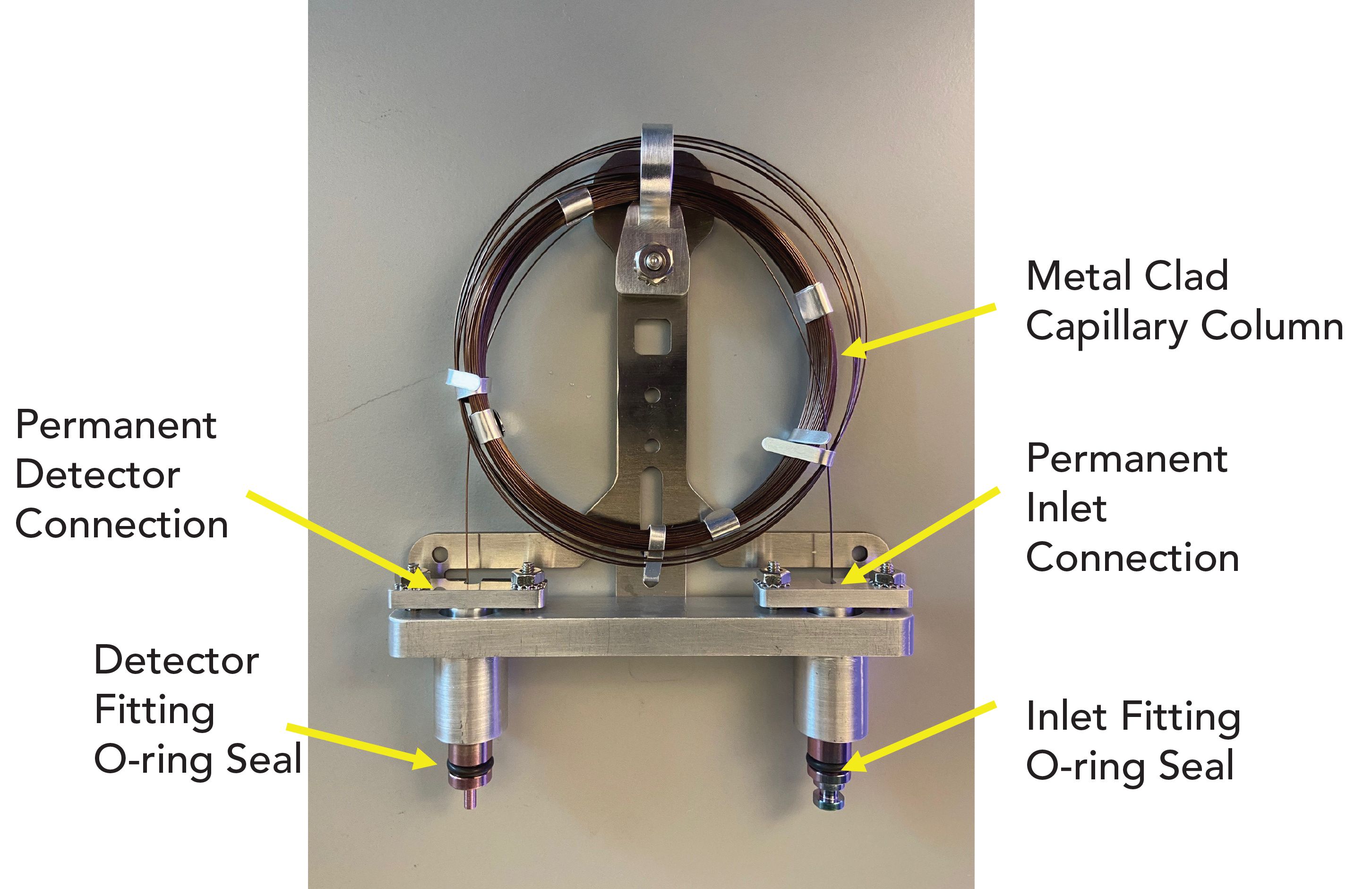
Pascal Cardinael and Valérie Agasse from the University of Rouen, in Mont‑Saint-Aignan, France, reveal the rationale behind miniaturization and the latest developments in miniaturized gas chromatography (GC).

Temperature programming is used in most capillary GC separations, but many analysts lack a good understanding of the principles behind this approach.

Our annual review of new developments in the field of gas chromatography, as seen at Pittcon and other venues

Chemical fingerprinting can provide evidence for quality differences resulting from botanical and geographical origins of primary food ingredients, post-harvest practices, production processes (such as traditional versus industrial processes), and the shelf-life evolution of finished products. This article discusses the strategic role and potential of comprehensive two-dimensional gas chromatography (GC×GC) combined with time-of-flight mass spectrometry (TOF-MS) and pattern recognition using template matching for data processing to unravel the quality traits of high-quality food products. Practical examples dealing with high-quality cocoa and extra-virgin olive oil are described.

Chemical fingerprinting can provide evidence for quality differences resulting from botanical and geographical origins of primary food ingredients, post-harvest practices, production processes (such as traditional versus industrial processes), and the shelf-life evolution of finished products. This article discusses the strategic role and potential of comprehensive two-dimensional gas chromatography (GC×GC) combined with time-of-flight mass spectrometry (TOF-MS) and pattern recognition using template matching for data processing to unravel the quality traits of high-quality food products. Practical examples dealing with high-quality cocoa and extra-virgin olive oil are described.

Is gas chromatography a mature technology? LCGC Europe spoke to Ronda Gras about a range of GC projects she has been working on to extend the scope of the technique, including a multi-hyphenated approach combining three modes of detection, a miniaturized micromachined GC system, and a novel in situ method to detect carbon dioxide in various matrices by incorporating 3D-printing technology in a FID.