


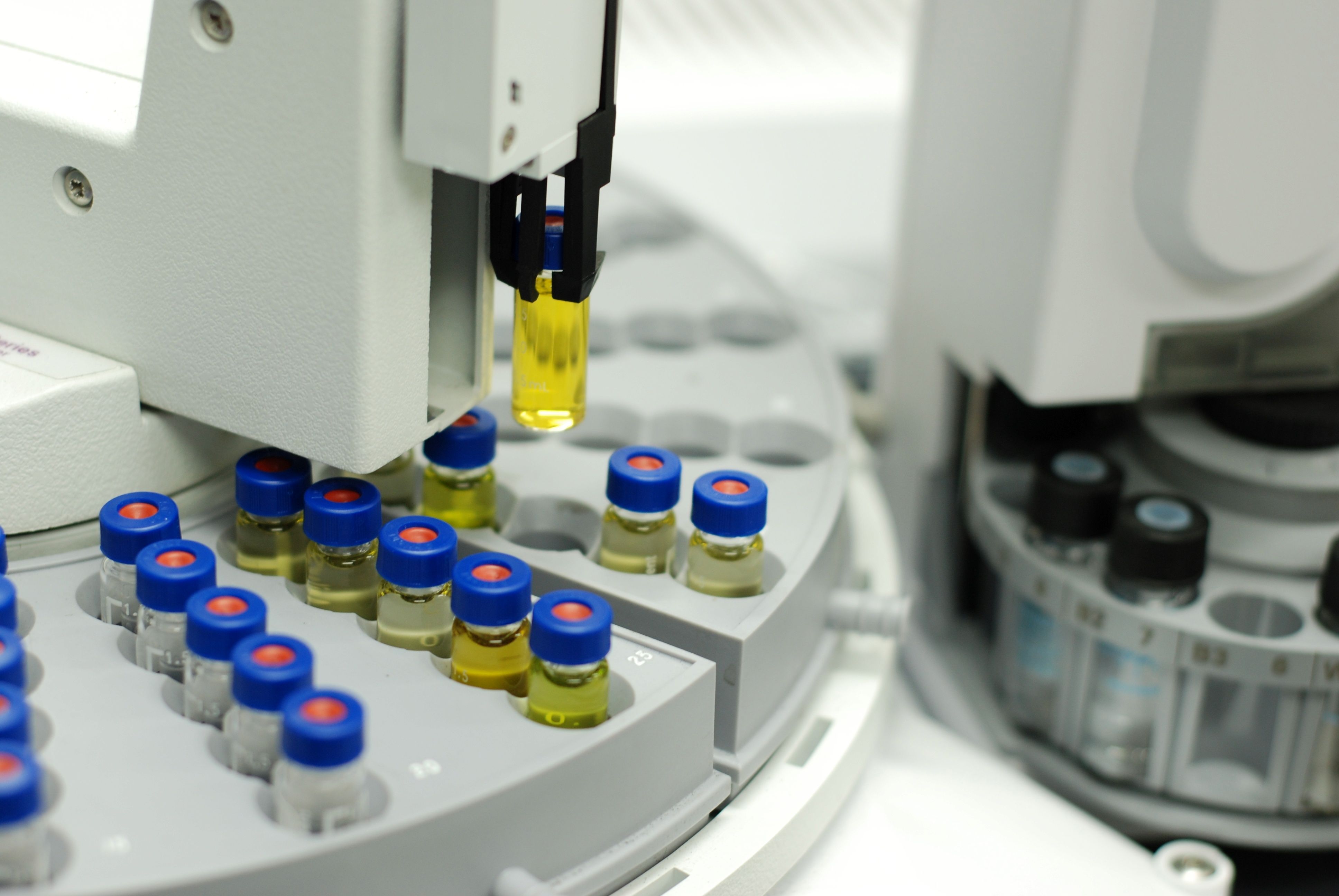

New approaches to sample preparation are being developed for microbial metabolomics to address the inherent complexity of this type of analysis.
New approaches to sample preparation are being developed for microbial metabolomics to address the inherent complexity of this type of analysis.

Gas chromatographers may not have the latest equipment they need. Here, we give a list of tools and consumables that can help make workflows more efficient, detection limits lower, and GC instruments cleaner.

Featured Articles
UV spectroscopy is an effective approach for tandem or parallel detection in gas chromatography, particularly in separations that require narrow bandwidths, such as GCxGC.

Columns: Column Watch
This study illustrates the importance of column selection during GC method development.

Are the days numbered for long linear runs of univariate data in separation science?

The late Harold McNair had a remarkable 60-year career as a chromatographer. He taught us many valuable lessons, three of which we discuss here.

Electronic pneumatic controllers (EPC) were introduced into gas chromatography (GC) systems from the mid-1990s onwards and do an excellent job of regulating gas flow and pressure for GC inlets, columns, and detectors. Regular readers will know that, while I support innovation and improvements in engineering capability, I am inherently skeptical of anything with the “black box” tag and believe that unless we inherently understand how something works, we can neither fully harness the potential benefits, nor properly troubleshoot when something goes wrong. Therefore, read on as we open the lid and take a good look inside these particular black boxes.

HS-SPME-GC–MS was combined with OPLS-DA data analysis to tentatively identify eight chemical markers to differentiate the geographical origins of cigar leaf samples.

How far can you get on optimizing a GC separation without changing the column? Pretty far, in fact.

The May 2021 ChromTalks, presented by LCGC and CHROMacademy, brought together 12 world-renowned chromatography experts discussing some of the most important lessons and experiences that shaped their careers. This month, we look back at ChromTalks and share the lessons learnt from these great speakers, with topics including sample preparation, GC, and GC–MS.

At ChromTalks, experienced speakers shared mistakes made during their careers.

I do not believe in classic linear separations anymore—further, I think separations science is wildly underdeveloped and under-appreciated.

Different stationary phases, solvents, and compounds using different split ratios demonstrating impacts to selectivity as a function of analytes interacting with the solvent and the stationary phase are examined.

The incorporation of a post-column reaction using a 3D-printed, two-stage microreactor is showing groundbreaking performance improvements for flame ionization detection in many gas chromatography applications—and delivers carbon universal response.

HS-GC analysis is presented as an excellent method for the analysis of high volatile components in e-liquids. For the analysis of semivolatile ingredients, an additional sample preparation step is proposed based on a LLE followed by a freeze-out of the matrix components.

We take a look at the past, present, and future of applying gas chromatography–mass spectroscopy (GC–MS) techniques to non-targeted screening (NTS) in various disciplines, assessing both the opportunities and the challenges.

Recycling plastics involves catalytically cracking polymers back into their constituent monomer mixtures, which require careful characterization for further processing. There is a resurging need for detectors that can detect and characterize heteroatom-containing species.

Correlation, clustering, and color projection techniques exploit the ability of the human brain to identify patterns from huge amounts of visual information. This process can provide a life raft for a weary chromatographer who is drowning in data.

Solid adsorbent gas chromatography (GC) columns, such as porous layer open tubular (PLOT) columns, are the best option for GC analysis of C1–C5 hydrocarbons, but water can affect retention and selectivity. We review the effects of water for different types of PLOT columns, and explain how to prevent or remediate the problem.

Microextraction is an affordable solution for preventing “garbage in–garbage out” effects in one-dimensional (1D) and two-dimensional (2D) GC separations, by providing analyte preconcentration, interference removal, tuning of extraction coverage, and easy coupling to GC systems.

Separation science is an intriguing and challenging (yes, let’s admit it) interdisciplinary field. Many of our daily rituals depend on effective chemical separations.

A review of the history and fundamentals for determining and reporting limit of detection (LOD) for analytical instruments and methods. Includes a discussion of the International Union of Pure and Applied Chemistry (IUPAC) and propagation of errors methods used for calculating LOD, and explains the limitations of the IUPAC method in modern chromatography.
I’d like to concentrate on variables that can really impact our chromatography, but may be on hidden, supplementary, or advanced pages of our software, or may appear on the main software acquisitions menus, but are poorly understood or rarely altered. These variables are often not specifically referenced in laboratory methods documents or, if they do appear, are poorly understood.

Decomposing animal tissue releases volatile organic compounds (VOCs), of interest in forensic science. We describe the use of GC×GC–qMS/FID retrofitted with a reverse fill/flush (RFF) flow modulator for analyzing these VOCs in a tropical climate.

The limit of detection (LOD) of an analytical method may be defined as the smallest concentration of analyte that has a signal significantly greater than that of a blank sample signal. We explore the sources of experimental uncertainty and variability in LOD determinations.