Gas chromatography makes use of a wide variety of detection methods, which really shine when deployed properly. Here’s guidance for how to choose the right one for your analysis.

Gas chromatography makes use of a wide variety of detection methods, which really shine when deployed properly. Here’s guidance for how to choose the right one for your analysis.

Five top tips for improving your gas chromatography (GC) methods.

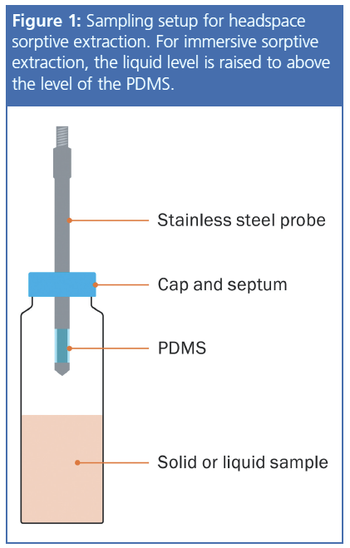
This study describes the analysis of fragranced washing detergent and washing powder using probe-based headspace and immersive sorptive extraction, in conjunction with analysis by thermal desorption–gas chromatography–mass spectrometry (TD–GC–MS). As well as discussing the differences between the two samples, the analyte ranges covered by headspace and immersive sampling are compared.

Evaluating the ability of gas chromatography–vacuum ultraviolet detection (GC–VUV) to distinguish and correctly identify various isomer and isotopologue forms of an analyte through the lens of spectral similarity.

Three main points summarize the best ways to be successful in gas chromatography (GC): Capillary GC is clean GC; practice, practice, practice; and be a student of GC.

HS-SPME-GC–MS is a valuable technique for identifying volatile organic compounds, additives, and degradation products in industrial rubber, car labeling reflection foil, and bone cement materials.

The durian fruit is notorious for its unpalatable aroma, and yet the fruit is incredibly popular throughout Southeast Asia and amongst travellers. Holding the title of “the world’s smelliest fruit” attracts attention including that of Martin Steinhaus from the Aroma Research Group at the Deutsche Forschungsanstalt für Lebensmittelchemie (German Research Center for Food Chemistry). He spoke to The Column about his group’s research into the compounds responsible for the fruit’s uniquely unpleasant aroma.

To address the challenges of analyzing new illicit drugs, emerging techniques such as UHPSFC with MS and UV detection, and GC with VUV detection, may be needed, particularly for distinguishing positional isomers and diastereomers.

LCGC, the leading resource for separation scientists, is proud to announce that Ronald E. Majors and Zachary S. Breitbach are the winners of the 11th annual LCGC Lifetime Achievement and Emerging Leader in Chromatography Awards, respectively. Majors and Breitbach will be honored in a symposium as part of the technical program at the Pittcon 2018 conference in Orlando, Florida, on February 26, 2018.

The chemical messages that animals use to communicate can trigger a range of responses in members of the same species. The Column spoke to Jorge Saiz from the Centre of Metabolomics and Bioanalysis (CEMBIO) at the University San Pablo CEU, Spain, about his research into the chemical secretions of lizards and the role of gas chromatography–tandem mass spectrometry (GC–MS/MS) in his work.

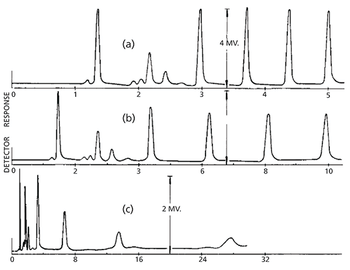
Fast gas chromatography (GC) has received new attention recently in the form of available enhanced instrument capabilities. What can fast GC do for separations, and how can laboratories take advantage of enhanced separation speeds?

In this extended special feature to celebrate the 30th anniversary edition of LCGC Europe, leading figures from the separation science community explore contemporary trends in separation science and identify possible future developments. We asked key opinion leaders in the field to discuss the current state of the art in gas chromatography instruments.

In this study, an empirical assessment of summation integration (using the lowest baseline point in user-defined tR windows) was conducted involving 490 low-pressure GC–MS/MS analyses of 70 pesticides in 10 common fruits and vegetables over the course of 10 days.

When data change over time, you may be able to tease out the causes by conducting a time-series analysis or by looking at various forms of correlation.

Leading separation scientists share their perspectives on current challenges in separation science and where the field is heading.

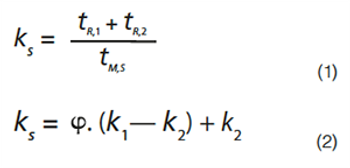
A quick step-by-step guide for optimizing GC temperature programming.

If you understand how your system is affected by outside influences, you can take control of the variables.

A method was developed to address the constraints encountered when measuring methane levels during the degassing process.

Some 50 years after Giddings’s iconic comparison of the separation speed of gas chromatography (GC) and liquid chromatography (LC), the authors revisit this comparison using kinetic plots of the current state‑of‑the-art systems in LC, supercritical fluid chromatography (SFC), and GC. It is found that, despite the major progress LC has made in the past decade (sub-2-µm particles, pressures up to 1500 bar, core–shell particles), a fully optimized ultrahigh-pressure liquid chromatography (UHPLC) separation is still at least one order of magnitude slower than capillary GC. The speed limits of packed bed SFC are situated in between.

Annual review of new developments in the field of GC

Gas chromatographers can control several variables that affect their separations: carrier-gas flow, column temperature, column dimensions, and stationary phase chemistry. When faced with less than optimum resolution or separation speed, a strategy of changing just one variable at a time can be more productive than trying to hit the goal in one attempt. This month's GC Connections examines how to use such a plan to obtain better GC results.

Recent advances in vacuum ultraviolet (VUV) spectroscopy have allowed for the application of this technology as a chemical detection platform for gas chromatography (GC). This technique is known as GC–VUV. A GC–VUV detector can produce highly characteristic absorbance spectra for nearly all chemical species in the wavelength region of 125–240 nm. This enables not only identification but also robust quantitation of a variety of compounds separable by gas chromatography, including water. This article describes the results of a pilot study focused on trace water determination in common organic solvents using an ionic liquid stationary phase GC column in a GC–VUV platform.

The most prominent advantage of using nitrogen as a carrier gas is that it is the most efficient one when used at its optimum linear velocity.

Separation scientists may seek an optimum spot between chromatographic performance required to obtain sufficient results quality, and the time and resources needed to do so. This installment of GC Connections examines the factors that control peak resolution - one of the main drivers of separation quality - and how chromatographers can use this to find an optimum between time, cost, and performance.

This month's “GC Connections” continues the discussion of procedures for safe setup, use, and disposal of compressed gas cylinders in the chromatographic lab.