




GC×GC is now a well-established technique, but it is still underutilized in many settings.
GC×GC is now a well-established technique, but it is still underutilized in many settings.

A novel LC–MS/MS method, with a dual ESI and APCI source using simple solvent extraction for sample preparation, was validated for analysis of 102 pesticides and 5 mycotoxins regulated by Colorado state in dried hemp.

This article provides a look at the new GC products that entered the market in 2022–2023.

Pittcon 2023 revealed that gas chromatography (GC) still has a strong presence at in-person conferences and in literature.

In this LCGC blog, some words of wisdom are offered to help one avoid that panic situation of having to change the GC column or delay the analytical results.

Understanding the relationship between selectivity and retention is key to realizing excellent gas chromatographic separations.

What is the relationship between selectivity and resolution?

Two-dimensional gas chromatography (GC×GC) and chemometrics are leading the way in new strategies on multivariate data analysis. Using GC×GC in untargeted analysis reveals how far the technique has advanced the field of separation science.

By reviewing the basic thermodynamics underlying GC separations, we see how it impacts retention and method development in GC analysis.

Novel nontargeted analysis applications in two-dimensional gas chromatography–mass spectrometry (GC×GC–MS) and GC–high‑resolution (HR)MS have enabled the discovery of new contaminants. Now, the next frontier is nontargeted analysis for the elucidation of the mechanisms of (bio)chemical reactions in complex samples, such as the biodegradation of organics in water and soils or the conversion of plastics into oils. GC has the potential to contribute greatly to the optimization of these processes and therefore make a real contribution to net zero and circular economy agendas.

In this instalment, we review the basic thermodynamics underlying separation in GC, and we see how this impacts selectivity and retention.

Immersive sorptive extraction coupled with comprehensive two-dimensional gas chromatography and time-of-flight mass spectrometry (GC×GC–TOF-MS) was used to compare flavour profiles from popular brand soft drinks with those of imitation products.

The Column interviewed Maiken Ueland, an ARC discovery early career research fellow at the Centre for Forensic Science and deputy director of The Australian Facility for Taphonomic Experimental Research (AFTER) at the University of Technology Sydney in Australia, on her work in forensic taphonomy, where she uses analytical, biochemical, and spectroscopic techniques to conduct human post-mortem investigations.

Webcasts
Webinar Date/Time: Thursday, February 16th, 2023 at 8am PST | 11am EST | 4pm GMT | 5 pm CET

The common measures of stationary phase polarity—McReynolds constants and the polarity scale—are not always accurate predictors of retentiveness or selectivity in GC.
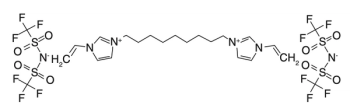
This instalment examines the idea of stationary phase polarity in detail. The assumptions inherent in the most popular stationary phase polarity-evaluating systems—McReynolds constants and the polarity scale—are discussed.

Webcasts
Webinar Date/Time: Thu, Jan 19, 2023 11:00 AM EST

Small leaks may compromise column lifetime, increase maintenance, cause retention time shifts, and decrease sensitivity at elevated temperatures, but do they matter?

In this extended special feature to celebrate the 35th anniversary edition of LCGC Europe, key opinion leaders from the separation science community explore contemporary trends in separation science and identify possible future developments.

The ECD and its principles of operation are reviewed, and the general tradeoffs in detection between selectivity, ease of use, and sensitivity discussed.

In this extended special feature to celebrate the 35th anniversary edition of LCGC Europe, key opinion leaders from the separation science community explore contemporary trends in separation science and identify possible future developments.

Learning or mastering new skills as an adult can feel daunting. These three tips will help.

Webcast
Webinar Date/Time: Mon, Dec 12, 2022 11:00 AM EST

Webcasts
Webinar Date/Time: Tue, Dec 13, 2022 11:00 AM EST

This month we interview Jessica Pandohee about her work in foodomics in prebiotics research for gut health, and the role of GC–O in aroma analysis for coffee-flavoured milk.