
LCGC North America
Ron Majors brings readers his yearly review of all that was new and innovative at the annual Pittsburgh Conference.

LCGC North America
Ron Majors brings readers his yearly review of all that was new and innovative at the annual Pittsburgh Conference.

LCGC North America
The causes and cures for peak tailing are discussed, along with the various ways that chromatographers measure tailing peaks.
LCGC Europe
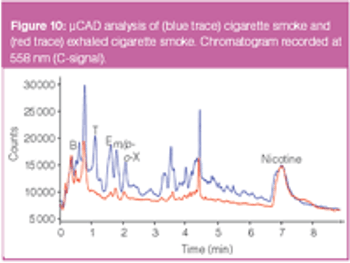
A miniature gas chromatograph incorporating a miniaturized chemical trap for enrichment, rapid thermal desorption of the trap, a resistively heated capillary column for programmed GC analysis and a micro-chip-based plasma emission detector (PED) is described. The sampling and chromatographic conditions for the analysis of volatile compounds in air are presented. The performance of the µCAD is illustrated in the universal (carbon) mode and for the selective detection of chlorinated and organo-mercury compounds. Detection limits (DLs) are at the sub-μg/L level in the carbon mode and 10 ng/L for organo-mercury compounds.

LCGC Europe
Detectors are another link in the chain of signals that a chromatographic analysis generates. After separation, a detector transduces the chemical signals of eluted analytes to an electrical signal that is then recorded and measured. The identities and amounts of analytes are determined from this information. This month in "GC Connections", John Hinshaw examines the environment, set-up and operating conditions necessary to ensure high gas chromatography detector performance and reliability.

Agilent Technologies Inc. (Palo Alto, California) and Healex Systems Ltd.(Wilmington, Delaware) announced that Agilent now fully supports Healex's ChemLaunch remote instrument access and control module for Agilent's ChemStation chromatography software.
A team of scientists from Agricultural Research Service (ARS) and Abraxis, Inc. compared the a new triclosan test, called "magnetic particle enzyme immunoassay," to the more traditional method-gas chromatography-mass spectrometry (GC-MS). They hope that this test, which detects triclosan at a concentration of 20 parts per trillion (ppt)-the equivalent of 1 ounce in 31 million tons, can expedite environmental monitoring of this widely used antibacterial agent in rivers, wells, and other bodies of water.
The Pittsburgh Conference announced a recent co-operative venture with the Professionals' Net Work in Advanced Instrumentation Society (PAI-NET).
Agilent Technologies Inc., (Palo Alto, California) announced a low thermal mass (LTM) system for rapid heating and cooling of its 7890A gas chromatograph (GC), which will greatly increase productivity by significantly reducing analytical cycle times.
There are a host of volatile organic compounds (VOC) in sea salt that originate from several sources such as the surrounding plants, algae, bacteria and environmental pollution. A team of scientists from the University of Aveiro, one region where sea salt is produced, reasoned that the combination of VOC from the different local sources could be sufficient to create a unique fingerprint of the salt.
PerkinElmer Inc. (Waltham, Massachusetts) has acquired Arnel Inc. (Parlin, New Jersey), a custom producer of GC technologies for the petrochemical, food and beverage, and industrial hygiene markets.
LCGC North America
This month, John Hinshaw examines the environment, setup, and operating conditions necessary to ensure high gas chromatography detector performance and reliability.

LCGC Europe
Chromatographers are choosing hydrogen carrier gas more often for its performance and, in the face of increasing helium prices, cost. In this instalment of "GC Connections", John Hinshaw addresses some of the more frequently asked questions he encounters regarding hydrogen as a carrier gas.
Dr. Philip J. Wyatt, the CEO and founder of Wyatt Technology Corporation (Santa Barbara, California) has been awarded the 2009 Prize for Industrial Application of Physics by the American Physical Society (APS).
Pittcon announced the recipients of 11 prestigious awards recognizing the significant contributions of leaders in analytical chemistry and applied spectroscopy.
Phenomenex Inc., (Torrance, California), will be presenting a workshop, "Analytical Challenges in Biofuel Analysis," at the 2009 Pittsburgh Conference in Chicago.

The Application Notebook
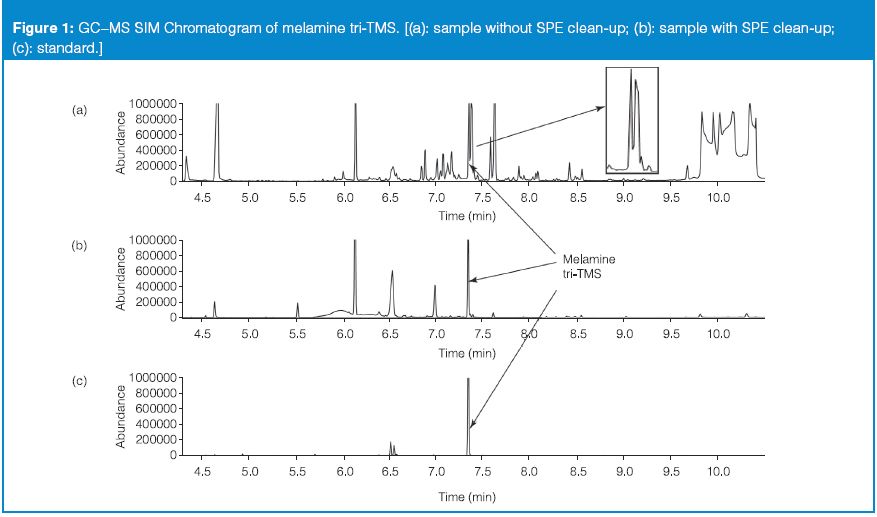
Melamine is an industrial chemical with a high nitrogen content that can cause kidney stones and lead to renal failure. In some instances, melamine has been added to baby formula and dairy products as a substitute for protein. This paper presents an efficient and definitive gas chromatography–mass spectrometry (GC–MS) method to identify melamine and related compounds based on the released US Food and Drug Administration (FDA) method.
The Application Notebook
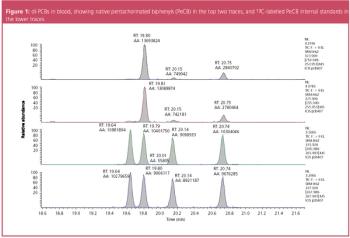
This application details a fast, reliable and highly selective trace-level screening method for the quantification of polychlorinated biphenyls (PCBs) in environmental, food and biological samples, using gas chromatography and a triple stage quadrupole mass spectrometer. The analytical strategy is analogous to the well-established US Environmental Protection Agency (USEPA) Method 1668A.
Researchers Edward Staples from the US measurement technology company Q&A Solutions (Westlake Village, CA) and Shekar Viswanathan from the National University (San Diego, CA) have developed a new method for detecting contraband in cargo containers using urface acoustic waves (SAWs) and a capillary-based gas chromatograph column.
Shimadzu has been awarded the 2008 Frost & Sullivan European Mass Spectrometry Product Line Strategy Award.
PerkinElmer, Inc. (Waltham, MA) announced the acquisition of Arnel Inc. (Parlin, NJ), a provider of custom engineered solutions for gas chromatography applications in the petrochemical, food and beverage, and industrial hygiene markets.
Thermo Fisher Scientific Inc., (San Jose, CA) has launched a program focused on assisting government and commercial food testing laboratories in the development and implementation of methods for the analysis of melamine in food products imported from China.
Chinese scientists from the Department of Chemistry at Fudan University (Shanghai, China) have developed a rapid method for the detection and analysis of short-chain amines in streams and rivers using a portable GC.

LCGC North America
An alphabetical listing of all 2008 LCGC articles by author and subject.
The 47th Eastern Analytical Symposium and Exposition presented its award for Outstanding Achievements in Separation Science to Professor Pat J. Sandra, of Ghent University, Belgium, on November 18, 2008.

LCGC North America
A selective and highly sensitive capillary gas chromatographic-mass spectromic approach has been developed for the detection of PBDEs and PBBs that utilizes dissociative resonance electron capture and selected ion monitoring.