



Webcasts
Webinar Date/Time: Thursday, August 21, 2025 8am PDT | 11am EDT | 4pm BST | 5pm CEST
Webcasts
Webinar Date/Time: Thursday, August 21, 2025 8am PDT | 11am EDT | 4pm BST | 5pm CEST

Researchers from Comenius University Bratislava used LC–MS/MS to analyze albendazole substances in plasma samples.

To better detect cardiovascular diseases in people, researchers used high-performance liquid chromatography–tandem mass spectrometry (HPLC–MS/MS) to simultaneously quantify metabolites in human plasma.

In this article, you’ll find some of the top content that was published on LCGC this week, including our upcoming forensic science content series and an interview on preanalytical factors for ethanol testing.
Researchers at the Institute of Marine Research in Bergen, Norway used liquid chromatography–mass spectrometry to analyze resolvins in fish and human cells.

Antiretroviral drug residues were monitored in breastmilk samples using ultrahigh-performance liquid chromatography–tandem mass spectrometry (UHPLC–MS/MS).
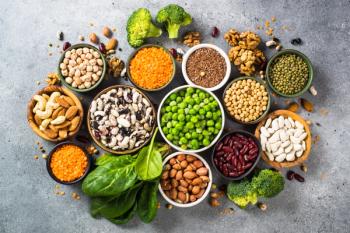
Bioactive compounds extracted from plants are revered for their abilities to enhance human health. However, due to the complex matrices of plant foods, the qualitative and quantitative analysis of metabolites in plant foods requires a prior separation step.

Webcasts
Webinar Date/Time: Wed, Aug 13, 2025 9:00 AM EDT
In this article, you’ll find some of the top content that was published on LCGC this week, including details on the recent merger between Waters Corporation and BD Biosciences.

Waters Corporation is merging with BD’s Biosciences and Diagnostic Solutions business in a $17.5 billion deal to expand its capabilities in life sciences and diagnostics.
This week, LCGC International published a variety of articles on hot topics in separation science. Several analytical techniques were covered in these articles, including gas chromatography–mass spectrometry (GC–MS) and liquid chromatography–MS (LC–MS).
Webcasts
Webinar Date/Time: Thursday, July 17, 2025 8am PDT | 11am EDT | 4pm BST | 5pm CEST

At HPLC 2025 in Bruges, Belgium LCGC International interviewed a member of our editorial advisory board (EAB), Paul Ferguson, a leading voice in sustainability in the pharmaceutical sector, to explore the intersection of green chemistry and emerging therapeutics.

To better conduct the analysis of nucleoside analogues, hydrophilic interaction liquid chromatography–tandem mass spectrometry (HILIC-MS/MS) was used to quantify antitumor prodrugs and their metabolites.

Using two-dimensional liquid chromatography–mass spectrometry, a new workflow was developed to characterize phosphorodiamidate morpholino oligomers, which can help treat infectious diseases.

To better detect polycyclic aromatic hydrocarbons in the human body, a UHPLC–MS/MS method was developed and tested on urine samples from workers exposed to diesel exhaust.

To quantify antibiotics in ICU patients’ blood, dried blood spot analysis was sued alongside UHPLC–MS/MS to monitor these substances in a more convenient matter.

In a new study, researchers used GC–MS and LC–MS were used to detect composition fraud in food supplement creation.

A new dried spot-based technique involving untargeted liquid chromatography coupled with high-resolution mass spectrometry was testing for characterizing foodstuffs.
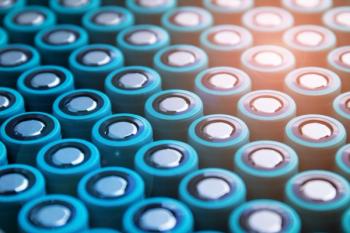
Discover a novel GC-based method for accurately analyzing organic carbonates in lithium-ion batteries without the need for complex calibrations.
Webcasts
Webinar Date/Time: Tuesday, July 1, 2025 8am PDT | 11am EDT | 4pm BST | 5pm CEST

A new separation platform based on chromatographic techniques was used to characterize algae hydrocolloids.
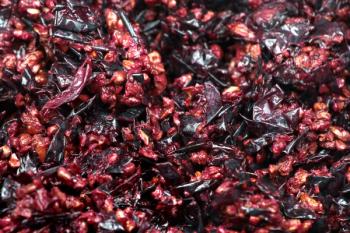
Grape pomace, a byproduct of the winery industry, holds various phenolic compounds within it. Scientists used liquid chromatography-based techniques to harvest these potentially beneficial components.

New QuEChERs-based methods were created to detect pesticide residues in commercial dry pet food.

Shea kernels contain bioactive secondary metabolites that can offer potential health benefits. Researchers aimed to learn more about these substances.