
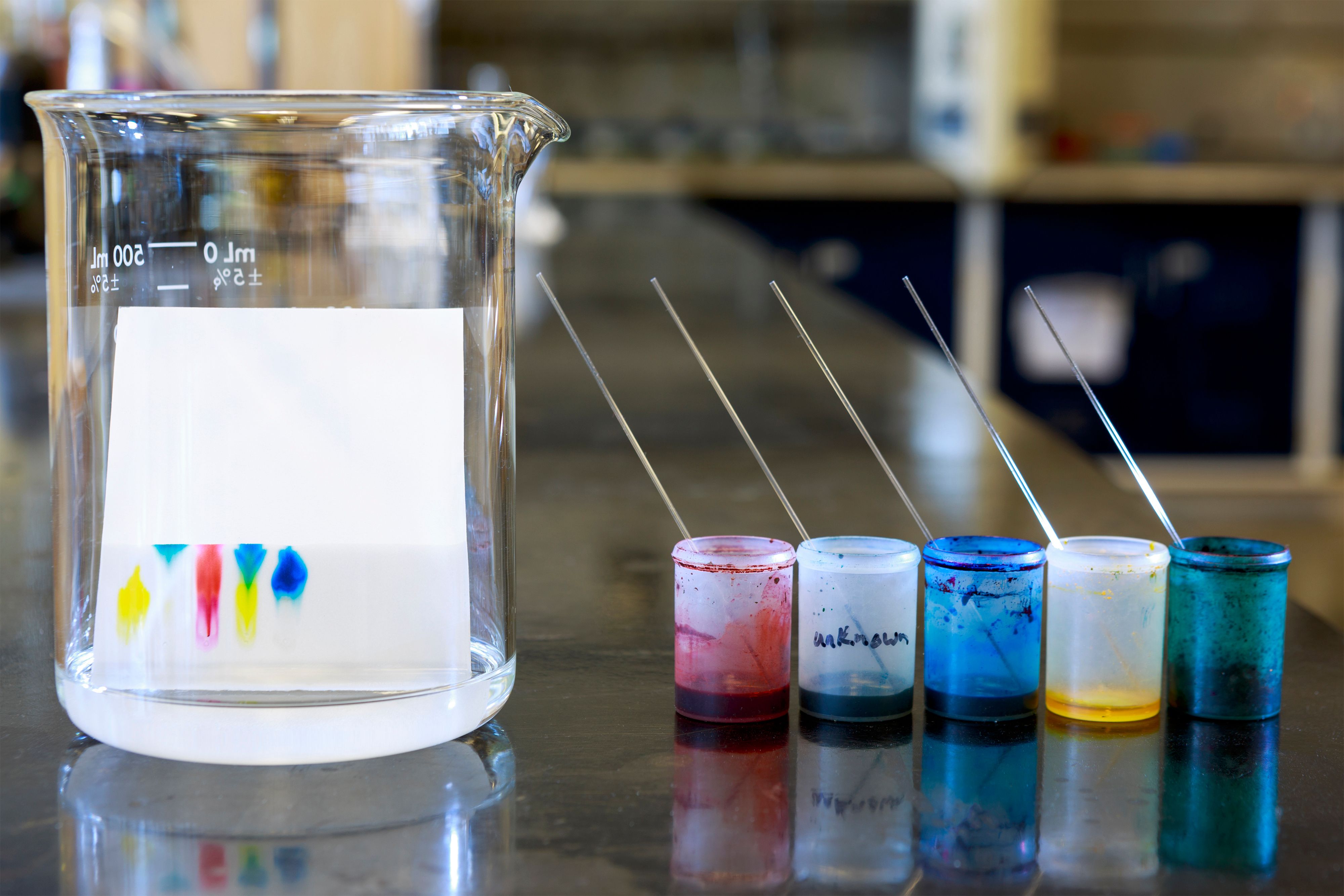





A new process for tracking targeted and non-targeted fluorinated residuals using liquid chromatography–high-resolution mass spectrometry (LC–HRMS) has been created.
A new process for tracking targeted and non-targeted fluorinated residuals using liquid chromatography–high-resolution mass spectrometry (LC–HRMS) has been created.

Scientists from the National Institutes for Food and Drug Control have characterized antibody-drug conjugates (ADCs) using various mass spectrometry (MS)-based techniques.

Here is some of the most popular content posted on LCGC International this week.

University of Valencia scientists recently developed a method using solid-phase extraction (SPE) followed by high-performance liquid chromatography coupled to high-resolution mass spectrometry (HPLC–HRMS/MS) for detecting microplastics and other harmful substances in textiles.

Here is some of the most popular content posted on LCGC International this week.

Jiangsu Police Institute scientists recently created a solid-phase microextraction (SPME)-based method for determining amphetamine-type stimulants.
In this article, the use of comprehensive two-dimensional liquid chromatography (LC×LC) coupled to mass spectrometry (MS) for characterizing glycosylation of therapeutic enzymes is presented.

How is mD-LC–MS changing the way we evaluate HPLC peaks and assess performance?

In the first LCGC Blog of 2025, Caitlin Cain of the University of Michigan highlights the divide between gas and liquid chromatographers, and why both types of techniques should be in the same conversations.

Webcasts
Webinar Date/Time: Wed, Jan 22, 2025 11:00 AM EST

LCGC International sat down with Jose Bernal to discuss his latest research in using pyrolysis gas chromatography–mass spectrometry (Py-GC–MS) and other chromatographic techniques in studying microplastics in food analysis.

Webcasts
Webinar Date/Time: Thursday, January 16, 2025 8am PST | 11am EST | 4pm GMT | 5pm CET

In this column, we discuss the label-free and stable isotope labeling proteomics approaches that help in biomarker discovery. We also discuss the different enrichment techniques, such as stable isotope labeling by amino acid in cell culture (SILAC), isobaric tags for relative and absolute quantitation (iTRAQ), and tandem mass tags (TMT, that help in measuring low-abundance protein biomarkers.

Known as “forever chemicals”, PFAS exposure has been linked indirectly and directly to a range of potential health issues. The objective of this study was the development of an optimized sample preparation and LC–MS/MS method for the analysis of PFAS in serum for biomonitoring applications.

As part of our RAFA 2024 coverage, we interviewed Rudolf Krska of BOKU University about his research on food safety, specifically regarding using analytical methods to mycotoxins and other secondary metabolites in plants and foods.

Michael Sulyok of the University of Natural Resources and Applied Life Sciences discusses a novel “dilute and shoot” LC–MS/MS technique to analyze mycotoxins in grain products.
Here is some of the most popular content posted on LCGC International this week.

In this edition of “Inside the Laboratory,” Susan Richardson of the University of South Carolina discusses her laboratory’s work with using electron ionization and chemical ionization with gas chromatography–mass spectrometry (GC–MS) to detect DBPs in complex environmental matrices, and how her work advances environmental analysis.

Webcasts
Webinar Dates/Times: Friday, December 13, 2024 Morning Session: 12:30 pm GMT | 1:30 pm CET | 7:30 am EST Afternoon Session: 2:30 pm GMT | 3:30 pm CET | 9:30 am EST

Webcasts
Webinar Dates/Times: Tuesday, December 10, 2024 7am PST | 10am EST | 3pm GMT | 4pm CET

An illuminating session focusing on progress in analytical techniques used in food analysis took place on Wednesday 6 November 2024 at RAFA 2024 in Prague, The Czech Republic, including a talk on the analysis of 1000 toxins in 10 minutes.

LCGC International spoke with various corporate personalities about trends and developments in sample preparation.

This article will discuss an ion-pair reversed-phase liquid chromatography mass spectrometry (IP-RPLC–MS) workflow for the characterization of three messenger RNA (mRNA) key critical quality attributes: 5’ Cap, ORF, and poly(A) tail.
Here is some of the most popular content posted on LCGC International this week.

Peng Che fom Vrije Universiteit Amsterdam in the Netherlands discusses the benefits of hyphenating liquid chromatography (LC) with electron activated dissociation mass spectrometry (EAD-MS) to analyze cathinone positional isomers.