

Here are the top five articles published on LCGC International this week.

Here are the top five articles published on LCGC International this week.

Soochow University scientists used a mass spectrometry (MS)-based system to help better understand the structure of Sulodexide.

A recent study analyzed nearly 100 CBD products to test the accuracy of advertised cannabinoid content.

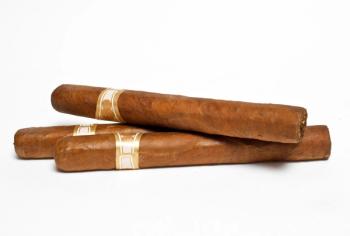
Scientists from Shanghai Jiao Tong University and the Sichuan China Tobacco Industry Company used gas chromatography-ion mobility spectrometry (GC-IMS) to analyze the flavor profiles of different cigars.

Webinar Date/Time: Wed, Sep 18, 2024 Session 1: 10am EDT Session 2: 2:00 PM EDT

Webinar Date/Time: Wed, Sep 4, 2024 11:00 AM EDT

National Institute of Pharmaceutical Education and Research (NIPER) scientists recently highlighted LC–MS’s use in improving drug modalities.

Here are the top five articles published on LCGC International this week.

University of Messina scientists recently used GC-based techniques to help characterize essential oil from Piper gaudichaudianum Kunth, a plant native to Brazil.

Here are the top five articles published on LCGC International this week.

Pharmaceutical excipients, such as polyethylene glycol-based polymers, must be tested for the presence of ethylene oxide (EtO) and 1,4-dioxane as part of a safety assessment, according to USP Chapter <228>.

Steven Ray Wilson and Hanne Røberg-Larsen of the University of Oslo recently discussed the practical application and advantages of their FDA-validated research to analyse small molecule drugs and their metabolites in organoid/organ-on-chip systems that serve as alternatives to animal models.

Mankind Research Centre scientists recently tested a new solid phase extraction (SPE)-based approach coupled with GC–MS for analyzing small molecule N–nitrosamine impurities in antitussive syrups.

São Paolo State University scientists recently used pyrolysis gas-chromatography–mass spectrometry and dispersive liquid-liquid microextraction to determine flame retardants in sewage.

Here are the top five articles published on LCGC International this week.

University of Campinas and Iowa State University scientists recently combined vacuum-assisted sorbent extraction (VASE) and gas chromatography-mass spectrometry (GC–MS) to determine polycyclic aromatic hydrocarbons in açaí-based food products.

Scientists from the Institute of Environmental Assessment and Water Research developed and optimized a method for determining various pesticides in human urine.

University of Washington scientists used comprehensive two-dimensional (2D) gas chromatography (GC×GC) paired with time-of-flight mass spectrometry (TOFMS) to study moisture-damaged cacao beans.

Tianjin Centers for Disease Control and Prevention scientists used chromatography techniques to determine bisphenol analogues (BPs) in human urine.

Dalian Maritime University scientists recently used high-performance liquid chromatography tandem triple quadrupole mass spectrometry HPLC-MS/MS to help detect amphetamine-type drugs in water.

Here are the top five articles published on LCGC International this week.

Chinese Academy of Inspection and Quarantine scientists recently used gas chromatography–tandem mass spectrometry (GC–MS/MS) to create a new detection method for screening hazardous substances in teethers.

Carol Robinson of the University of Oxford has received the European Inventor Award 2024 for Lifetime Achievement from the European Patent Office for her work bringing mass spectrometry to structural biology.

Webinar Date/Time: Mon, Aug 12, 2024 9:00 AM EDT

Navin Rauniyar and Xuemei Han of Tanvex Biopharma USA recently discussed how identifying product-related variants through characterization enables the recognition of impurities that compromise the quality and safety of drugs.