





Scientists from Hebei Medical University developed a sensitive liquid chromatography-tandem mass spectrometry (LC–MS/MS) method for analyzing free fatty acids in human serum.

Scientists from Hebei Medical University developed a sensitive liquid chromatography-tandem mass spectrometry (LC–MS/MS) method for analyzing free fatty acids in human serum.
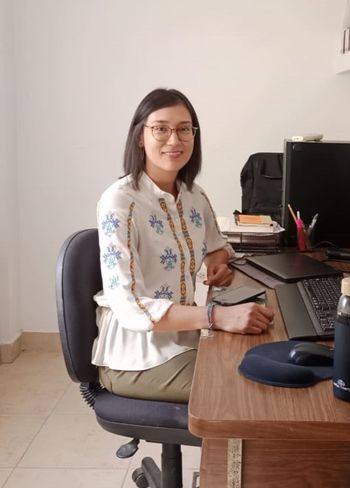
LCGC International sat down with Susana Palma of CIAD to discuss her career and work with the Females in Mass Spectrometry (FeMS) group.

Here are the top five articles that the editors of LCGC International published this week.

LCGC International sat down with Colleen Maxwell of the University of Leicester to discuss her career and work with the Females in Mass Spectrometry (FeMS) group.

Scientists recently analyzed the chromatographic profiles of postmortem bacterial species and their volatile organic compounds (VOCs) using comprehensive two-dimensional gas chromatography (GCxGC).

This article discusses the challenges and effective solutions for high performance liquid chromatography (HPLC)-based analytical characterization of virus-like particles (VLPs).

The basic operating principles of ion mobility spectrometers (IMS), their resulting strengths and weaknesses, and why both perfectly align with the capabilities and requirements of gas chromatographs are discussed.
Here are the top five articles that the editors of LCGC International published this week.

The instrument manufacturer highlighted its new Stellar Mass Spectrometry solution at the conference in Anaheim, California, alongside other updates to its existing product line.
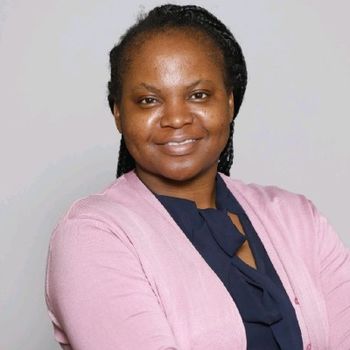
LCGC International sat down with Kemi Osho of the University of Nevada, Reno (UNR) to discuss her career and work with the Females in Mass Spectrometry (FeMS) group.

The company launched its new Xevo MRT instrument and highlighted new certifications for its chromatography columns during the conference in Anaheim, California.

Governments are striving to implement policy changes towards a greater use of green technology, specifically around the generation of energy. Individuals and industrial organizations have also taken up the challenge, and now many companies are driving to significantly reduce their environmental footprint, or indeed become carbon negative within very short time frames.

An unexpected retention order for ketamine analogs was observed when using a biphenyl stationary phase for liquid chromatography-mass spectrometry (LC–MS).

In this interview, Kristina Hakansson of the University of Michigan discusses her upcoming ASMS 2024 conference, as well as her expectations for the event.

Tony Edge, Stephane Moreau, Carsten Paul, and Fraser McLeod discuss the latest trends and developments in LC.

LCGC’s Senior Technical Editor uses artificial intelligence (AI) platform ChatGPT to answer questions about the role of AI in separation science. Do you agree with ChatGPT?

As opposed to targeted metabolomics which looks only at a predetermined set of metabolites or their pathways, an untargeted approach was preferred by this research team because of its unbiased yet still comprehensive nature.

In preparation for ASMS 2024, we recently interviewed Uri Keshet of the University of California, Davis about his upcoming presentation and expectations for the conference.
Here are the top five articles that the editors of LCGC International published this week.

During the 18th International Symposium on Hyphenated Techniques in Chromatography and Separation Technology, experts presented a workshop on different ways multidimensional liquid chromatography can be applied.

During the 18th International Symposium on Hyphenated Techniques in Chromatography and Separation Technology, experts presented a workshop on emerging industrial applications in MS.
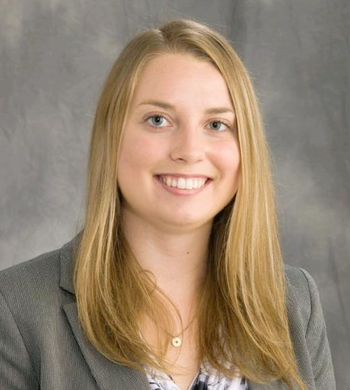
In preparation for ASMS 2024, we sat down with Elizabeth Neumann of the University of California, Davis about her upcoming workshop.

The editors of LCGC International sat down with Nick Riley of the University of Washington about his upcoming workshop at ASMS 2024 in Anaheim, California.
Here are the top five articles that the editors of LCGC International published this week.

Scientists from Wuhan Textile University recently tested a new solid-phase extraction system for analyzing covalent organic frameworks (COFs).