



Scientists from the University of Córdoba in Córdoba, Spain recently used liquid chromatography–tandem mass spectrometry (LC–MS/MS) to comprehensively profile human ceramides to determine their reactions to diseases.
Scientists from the University of Córdoba in Córdoba, Spain recently used liquid chromatography–tandem mass spectrometry (LC–MS/MS) to comprehensively profile human ceramides to determine their reactions to diseases.
Ultrahigh-pressure liquid chromatography coupled to high-resolution mass spectrometry (UHPLC-HRMS) had been previously proposed for untargeted lipidomics analysis, but this updated approach was reported by the authors to reduce run time to 4 min.

LCGC International sat down with Jeff Zonderman, senior vice president of Bruker Applied MS at Analytica, to discuss sustainability, PFAS analysis, and the company’s year-old mass spectrometry division.

The serum/plasma estradiol is useful for diagnosis, pathology, and therapeutic efficacy monitoring of estrogen-dependent diseases, according to the authors.

Scientists from Anhui University of Chinese Medicine in Hefei, China recently investigated the mechanisms behind what makes huachansu tablets, a type of traditional Chinese medicine (TCM), effective against liver cancer.

On the occasion of Earth Day, University of Wisconsin-Madison graduate student and chemist Katelyn Michael speaks with LCGC about the methods she has been using to attempt to degrade known PFAS.
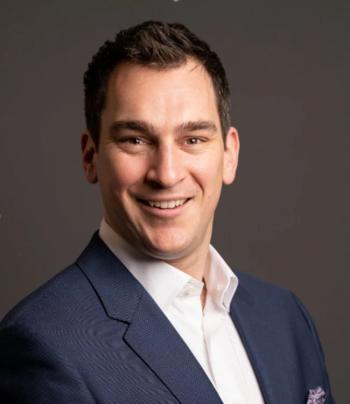
On this Earth Day, LCGC sits down with Toby Astill of Thermo Fisher Scientific to talk about laboratory testing of PFAS and how companies and industry work in tandem with governments and regulatory agencies to share information and effect changes in standards.

Here are the top five articles that the editors of LCGC International published this week.

Scientists from the Netherlands created a new LC–MS/MS assay to test new small molecular inhibitors (SMIs) and their effectiveness in prognosing lung cancer.

In this edition of "Inside the Laboratory," John A. McLean, the dean of graduate education and research at the College of Arts & Science of Vanderbilt University, discusses his laboratory's recent work regarding ion mobility-mass spectrometry (IM-MS) and how it can be applied in various fields.

LCGC International sat down with Katarina Marakova to discuss her group’s work in top-down analysis of proteins using capillary zone electrophoresis–mass spectrometry (CZE–MS).

In this interview from Analytica 2024 in Munich, Germany, Michael Lämmerhofer of the University of Tuebingen discusses the potential of chiral stationary phases (CSPs) in different applications.

Experts from academia and industry present on the innovative research projects they are working on.
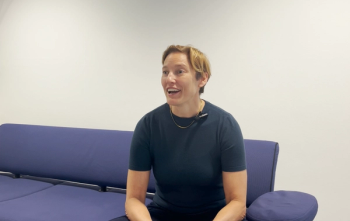
Bendt, of SLING, or Singapore Lipidomics Incubator, spoke with LCGC at Analytica 2024 about her research in the field of lipidomics, and about her work laying the ground for the Females in Mass Spectrometry group.
Here are the top five articles that the editors of LCGC International published this week.

Causon, of the University of Natural Resources and Life Sciences in Austria, spoke with LCGC at Analytica 2024 about his newest ion mobility–mass spectrometry (IM-MS) project, MobiliTraIN.

At Pittcon 2024, Massood Kadir, Business Development Manager at Syft Technologies, gave a live demonstration of real-time trace gas analysis by SIFT-MS, a direct mass spectrometry technique.
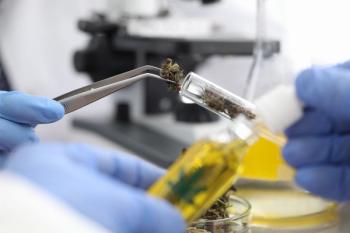
Chromatographic and spectroscopic techniques alike were reviewed for their current effectiveness and future potential in this lecture session at Analytica 2024.

At Analytica 2024, four speakers tackled the issue of water quality and how the detection of what is contained therein continues to evolve.

Researchers from the Massachusetts Institute of Technology (MIT) used three-dimensional printing to develop new electrospray emitters to improve medical diagnostics.
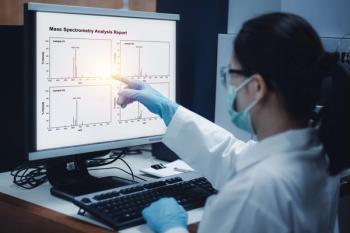
Scientists at the Analytica conference in Munich, Germany, spoke about clinical mass spectrometry and its use in metabolomics and lipidomics.

This article describes newly introduced high-performance liquid chromatography (HPLC), mass spectrometry (MS), chromatography data systems (CDS), and related products in 2023–2024. It summarizes their technical specifications and significant user benefits.

Rabi Ann Musah, PhD, a professor of chemistry at the University of Albany, State University of New York, is exploring ways to help protect seed viability through optimizing the isolation of specific compounds. We sat down with her to discuss her research and findings.

Yuefei Ruan from the City University of Hong Kong, China, discusses the relevance of target analysis, extractable organofluorine analysis, high-resolution mass spectrometry (HRMS) screening, and the oxidative conversion of precursors for the analysis of PFAS in aquatic environments.
Here are the top five articles that the editors of LCGC International published this week.