





LCGC International spoke with various corporate personalities about trends and developments in sample preparation.
LCGC International spoke with various corporate personalities about trends and developments in sample preparation.

LCGC International interviewed FeMS Empowerment Award winner Marta Relvas-Santos on her use of mass spectrometry to identify potential biomarkers and therapies for bladder cancer. She also shared insights on her work with FeMS and advice for fellow scientists.

The method of standard additions (MoSA) enables quantification of volatile impurities in condensed-phase samples, such as emulsions, for which matrix-matched calibration standards are required. The technique is, however, expensive because it requires multiple analyses of each sample.

This article will discuss an ion-pair reversed-phase liquid chromatography mass spectrometry (IP-RPLC–MS) workflow for the characterization of three messenger RNA (mRNA) key critical quality attributes: 5’ Cap, ORF, and poly(A) tail.

Here is some of the most popular content posted on LCGC International this week.

A look at some of the hottest topics in mass spectrometry.

Peng Che fom Vrije Universiteit Amsterdam in the Netherlands discusses the benefits of hyphenating liquid chromatography (LC) with electron activated dissociation mass spectrometry (EAD-MS) to analyze cathinone positional isomers.

Mithibai College of Arts scientists recently used liquid chromatography-tandem mass spectrometry (LC–MS/MS) for detecting nitrosamines in blood pressure medication.

A look at the practical benefits of using TIMS-TOF MS in spatial biology applications.

LCGC International sat down with Faith Johnson of ECOLAB to discuss her career and work with the Females in Mass Spectrometry (FeMS) group.

Researchers from Austria, Greece, and Italy conducted a study to analyze volatile organic compounds (VOCs) present in Irish and Scotch whiskys using solid-phase microextraction (SPME) Arrow with comprehensive two-dimensional gas chromatography coupled to mass spectrometry (GC×GC–MS) to examine the organoleptic characteristics that influence the taste of spirits.

A study has used gas chromatography coupled to a time-of-flight mass spectrometer to build an electron ionization mass spectra database of more than 250 chemicals classified as either volatile or semi-volatile compounds. An additional, confirmatory layer of liquid chromatography–mass spectrometry analysis was subsequently performed.

Limited toxicokinetic and toxicologic information is available about a diverse set of per- and polyfluoroalkyl substances (PFAS), but methods based on gas chromatography–tandem mass spectrometry (GC–MS/MS) can help unravel some of the mystery.

Messina Institute of Technology scientists used gas chromatography–mass spectrometry (GC–MS) was used to profile illegal samples of Cannabis sativa L.
Here is some of the most popular content posted on LCGC International this week.

Nicholas Ingram of IQVIA Laboratories recently spoke with LCGC International about using high-resolution mass spectrometry (HRMS) to help monitor drug stability.

Webcasts
Webinar Date/Time: Mon, Nov 18, 2024 11:00 AM EST
Here is some of the most popular content posted on LCGC International this week.
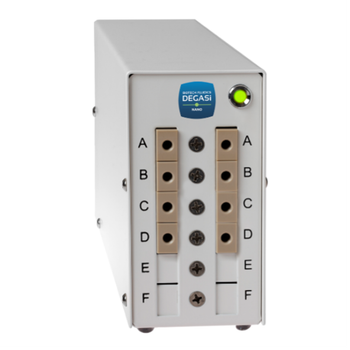
Biotech Fluidics recently released the Biotech Micro Flow Meter, a tool for continuously monitoring the consistency of nanoscale dispensing systems as well as UHPLC and LC/MS solvent/reagent delivery systems.

Scientists from the Institute of Analytical Chemistry of the Czech Academy of Sciences and Masaryk University recently tested various saliva sampling methods to optimize bile acid analysis.

Webcasts
Webinar Date/Time: Thu, Nov 7, 2024 11:00 AM EDT

This review aims to provide a summary of the most current analytical techniques and their applications in per- and polyfluoroalkyl substances (PFAS) research, contributing to the ongoing efforts to monitor and mitigate PFAS contamination.

Scientists recently used thermal desorption (TD) and gas chromatography– time-of-flight mass spectrometry (GC×GC-TOFMS) to track per- and polyfluoroalkyl substances (PFAS) emissions from materials used in firefighter gear.

Raquel Gonzalez de Vega of the University of Graz recently spoke to us about her work tracking per- and polyfluoroalkyl substances (PFAS) in ski wax products.

Navin Rauniyar and Xuemei Han of Tanvex Biopharma USA recently discussed how identifying product-related variants through characterization enables the recognition of impurities that compromise the quality and safety of drugs.