Pharmaceutical Analysis

Latest News


figure 1.png

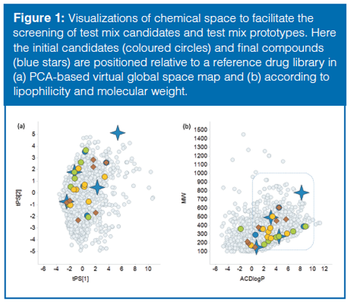
Chromatographic techniques with mass spectrometric detection are important enablers in modern drug discovery. With the development of robust instrumentation and implementation of user-friendly software (or software packages), non-expert users can now walk up to easily accessible advanced chromatographic systems and perform experiments at their own convenience. Although remarkable improvements in robustness and ease-of-use have happened since the introduction of the first high performance liquid chromatography–mass spectrometry (HPLC–MS) systems, the instrument performance still needs to be qualified and monitored to ensure consistent high-quality results. This article will demonstrate how a simple test mixture of carefully selected compounds can facilitate both the development of generic ultrahigh-pressure liquid chromatography–mass spectrometry (UHPLC–MS) methods and automated performance monitoring of multiple instruments located in separate laboratories and buildings.

Quantitative determination of the counterions associated with pharmaceutical salts is a mandatory requirement for quality control. While ion chromatography (IC) is the standard technique in most laboratories, capable of delivering excellent sensitivity, specificity and flexibility, there are other simpler and quicker analytical methodologies that may should be considered for this quality control application.

In this article, we discuss the use of CE-MS (sheath flow interface) for analysis of intact proteins as well as of protein digests. We discuss the unique aspects that the user needs to be aware of while testing biotherapeutics versus small molecule drugs. We also highlight that the optimization of CE and MS parameters together result in the creation of a more robust and reproducible protein analysis approach. Finally, we list some of the most common errors that are likely to occur during CE-MS analysis and suggest ways to overcome them.

In this column, we introduce the basics of today’s approaches for doing intact protein dissociation with mass spectrometry (MS), or top-down sequencing (that is, rather than the more conventional peptide-based “bottom-up” sequencing where future improvements might occur, advantages and limitations of using top-down sequencing, possible applications, and why it has become such an important and pursued research area for many.

A universal generic HPLC or UHPLC method with a primary modern column that works well for most drug analyses in a few minutes would be an attractive idea for many laboratories. With advances in column technologies, this ideal scenario is becoming more realistic, as demonstrated in the proposed 2-min generic method shown here. In addition, rationales for the selection of column and operating conditions are discussed, together with ways to extend this generic method as a starting point for stability-indicating applications by simple adjustments of gradient time and range.

Frank.jpg

Subcritical water chromatography (SBWC) is seen as an increasingly enticing prospect to replace high performance liquid chromatography (HPLC) in industrial settings because of its low costs and environmental impact. Yu Yang of East Carolina University, in Greenville, North Carolina, USA, has conducted research into this process for two decades. He recently spoke to LCGC about his work, why companies should consider SBWC, and its role in pharmaceutical analysis.

Glycosylation of monoclonal antibody (mAb) therapeutics is widely recognized by the regulators and the industry as a critical quality attribute (CQA). Hence, it is necessary that glycosylation is measured and adequately controlled during production. This installment reviews the various process parameters and raw material attributes that affect glycosylation, as well as the different analytical tools that are used for characterization, with greater emphasis on the chromatographic methods of analysis. Key recent advancements that have occurred in the past five years are also discussed briefly. While significant progress has been made in the monitoring of glycosylation, its real time control has yet to be demonstrated.

HPLC-figure4_web.jpg

The third installment in this series provides an overview of modern practices of separation science in small-molecule drug development. It highlights approaches in HPLC method development and physical/chemical characterization to support process chemistry and formulation development, and for assessment/control of the clinical trial materials. The role of the separation scientist in analytical development and salient chromatographic methodology trends are discussed.
GuestAuthor_web-1.jpg

A systematic approach for formation of sigmoidal gradient for analysis of biopharmaceutical proteins has been reviewed and discussed together with two case studies. The first application involves HPLC separation of the various product related variants of a microbial expressed biotherapeutic, granulocyte colony stimulating factor (GCSF). The second case study involves separation of the charge heterogeneity related variants for a monoclonal antibody (mAb) biotherapeutic product. In all cases, it is observed that the use of sigmoidal gradient successfully reduces the analysis time significantly (from 70 minutes to 15 minutes for GCSF and from 40 minutes to 4 minutes for the mAb) while retaining the selectivity and the resolution.

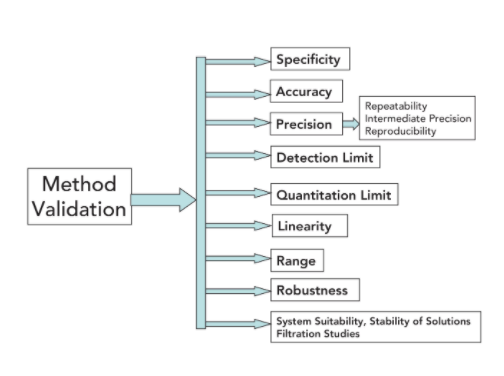
The United States Food and Drug Administration (FDA) has issued a new guidance document, Analytical Procedures and Method Validation for Drugs and Biologics. The guidance is quite general in nature. Anyone hoping for specific recommendations on topics such as which methods to use will be disappointed. Industry experts say that i really isn’t feasible for the FDA to provide detailed recommendations about analytical methods for biopharmaceuticals, however.

Table1-Web.jpg

This installment provides an overview of high-throughput characterization techniques of drug leads to support small molecule drug discovery programs in a pharmaceutical company. A myriad of analytical chemistry techniques including separation science methodologies are used to confirm the structures and identities, quantitating the concentrations of stock solutions, and measuring key physicochemical properties of the new chemical entities (NCE). A case study is used here to illustrate the details of these applications in high-throughput characterization.

Benedetto Natalini of the University of Perugia, Italy, spoke to Bethany Degg of The Column about the driving forces in pharmaceutical analysis, including the importance of regulation, chirality, and miniaturization.

During the past year, LCGC examined current trends in the application of liquid chromatography (LC), and gas chromatography (GC), and related techniques in environmental, food, forensics, and pharmaceutical analysis. This article presents some developments made by separation scientists working in these application areas and offers insights into the current trends in each field.