



Pharmaceutical Analysis
Latest News

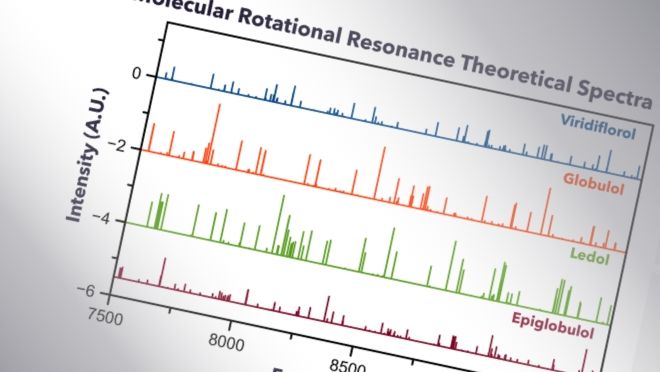
Rethinking Targeted Analysis: Structure-Specific Detection in Complex Food and Pharmaceutical Matrices
By BrightSpec
Advertisement
Latest Videos





Shorts
0:37
Tackling Complex Molecules in the Lab
8 months ago
by
Kate Jones
Advertisement
More News
Webcasts
Webinar Date/Time: Tue, Jun 16, 2026 11:00 AM EDT

Webcasts
Webinar Date/Time: Wednesday, May 27 and Thursday, May 28, 2026 Morning Session: 9:00 AM EDT Lunchtime Session: 12:00 PM EDT Afternoon Session: 1:00 PM EDT

Webcasts
Webinar Date/Time: Tue, May 19, 2026 1:00 PM EDT
Stop Guessing and Start Analyzing: An End to End Strategy for High Sensitivity, High Speed HPLC Analysis of Small Molecules
ByAvantor
Webcasts
Webinar Date/Time: Tue, Apr 7, 2026 11:00 AM EDT

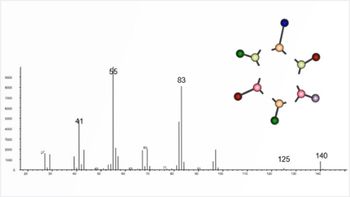
A liquid chromatography–tandem mass spectrometry (LC–MS/MS) method for the determination of 39 emerging contaminants in water at ultra trace concentrations has been developed and validated.
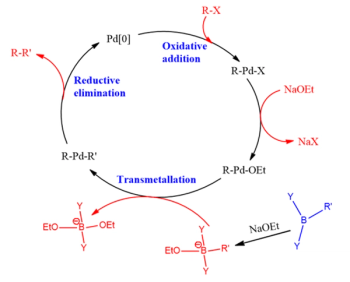
A quality attribute of Suzuki-Miyura coupling reactions is to measure residual levels of phosphine ligands in the reaction product. Residual phosphine ligands can be present in non-oxidized and oxidized forms. The non-oxidized and oxidized forms have different UV chromophores and can have differing solubility. These differences can preclude accurate and precise quantification. The extent of oxidation is difficult to prevent and control for calibration standards and test materials. This paper describes a method for derivatizing residual phosphines to the oxidized form. The oxidized form is stable and provides a basis for accurate quantification of residual phosphines. This overcomes the challenges for quantifying the non-oxidized and oxidized forms.
Webcasts
Webinar Date/Time: Thursday, February 19, 2025 8am PST | 11am EST | 4pm GMT | 5pm CET
As a long-standing member of the chromatography community, I am continually awestruck by the rate of change we consistently experience. Through the collective efforts of an entire community, we realize a fast-paced evolution that serves the world. In this article, we will aim to make the rapidly expanding and dynamic field of biopharmaceuticals approachable by taking a high-level look into its most recent success: peptide-based therapeutics.
Jessica Lin and Zhenqi (Pete) Shi from Genentech describe a novel machine learning approach to predicting retention times for small molecule pharmaceutical compounds across reversed-phase high performance liquid chromatography (HPLC) columns.
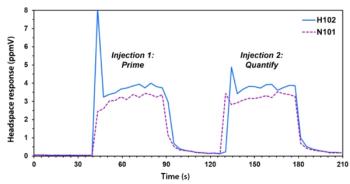
Selected ion flow tube mass spectrometry (SIFT-MS) offers potential for rapid screening of volatile nitrosamines and their amine precursors in a single run.
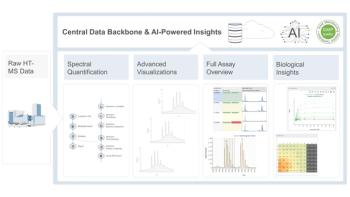
High-throughput mass spectrometry (HT-MS) is becoming a driving force in modern drug discovery. This article explains how a purpose-built digital ecosystem—featuring structured data, automation, artificial intelligence (AI)-driven analytics, and cloud scalability—is essential to translate massive HT-MS data sets into reproducible, actionable decisions.

GLP-1 receptor agonists (GLP-1 RAs) are transforming metabolic disease treatment, with analytical chemists playing a critical role in formulation, stability testing, and clinical trial support for injectable and oral therapies.

At the Eastern Analytical Symposium (EAS) in Plainsboro, New Jersey, Purdue researchers presented data suggesting that microscopic flaws in drug crystals—rather than just chemical composition or particle size—play a critical role in carcinogenic nitrosamine formation.
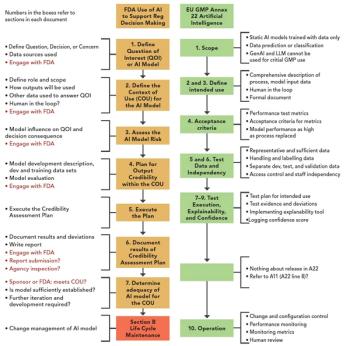
Does AI/ML help to enhance chromatographic peak integration? What do regulators say? Are you being seduced by technology?

Key aspects involved in manufacturing high-quality packed capillary columns, including fritting, column packing, and parallel fabrication, are discussed.

HPLC is indispensable in pharmaceutical analysis and quality control despite some notable shortcomings in laboratory testing and processes to ensure regulatory compliance.

SFC Europe 2025—the 19th International Conference on Packed Column Supercritical Fluid Chromatography and Related Techniques—will be held in Basel, Switzerland, on October 5–7, 2025. LCGC International spoke to John Reilly, Maria Kristina Parr, and Larry Miller about the important role that SFC now plays in life science analysis
SFC Europe 2025—the 19th International Conference on Packed Column Supercritical Fluid Chromatography and Related Techniques—will be held in Basel, Switzerland, on October 5–7, 2025. LCGC International spoke to John Reilly, Maria Kristina Parr, and Larry Miller about the evolution of supercritical fluid chromatography (SFC) in terms of technology and applications.
Analytical instrument makers reported strong Q2 2025 results, driven by sustained demand in the pharmaceutical and chemical industries, with consumables and recurring revenues outpacing instrument sales.

Best of the Week: Call for New Technology Submissions, Decoding Plant Stress Responses, Quantifying Cocoa Alkaloids
Published: | Updated:
In this article, you’ll find some of the top content that was published on LCGC this week, including calls for new chromatography technologies and interviews with rising stars in the field.
Best of the Week: Forensic Chromatography, Precision in Ethanol Testing, Analyzing Plant-Based Bioactives
Published: | Updated:
In this article, you’ll find some of the top content that was published on LCGC this week, including our upcoming forensic science content series and an interview on preanalytical factors for ethanol testing.

The company plans to invest billions in a new drug manufacturing hub in Virginia, dedicated to chronic disease treatments, alongside additional facilities in California, Indiana, Maryland, Massachusetts, and Texas.

The pharmaceutical industry’s move toward increased U.S.-based manufacturing is changing the landscape of career opportunities for analytical chemists.

In this article, you’ll find some of the top content that was published on LCGC this week, including a technical article on food flavor and an interview with the president of Shimadzu Europa.

In a new study, researchers used GC–MS and LC–MS were used to detect composition fraud in food supplement creation.
Advertisement
Advertisement