



Webcasts
Webinar Date/Time: Airing 1: Tuesday January 17, 2023 at 9am EST | 2pm GMT | 3pm CET Airing 2: Tuesday January 17, 2023 at 2pm EST | 1pm CST | 11am PST
Webcasts
Webinar Date/Time: Airing 1: Tuesday January 17, 2023 at 9am EST | 2pm GMT | 3pm CET Airing 2: Tuesday January 17, 2023 at 2pm EST | 1pm CST | 11am PST

Webcast
Webinar Date/Time: Thu, Dec 15, 2022 11:00 AM EST

Webcasts
Webinar Date/Time: Monday, November 28 2022 at 11 am EDT

Cover Story
The Column spoke to Brett Paull from the University of Tasmania in Hobart, Australia, about the development of truly portable LC systems for use in the pharmaceutical industry and in environmental analysis. Why are they necessary, and where can improvements still be made?
This case study of the career path of a separation scientist illustrates the diversified roles of an analytical chemist in nonclinical drug development.
Part 2 of a review of the recent Chromatographic Society (ChromSoc) spring symposium meeting focusing on small molecule analysis.

The first part of a review of the recent Chromatographic Society (ChromSoc) spring symposium meeting focusing on small molecule analysis.

This simple, rapid, and accurate HPLC-UV method can facilitate routine therapeutic drug monitoring in neonates.

Barry L. Karger and James P. Grinias are the winners of the 15th annual LCGC Lifetime Achievement and Emerging Leader in Chromatography Awards, respectively, for 2022. Here, we review their achievements.
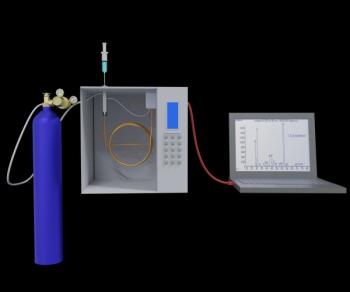
Compact instrumentation offers important advantages for many workflows, as illustrated by these examples.

This novel gas chromatography (GC)–MS approach enables analysis of the suspected mutagens bis(pinacolato)diboron (BPD) and tetrahydroxydiboron (BBA) found at low-levels in certain intermediates and active pharmaceutical ingredients (APIs), even in the presence of boron from other sources.
Here, a new automated active pharmaceutical ingredient (API) extraction platform is integrated with online liquid chromatography (LC) to assess drug product potency. The platform dissolves the tablet coating (if present), disintegrates the tablet, and disperses and solubilizes the tablet for analysis.

Webcasts
Thursday, October 21 at 10am EDT | 3pm BST | 4pm CEST and 1pm EDT | 12pm CDT | 10am PDT Discover the latest advances in instrumentation and applications for hydrocarbon processing, agrochemicals, and pharmaceuticals.
Webcasts
Tuesday, October 12 at 10am EDT | 3pm BST | 4pm CEST and 1pm EDT | 12pm CDT | 10am PDT Discover the latest advances in instrumentation and applications for hydrocarbon processing, agrochemicals, and pharmaceuticals.
Webcasts
Thursday, September 30 at 10am EDT | 3pm BST | 4pm CEST and 1pm EDT | 12pm CDT | 10am PDT Discover the latest advances in instrumentation and applications for hydrocarbon processing, agrochemicals, and pharmaceuticals.
This concise yet comprehensive overview of sample preparation for bioanalysis looks at sample preparation fundamentals, best practices, and modern trends—all illustrated with a case study.

This article discusses the development of a series of applications that will allow for the determination of a number of nitrosamines that have been identified by the FDA as genotoxins to monitor, initially showing how to perform a separation of these compounds from the API and then looking at how MS can be applied to the analysis to ensure that the required detection limits can be reached.

This is the first article in a four-part series exploring the quantitative assessment of drugs and their metabolites in biological fluids (such as blood, plasma, and urine) and tissue homogenates using liquid chromatography–mass spectrometry (LC–MS).

We assess recent advances in cleaning verification methods for small-molecule pharmaceuticals, and propose a workflow.

Is there a secret formula to getting hired into a pharmaceutical analytical chemistry group? What skills are prized above all others?

Ion-exchange chromatography (IEX) is a frequently overlooked technique. This novel IEX method uses non-aqueous mobile phases to purify a non-crystalline intermediate after a reductive amination with D-xylose. IEX delivers a step change in strength and purity of the intermediate allowing successful downstream processing.
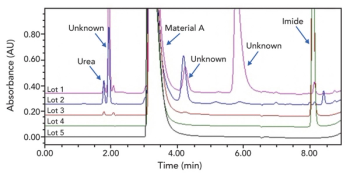
Drug substance development requires a range of analytical methods to be developed to generate process knowledge and to support in-process and release testing throughout a synthetic sequence. This article describes practical examples of a wide variety of transfer challenges and our remediation strategy.

This Friday morning session honors the 2021 LCGC award winners: Paul Haddad of the University of Tasmania, and the foundation director of the Australian Centre for Research on Separation Science (ACROSS); and Erik L. Regalado, of the pharmaceutical company Merck & Co.

Viewpoints
The COVID-19 vaccine, and the speed at which it was developed, is the medical breakthrough of our lifetimes.

Incognito leads us through the complex method used to determine related substances for hydroxychloroquine, exploring the practical implementation and critical evaluation of a less than optimum ultrahigh-pressure liquid chromatography (UHPLC) pharmacopeial method.