




Size-Exclusion Chromatography (SEC)
Latest News
Advertisement
Latest Videos
Advertisement
More News
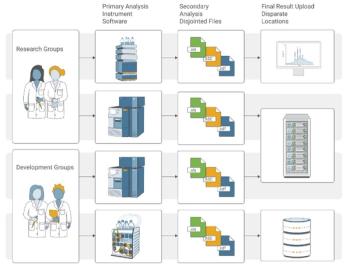
Interest in applying artificial intelligence (AI) and machine learning (ML) to chromatography is greater than ever. In this article, we discuss data-related barriers to accomplishing this goal and how rethinking chromatography data systems can overcome them.
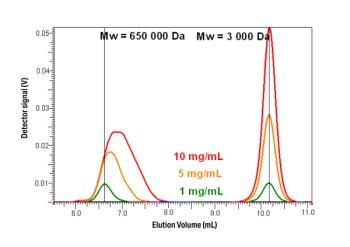
Sample concentration is a parameter that can influence the quality of gel permeation chromatography/size-exclusion chromatography (GPC/SEC) separations and the obtained results. Understanding this influence can help to support the development of reliable GPC/SEC methods.

Here is some of the most popular content posted on LCGC International this week.

This installment of Tips & Tricks focuses on the determination of the molar mass using a light scattering detector as an absolute detection method.

The 2024 Gulf Coast Conference will include a variety of presentations on chromatography. This article features a sampling of some upcoming sessions.

Waters Corporation scientists recently examined how different mobile and stationary phases affect small interfering RNA (siRNA) duplex stability in liquid chromatography.
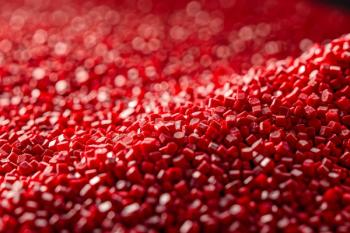
Polymer dispersions are used in numerous applications including paints, binders, and adhesives. These complex mixtures usually contain polymeric components that contribute significantly to their physical and chemical properties.

New automated two-capillary differential viscometer method measures PET dilute solution viscosity; precision tested on virgin and recycled PET samples.
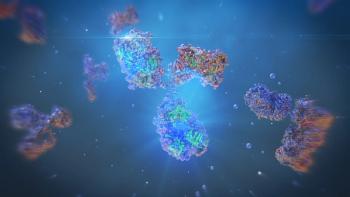
In biotherapeutics manufacturing, controlling size variants of therapeutic monoclonal antibodies (mAbs) is critical for ensuring product quality.

A session at the HTC-18 conference in Belgium featured speakers from around the world detailing the latest advances in biopharmaceutical analysis.
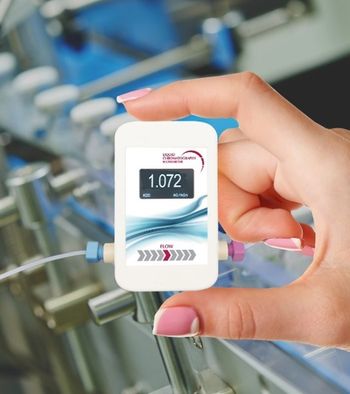
The flowmeter, Testa said in a press release, was compared favorably as an alternative to more traditional flow calibration methods for HPLC pumps.

This article covers liquid chromatography columns and accessories commercially released after Pittcon 2023 through the 2024 conference.

HRIM-MS has shown unique capabilities when used to analyze cyclic peptide therapeutics, and enhances the analysis of biopharmaceuticals by efficiently filtering out interfering compounds for direct analysis within a complex mixture. These findings demonstrate the technique's utility and versatility.

This installment of Tips & Tricks deals with pressure monitoring for GPC/SEC systems and gives hints for efficient troubleshooting to solve issues that are identified in the laboratory.
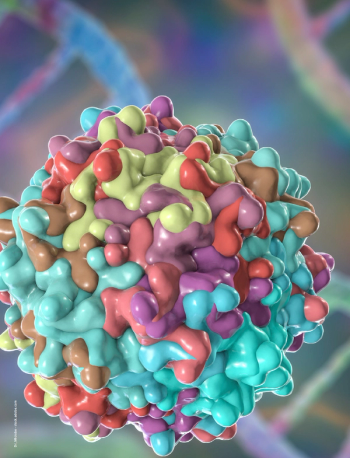
A fast and sensitive SEC technique incorporating a wide pore stationary phase with fluorescence detection, and its benefits, are described.

Bryan Troxell and other StrideBio scientists used size-exclusion chromatography with UV and multiangle light scattering (SEC-MALS) to measure changes in different viruses.

The purpose of this short tutorial article is to review the terms and official nomenclatures for size-exclusion separations and to provide some guidance and recommendations for practicing chromatographers. The interconversion between the different metrics is explained and some examples are presented.

Reliable calibration curves in the low molar mass region can be obtained when using the elution volumes of all separated oligomers of low molar mass standards on high resolution columns. This article explains how to do this.

Technological limitations have made it difficult for scientists to identify oligonucleotide aggregates. This can pose challenges when finding techniques to reliably analyze size variants for large nucleic acids and lipid nanoparticles (LNPs).

Alena Kubatova, a professor in the Department of Chemistry at the University of North Dakota, in Grand Forks, North Dakota, is exploring new approaches in characterizing lignin, to understand its structural complexities and how these methods can help improve processing in biorefineries. LCGC spoke to Kubatova to discuss her recent research in understanding the chemistry of lignin.

An interview with Reed Harris on critical quality attributes and other contemporary trends in biopharm analysis.

In a new study, nucleic acid and LNP aggregation is examined using prototype ultrawide pore size exclusion chromatography (SEC) columns with low adsorption capabilities.

How to overcome calibration issues in GPC/SEC using DMF and DMAc.

This instalment of “Column Watch” presents many of the highlighted topics and trends observed at this exceptionally well-run symposium.

How do you judge the potential success of separating two polymers using GPC/SEC?
Advertisement
Advertisement