Size-Exclusion Chromatography (SEC)

Latest News


Geo and Chen.jpg

The chemical composition of a copolymer material has a substantial impact on its properties and performance. Defining a composition profile is therefore an essential aspect of product development for these materials. The copolymer’s composition often varies considerably with molecular weight (MW), and in the R&D process, therefore, it requires a detailed analysis which maps out composition across the entire MW distribution.

figure 1 L.png

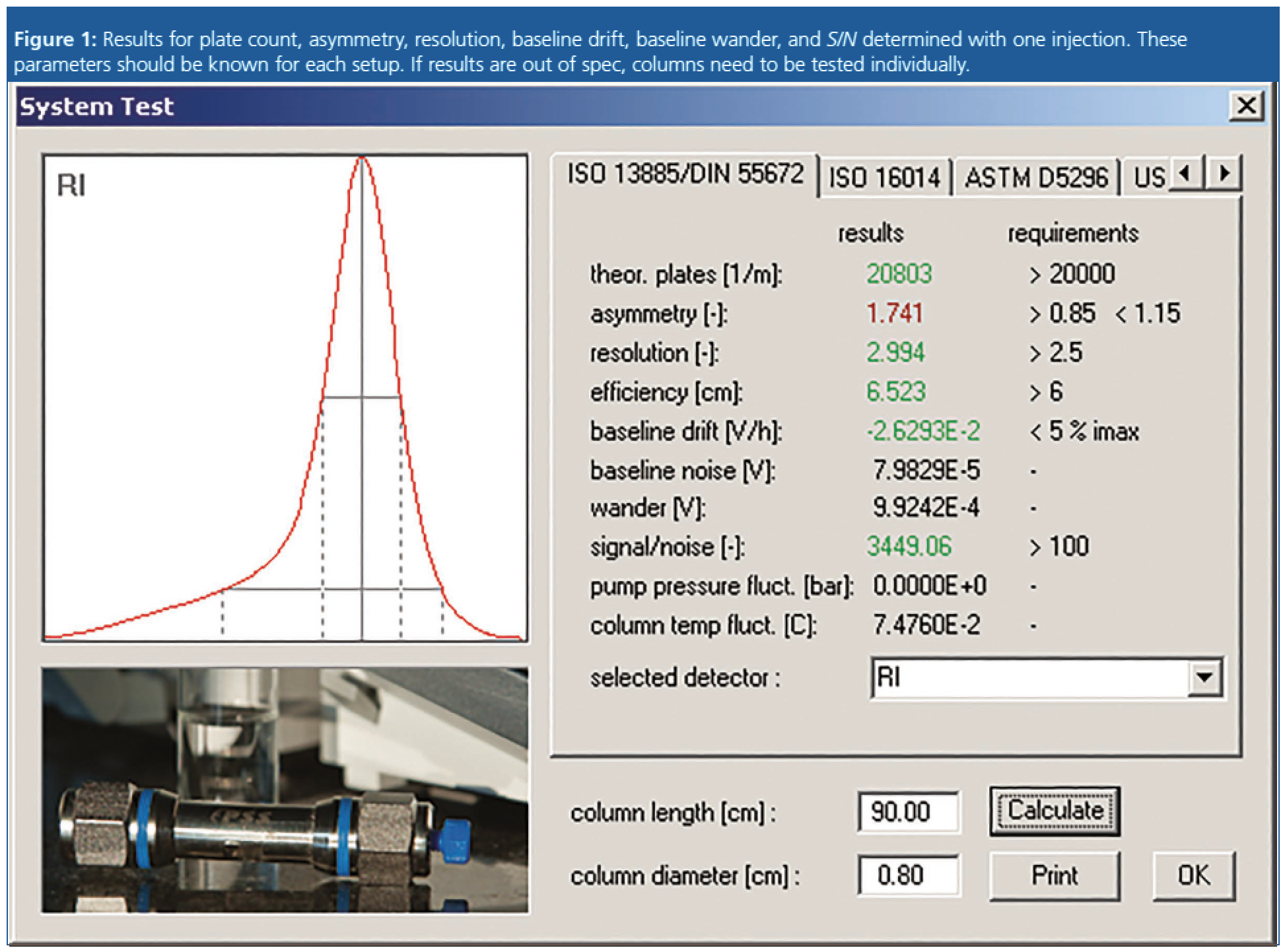
The refractive index (RI) detector is the most common detector in gel permeation chromatography/size-exclusion chromatography (GPC/SEC). The advantage of this universal detector is that it detects everything; the disadvantage is that it detects everything. This instalment of “Tips & Tricks” offers some advice when working with RI detectors.

figrue 2 L.png

Ultrahigh-pressure size-exclusion chromatography (UHP-SEC) offers multiple benefits for synthetic polymer characterization. However, despite the many advantages of UHP-SEC, its rapid, low-volume separation is more sensitive to column calibration errors and drift than traditional high performance (HP)-SEC. Additionally, only a small selection of column chemistries are available. It is therefore essential to combine UHP-SEC with online, low-volume multi-angle light scattering instrumentation (UHP-SEC-MALS) to overcome these challenges.

figure 1 L.png

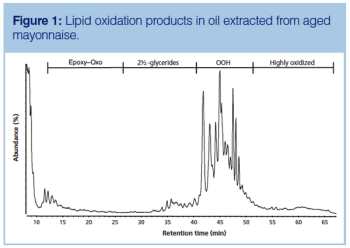
Monitoring lipid oxidation during the shelf life of lipid-containing food emulsions, such as mayonnaise, is challenging. It is, however, essential for the development of improved, consumer-preferred products. Determining the nonvolatile lipid oxidation products (NONVOLLOPS), the precursor compounds for rancidity, is required to determine the effectiveness of product stabilization technologies. A method based on normal-phase liquid chromatography with atmospheric pressure photo ionization-mass spectrometry (LC–APPI-MS) was developed for this purpose. The inclusion of a size-exclusion chromatography (SEC) step was needed to remove interfering diacylglycerides and free fatty acids from the samples. The combined SEC and normal-phase LC–APPI-MS method allowed the identification of a wide range of oxidized species including hydroperoxides, oxo-2½ glycerides, epoxides, and other oxidized species. The method was found to be more suitable for the analysis of large sample sets.

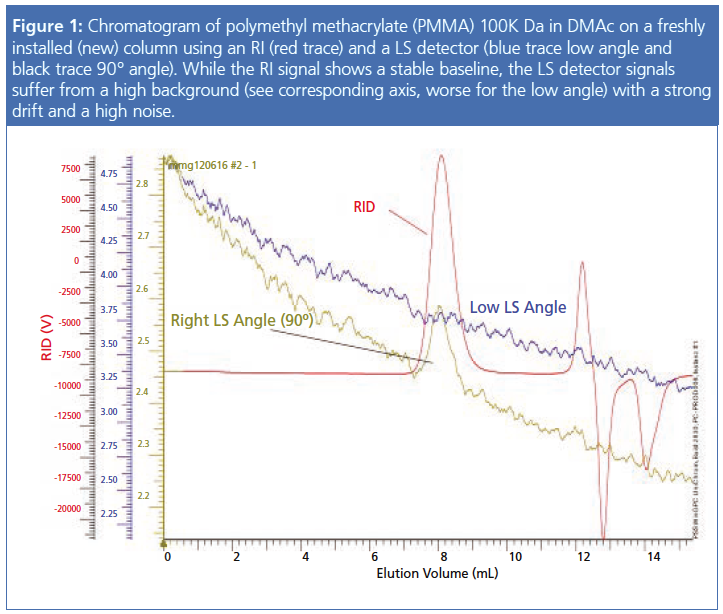
figure 1-1.png

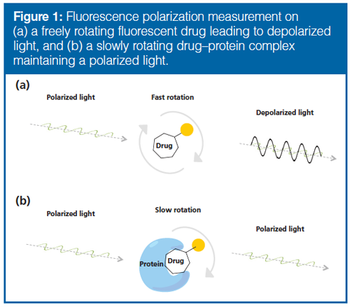
Fluorescence polarization (FP) is a highly regarded technique for studying drug–protein interactions, but has limited value regarding protein mixtures. As a novel approach to drug target discovery, the possibility of combining FP with liquid chromatography (LC) was explored. Nondenaturing protein LC principles such as size-exclusion chromatography (SEC), hydrophobic interaction chromatography (HIC), and ion exchange chromatography (IEX) were found to be orthogonal and compatible with FP because the mobile phases used do not negatively affect detection. For simple protein mixtures, the SEC/HIC/IEX–FP approach was able to identify tankyrase as the target of a triazole-based inhibitor of the Wnt signaling pathway, which is heavily associated with colon cancer. However, the total peak capacity of the three LC dimensions was not sufficient to resolve at cell-proteome level, calling for higher resolution of intact proteins to enable stand-alone drug target discovery with LC and FP.

Majors-Figure-10-web.jpg

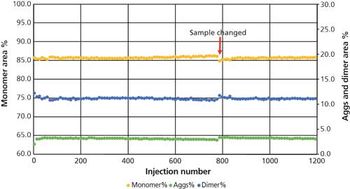
With many new biopharmaceuticals now being developed, robust analytical methods are needed to ensure that these protein-based drugs are of high purity and safe with a minimum amount of side effects. Size-exclusion chromatography is an important technique in investigating purity and is useful to identify and monitor protein aggregation, which can have economic and immunogenicity effects. This article discusses those column parameters that are most important in the selection of the optimum phase for SEC separations.

i4-457019-1408662773642.jpg

Size-exclusion chromatography (SEC) and pyrolysis-gas chromatography (Py-GC) are commonly used to characterize copolymers. SEC is a powerful method to determine the molecular-weight distribution of polymers whereas Py-GC provides valuable information on their chemical composition. The combination of these two techniques could yield combined size and composition information for copolymers or polymer mixtures. A fully automated system was constructed to perform these two-dimensional (2D) characterizations. Several examples of the use of this new technique to comprehensively characterize polymers are described.