

Sponsored Content
Method transfer or method scaling across different LC instruments can be affected by both dwell volume and extra-column dispersion. Each characteristic will have a different effect on the chromatographic separation.
Sponsored Content
Method transfer or method scaling across different LC instruments can be affected by both dwell volume and extra-column dispersion. Each characteristic will have a different effect on the chromatographic separation.
Sponsored Content - NA
With the increase of research with Eudragit, consistent molecular weight measurements have become more prevalent. Shodex has shown a repeatable SEC method using the GF-510 HQ column.
Sponsored Content - EU
This application note shows how the combination of column chromatography (SEC/GPC) with Multi-Angle Light Scattering (MALS), Dynamic Light Scattering (DLS) and RI detection can be applied as a powerful tool to identify monomers, dimers, hexamers and higher aggregates of insulin.
Sponsored Content - NA
This application note shows how the combination of column chromatography (SEC/GPC) with Multi-Angle Light Scattering (MALS), Dynamic Light Scattering (DLS) and RI detection can be applied as a powerful tool to identify monomers, dimers, hexamers and higher aggregates of insulin.
Sponsored Content - EU
Traditional extraction typically involve intensive manual LLE shakes at both pH 2 and 12 prone heavy emulsions and low recoveries or CLLE for traditional base, neutral, and acid for semivolatiles extractions can take up to 24hrs. By incorporating automated SPE with multi-bed sorbents, base, neutral, and acid for semivolatiles samples can be extracted with a single pass procedure without emulsions, centrifuging, and hours of manual labor. The FMS TurboTrace ABN SPE system is designed to handle multiple cartridges and provides a fully automated solution for the semivolatile extraction process.
Sponsored Content - NA
Traditional extraction typically involve intensive manual LLE shakes at both pH 2 and 12 prone heavy emulsions and low recoveries or CLLE for traditional base, neutral, and acid for semivolatiles extractions can take up to 24hrs. By incorporating automated SPE with multi-bed sorbents, base, neutral, and acid for semivolatiles samples can be extracted with a single pass procedure without emulsions, centrifuging, and hours of manual labor. The FMS TurboTrace ABN SPE system is designed to handle multiple cartridges and provides a fully automated solution for the semivolatile extraction process.
LCGC Europe
This application note demonstrates that Markes International’s automated thermal desorption systems offer excellent results for monitoring volatile organic compounds (VOCs) in stationary source emissions in accordance with the updated version of the European standard method CEN/TS 13649 released in 2014. The value of repeat analysis for method development and result verification is also demonstrated.
What is thermal desorption and how can it extend the capability of GC? In this podcast, you’ll hear the answers to these questions directly from Elizabeth Woolfenden, a leading expert on this sample introduction technique. As a co-founder of Markes International, widely acknowledged as the world leaders in TD, Elizabeth has been right at the heart of the development of thermal desorption, and will draw on her experience to highlight the scope of the technique, along with key technical innovations and emerging applications. So whether you’re new to TD and want a quick introduction, or an experienced analyst interested in hearing a personal perspective, don’t miss this unique opportunity to get the lowdown on thermal desorption from a major player in the area!
LCGC Europe
This application note describes a UPLC-MSE analysis of monoclonal antibody (mAb) disulfide bond. This study demonstrates that UNIFI-a compliance-ready software-is designed to support biopharmaceutical laboratories in performing fast peptide mapping and monitoring of mAb disulfide linkages.
Sponsored Content - AP
This whitepaper provides a summary of the impact of PIC/S, and compliance with the PIC/S document PE 009-12 “Guide to Good Manufacturing Practice for Medicinal Products Annexes“ Annex 11 Computerised Systems. It includes a high-level foundation to understand how pharmaceutical manufacturing companies are being regulated, what PIC/S means for common requirements across different countries, and how these requirements relate to expectations for data from computerised systems/electronic records.
The Application Notebook
LCGC North America
The quick capture and accurate titer analysis over a wide concentration range of monoclonal antibody is demonstrated using a TSKgel® Protein A-5PW, 20 μm analytical column.
The Application Notebook

Special Issues
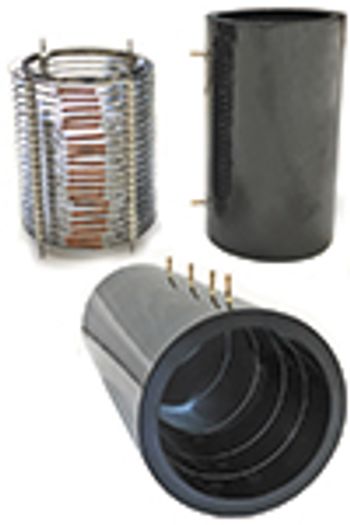
Reflectron lenses are used in time-of-flight (TOF) mass spectrometers to create an electrostatic field to alter ion flow, providing for a longer flight path and therefore greater resolution.
LCGC North America
The development of an automated online SPE–LC–MS-MS method for the analysis of 25-OH-vitamin D2, 25-OH-vitamin D3, and 3-Epi-25-OH-vitamin D3 from human serum.
LCGC North America
Enhancing the extraction of vitamin A and E in serum using simplified liquid extraction (SLE) significantly improves the LC–MS-MS detection of target compounds without an overly complex method or sacrificing robustness.
LCGC Europe
The development of an automated online SPE–LC–MS-MS method for the analysis of 25-OH-vitamin D2, 25-OH-vitamin D3, and 3-Epi-25-OH-vitamin D3 from human serum.
LCGC North America
A full ESI+/ESI- 52 drug panel was performed in 7 min and 30 s, including re-equilibration (44 in ESI+ and 8 in ESI-). This rapid analysis showed great resolution and no loss in sensitivity compared to slower methods.
LCGC Europe
A full ESI+/ESI- 52 drug panel was performed in 7 min and 30 s, including re-equilibration (44 in ESI+ and 8 in ESI-). This rapid analysis showed great resolution and no loss in sensitivity compared to slower methods.
LCGC Europe
Enhancing the extraction of vitamin A and E in serum using simplified liquid extraction (SLE) significantly improves the LC–MS-MS detection of target compounds without an overly complex method or sacrificing robustness.
LCGC North America
A simple automated extraction method using a Tecan Freedom EVO® 100 liquid handler and Phenomenex’s Novum simplified liquid extraction (SLE) 96-well plate. Analysis of isomeric cortisone and prednisolone by UHPLC by Kinetex 2.6 μm, 50 x 3 mm core-shell Biphenyl column was used to successfully separate these two compounds and their isomers.
LCGC Europe
A simple automated extraction method using a Tecan Freedom EVO® 100 liquid handler and Phenomenex’s Novum simplified liquid extraction (SLE) 96-well plate. Analysis of isomeric cortisone and prednisolone by UHPLC by Kinetex 2.6 μm, 50 x 3 mm core-shell Biphenyl column was used to successfully separate these two compounds and their isomers.
LCGC Europe
Using a single LC–MS-MS application, 12 steroids were separated. However, three separate panels are also run as an alternative method.
LCGC North America
This application note describes the GC¬¬–MS analysis of 23 drugs of abuse from various compound classes such as amphetamines, benzodiazepines, cannabinoids, and other illicit drugs.
LCGC North America
A simple sample preparation procedure and a rapid, sensitive, specific UHPLC–MS-MS method has been developed for quantifying several antidepressants and metabolites.
LCGC North America
Using a single LC–MS-MS application, 12 steroids were separated. However, three separate panels are also run as an alternative method.
LCGC Europe
A simple sample preparation procedure and a rapid, sensitive, specific UHPLC–MS-MS method has been developed for quantifying several antidepressants and metabolites.
LCGC Europe
This application note describes the GC¬¬–MS analysis of 23 drugs of abuse from various compound classes such as amphetamines, benzodiazepines, cannabinoids, and other illicit drugs.
LCGC Europe
The collection of oral fluid is gaining popularity due to the fact that it is not intrusive and easy to use. In this study we look at four different devices, and compare the results obtained for drugs varying in terms of hydrophobicity and their acidity/basicity.
LCGC North America
The collection of oral fluid is gaining popularity due to the fact that it is not intrusive and easy to use. In this study we look at four different devices, and compare the results obtained for drugs varying in terms of hydrophobicity and their acidity/basicity.