
The Application Notebook
Coenzyme Q10, found naturally in the body, is involved in the production of body energy. Thus, heart, lung, and liver have the highest concentration of Q10.
The Application Notebook
Coenzyme Q10, found naturally in the body, is involved in the production of body energy. Thus, heart, lung, and liver have the highest concentration of Q10.
The Application Notebook
On June 14, 2011, the FDA issued stricter regulations on how sunscreen manufacturers can label over-the-counter sunscreen products. In the summer of 2012, manufacturers with an annual sale of $25,000 or more will have to characterize the active ingredients found in their sunscreens (1).
The Application Notebook
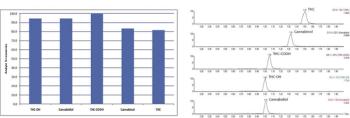
A simple and efficient supported liquid extraction (SLE) procedure for the extraction of THC and metabolites from human plasma at low levels has been developed.
The Application Notebook
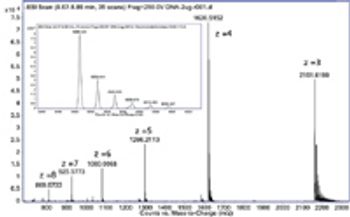
Recognition of DNAs and RNAs wide range of biological actions has driven modern biopharmaceutical research into the therapeutic value of oligonucleotides.

The Application Notebook
Flexible synthetic fused silica capillary is routinely supplied to the market in long continuous lengths on low cost Styrofoam or plastic spools.
The Application Notebook
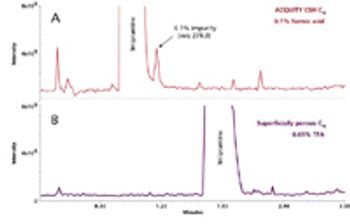
Many modern stationary phases suffer from poor chromatographic performance for basic compounds at low pH, especially when using low-ionic strength mobile phases such as formic acid.
The Application Notebook
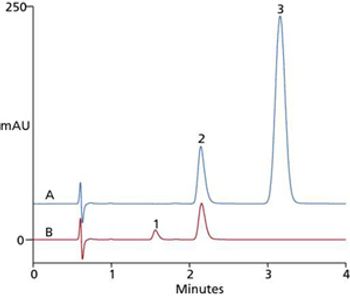
Nicotine is a famously addictive alkaloid found in tobacco. Controlled doses of nicotine compounds are sometimes used to help tobacco users quit smoking.
The Application Notebook
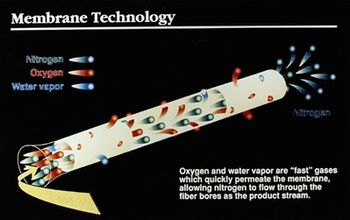
Since the gas flow required for the separation step in gas chromatography is frequently lower that that required to optimize the detection, nitrogen is used as a make-up gas to increase the gas flow for detection.

The Application Notebook
The separation of closely related compounds is of interest to many disciplines including natural products, flavors and fragrances, and pharmaceuticals.

Special Issues
GC–MS analysis of urine for drugs of abuse is commonplace, but can be complicated by high matrix effects and frequent co-elution.

Special Issues
In the recently published 2nd edition of Modern Size Exclusion Liquid Chromatography: Practice of Gel Permeation and Gel Filtration Chromatography (1) it is stated that the debate about which column to place first when running a series of SEC columns is still open.
The Application Notebook
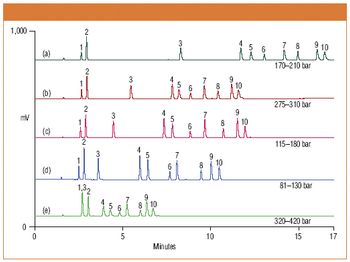
Cationic surfactants are used as disinfectants, corrosion inhibitors, phase-transfer catalysts, wetting agents, dispersants, and even mobile phase modifiers in liquid chromatography.

The Application Notebook
Cocaine is a central nervous system stimulant derived from Erythroxylon coca.
The Application Notebook
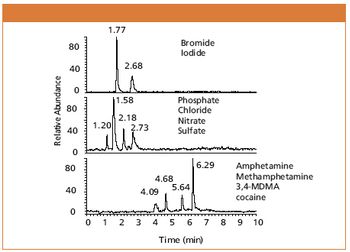
Illicit cocaine, amphetamine, methamphetamine, and ecstasy (MDMA) are often encountered in the form of salts and identification of the specific counter ion present may provide valuable information about the source of production and the manufacturing pathway.
The Application Notebook
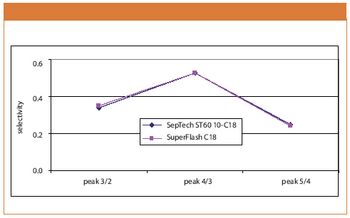
This note examines the benefits of using flash or HPLC for compound purification. Results show that flash is a viable alternative to HPLC.
The Application Notebook
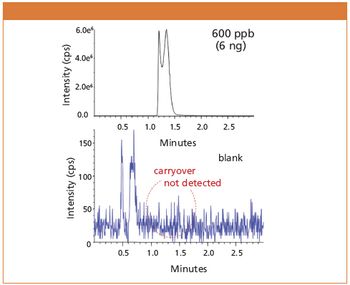
This article reports a new sample injection mechanism for an autosampler that directly transfers a sample to column without passing it through any flow-changing device, and hence minimizes a delay volume and reduces a carryover signal to the extreme level.
The Application Notebook
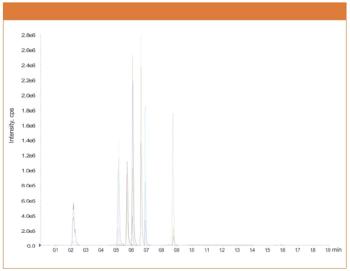
Urine is often used to analyze drugs of abuse because it is easy to collect and is available in copious amounts.

The Application Notebook
Method development in reversed-phase liquid chromatography (RPLC) can be challenging for structurally similar compounds.
The Application Notebook
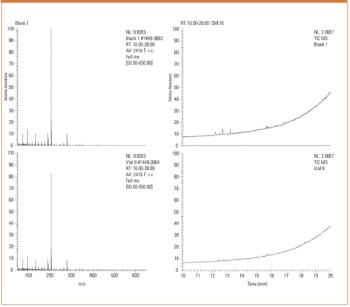
Methods: Vials and closures were exposed to acetonitrile for 2 h and subsequently analysed by LC-UV, LC–MS, and GC–MS to characterize the interferences.

The Application Notebook
P-hydroxybenzoic acid esters, also called parabens, are widely used as antimicrobial preservatives in cosmetic products.

The Application Notebook
For many years, the use of guard columns has been advocated by column manufacturers and other experts to protect and extend column lifetime and performance of analytical columns from potential damage caused by the presence of chemical contaminants and microparticulates in the sample and mobile phase.

The Application Notebook
Phenol formaldehyde resins are formed by a step-growth polymerization. GPC/SEC with RI and UV detection is often used to characterize resins and to quantify the amount of different oligomeric species.

The Application Notebook
The analysis of tea tree oil requires a severe quality control due to its potential to induce and elicit skin allergies. Tea tree oil is an essential oil and consists of a large number of constituents. Heart-cut Multidimensional GC–MS is very well suited to analysis of samples of such high complexity.

The Application Notebook
The release of certain chemicals from building products is of increasing concern due to their potentially detrimental effect on human health and the environment; therefore, new regulations requiring the production of low emission materials are currently being implemented. Novel sampling technology has been developed to help building product manufacturers obtain informative emissions data to develop compliant products and maintain product quality on a routine basis.
The Application Notebook
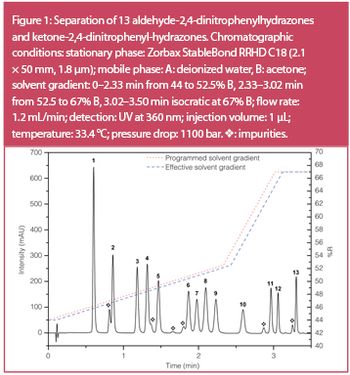
This application note deals with the development of a fast method for the determination of 13 aldehyde and ketone derivates with the Agilent 1290 Infinity LC-system. The method, which used acetone as organic co-solvent, separates the analytes within 3.5 minutes.
The Application Notebook
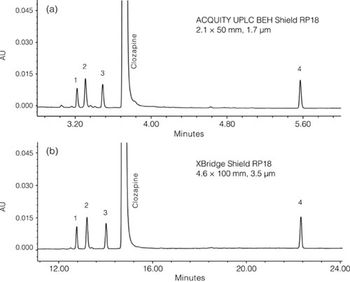
Transferring LC methods between instruments and/or laboratory sites is a common practice that allows analytical scientists to maximize equipment usage.

The Application Notebook
For many years, the use of guard columns has been advocated by column manufacturers and other experts to protect and extend column lifetime and performance of analytical columns from potential damage caused by the presence of chemical contaminants and microparticulates in the sample and mobile phase.
The Application Notebook
Introduction
The Application Notebook
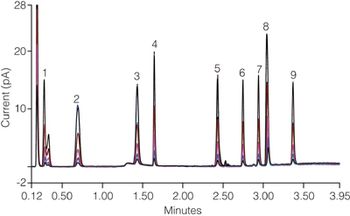
Quantification of substances, such as drug impurities or library compounds when pure standards are not available is difficult yet often necessary.
The Application Notebook
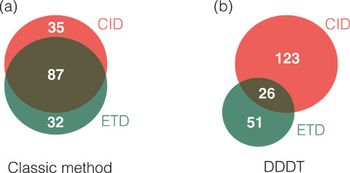
Collision-induced dissociation (CID) and electron transfer dissociation (ETD) are complementary mass spectrometric fragmentation techniques. We have used CID and ETD in different approaches to analyse tyrosine phosphorylation using a Thermo Scientific LTQ Orbitrap XL equipped with ETD.