Prof. Novotny discusses the joys of mentoring and the future of separation science.

Prof. Novotny discusses the joys of mentoring and the future of separation science.

This information is supplementary to the article “Middle-Up Characterization of the Monoclonal Antibody Infliximab by Capillary Zone Electrophoresis-Mass Spectrometry” that was published in the March 2019 issue of LCGC Europe.

Do you have questions about how to ensure data integrity? Then tune into this podcast series from LCGC. In this episode, hear from data integrity and quality systems expert Mark Newton about the shifting focus in data integrity, common problems and questions, and what you need to think about as you address data integrity in your company, or as you update software.

Do you have questions about how to ensure data integrity? Then tune into this podcast series from LCGC. In this episode, hear from data integrity and quality systems expert Mark Newton about dealing with data integrity issues arise in connection with sampling, sample preparation, aborted chromatographic runs, chromatographic integration, hybrid models, and more.

Do you have questions about how to ensure data integrity? Then tune into this podcast series from LCGC. In this episode, hear from data integrity and quality systems expert Mark Newton about the role of second-person review, the four Cs, training, oversight, and preparing for the future.


The Column

Click the title above to open the LCGC Europe February 2019 regular issue, Vol 32, No 02, in an interactive PDF format.

Just as medical practitioners are able to discern worrying features from a variety of medical physics devices (electrocardiogram, electroencephalogram, ultrasound, for example), we need to develop the skill to identify worrying symptoms from our HPLC instrument output.

If you have a method or process that involves a number of different variables, multivariate optimization approaches can provide a faster route to optimum conditions and can lead to a more reliable outcome than using a one-factor-at-a-time approach. With a little study and practice, students and researchers can apply these optimization techniques, even if a complete understanding of the underlying statistical treatments is not immediately apparent.

Incognito recalls the words of wisdom from an “old-school” supervisor who mentored him on the art of effective trace analysis.

Extraneous peaks, unrelated to the solute to be characterized, are quite common in gel permeation chromatography/size-exclusion chromatography (GPC/SEC), especially when refractive index (RI) detection is used. This instalment of Tips & Tricks explains why system or ghost peaks appear and how to minimize their appearance.

A surge in the development and commercialization of monoclonal antibody (mAb)-based ther-apeutics has driven the requirement for accurate and reproducible analytical methods for pro-tein characterization. Monoclonal antibodies are popular biologic drug candidates, but are sus-ceptible to a myriad of modifications during manufacture and complex degradation pathways during purification and storage, often leading to distinct charge variants that require character-ization and quantification. Ion‑exchange liquid chromatography (IEX) is a well-accepted and widely used technique to separate various mAb charge variant species for the sake of charac-terization and profiling. With the most recent advances in analytical technologies, IEX can be used to help ensure the selection of stable and efficacious mAb drug candidates, from discov-ery through manufacturing.

Researchers from Postnova have used asymmetrical flow field-flow fractionation coupled to AF4-MALS to successfully characterize a polydisperse cellulose nanocrystal for size and thickness.

Researchers from the PUC-Rio in Rio de Janeiro, Brazil, have found unexpectedly high uranium concentrations in groundwater samples from the mountainous region near Rio de Janeiro City.

Chiral Technologies Inc. has announced the acquisition of Arbor Biosciences.

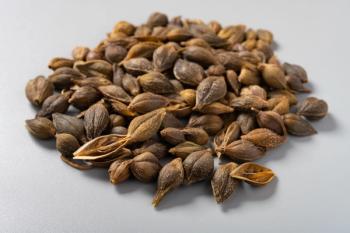
Researchers from Hacettepe University, Ankara, Turkey, have developed an UHPLC–MS/MS method to determine serotonin in raw and roasted nuts and nut products, including bars, chocolate, and spreads.

Click the title above to open The Column February 2019 North American issue, Volume 15, Number 2, in an interactive PDF format.

Click the title above to open The Column February 2019 Europe & Asia issue, Volume 15, Number 2, in an interactive PDF format.

Two-dimensional gas chromatography (GCxGC) is becoming the technique of choice for analysis of highly complex samples such as petroleum, pharmaceuticals, biological materials, food, flavors, and fragrances. Here, we explain how GCxGC works and provide examples that illustrate its advantages.

Click the title above to open the LCGC North America February 2019 regular issue in an interactive PDF format.

Data integrity is paramount when working in a regulated environment. Data process mapping is an excellent way to identify and mitigate data gaps and record vulnerabilities in a chromatographic process. This approach is simple and practical.

The contributions of Milos V. Novotny and Ken Broeckhoven, the winners of the 2019 LCGC Lifetime Achievement and Emerging Leader in Chromatography Awards, are presented.

It is often possible to achieve better sensitivity and lower limits of detection and quantitation using standard gas chromatography instrumentation. Paying attention to fundamental variables-like sample solvent, initial oven temperature hold, carrier gas operating mode, and thermal gradients- can lead to much improved method performance.

When can we use completely aqueous eluents with reversed-phase stationary phases, and what happens if we make a mistake?

This instalment of “GC Connections” begins with a brief introduction to GC×GC, follows with examples of how GC×GC opens additional avenues of analysis, and it concludes with information about how to learn more.

Tips to improve signal-to-noise ratio when using standard gas chromatography (GC) equipment.

The third meeting in the “Emerging Separations Technologies” series will take place on Thursday 28 March 2019 at RSC Burlington House, Piccadilly, London.

LCGC Asia Pacific spoke to Yong Liu and Adam Socia from MSD about the cost-saving benefits of implementing green chromatography in the pharmaceutical sector, the importance of analytical method volume intensity (AMVI), and effective practices to reduce solvent consumption and replace harmful solvents, including supercritical fluid chromatography (SFC), fast chromatography, and “cocktail chromatography”.