
Shimadzu Scientific Instruments recently finalized the purchase of a new two-story building at its headquarters in Columbia, Maryland.
Shimadzu Scientific Instruments recently finalized the purchase of a new two-story building at its headquarters in Columbia, Maryland.

After the morning break, there will be a session on hydrophilic interaction liquid chromatography (HILIC), with five speakers addressing different aspects of the technique. The session, which runs from 10:30 am to 12:15 pm, will be held in Ballroom D. David McCalley of the University of the West of England, well known as a HILC expert, will kick off the session with a talk on managing deleterious solute interactions with metals in HILIC—and, most likely, with his usual humor.
The 10 finalists for this year’s Csaba Horváth Young Scientist Award. who were chosen by the HPLC scientific committee from submitted abstracts, will give oral presentations throughout the week. The award will be presented during the closing ceremony on Thursday, June 23.
Erin Baker, an associate professor at North Carolina State University in Raleigh, North Carolina, is the 2022 recipient of the Georges Guiochon Faculty Fellowship. The Fellowship honors the memory of Georges Guiochon and recognizes his major contributions to high performance liquid chromatography (HPLC), including his interest in fostering the careers of young people in separation science.
Gioacchino Luca Losacco of Merck & Company in Rahway, New Jersey, is a finalist for the Csaba Horvath Young Scientist Award. Today at 5:15 pm, he will be presenting a paper entitled, “Automated Ion Exchange Chromatography Screening Combined with In Silico Multifactorial Simulation for Efficient Method Development and Purification of Biopharmaceutical Targets.” Co-authors include Michael B. Hicks, Jimmy DaSilva, Miraslava Potapenko, Fuh-Rong Tsay, Imad Haidar Ahmad, Ian Mangion, and Erik L. Regalado—all from Merck and Company—and Davy Guillarme of the University of Geneva, Switzerland. This talk is part of the Monday afternoon parallel session 4C, “Theory–I,” in Ballroom C.
Today at 3:45 pm, John W. Dolan of LC Resources in McMinnville, Oregon, will be presented with the 2022 Uwe D. Neue Award in Separation Science. He will then give a talk titled, “In the Fullness of Time: The DryLab Story.” His talk will be the first presentation in the Monday afternoon parallel session 4C, “Theory–I,” in Ballroom C.
Free lunchtime vendor technical workshops will be offered on Monday, Tuesday, and Wednesday from 12:45 to 1:45 pm, with two workshops occurring each day, in parallel sessions. The vendor technical workshops provide opportunities to get acquainted with the latest developments in equipment, media, and services available on the market. Symposium registrants who wish to participate in the free vendor technical workshops must pre-register early onsite at the booth of the workshop sponsor in the exhibit hall.
Free “Sunrise Tutorials” will be held on Tuesday, Wednesday, and Thursday mornings from 8:00 to 8:50 am, with two parallel talks each morning. The tutorial track is part of the educational mission of HPLC 2022. Experts are asked to give presentations on a topic with more background than might be found in a typical 20-minute talk. The goal is to make the topic more accessible to those less expert in the area. In some cases, discussion and other interactive activities may be used. (Open to all conferees, first-come seating).
The opening ceremony, sponsored by the Washington Chromatography Discussion Group, begins at 4:30 pm in Ballroom C/D. This will be followed by two plenary lectures.
This parallel session, entitled “Biopharmaceuticals: Forward Looking,” is co-chaired by Peter Yehl of Genentech, Inc. and Samuel Foster of Rowan University in Glassboro, New Jersey, USA. It will be held from 3:45 to 6:00 pm in the Palm Rooms 1-2-3.
This parallel session is co-chaired by Elia Psilakis of the Technical University of Crete in Greece and Katerina Plachka of Charles University in the Czech Republic and includes four talks. It will be held from 9:00 to 10:30 am in Ballroom D.
Today from 3:45 to 6:00 pm, there will be a parallel session titled “Pharmaceutical Analysis,” which will include four talks from experts in the field. This session will be presided over by Todd Maloney of Eli Lilly and Company and Alexandre Goyon of Genentech, Inc.
Today from 9:00 to 10:30 am, there will be a parallel session titled “Microscale Separations,” which will include four talks from experts in the field. This session will be presided over by Takuya Kubo of Kyoto University and Sebastian Piendl of the University of Leipzig.
Gioacchino Luca Losacco from Merck & Company in Rahway, New Jersey, is a finalist for the Csaba Horvath Young Scientist Award. He will be presenting a paper at 5:15 pm entitled, “Automated Ion Exchange Chromatography Screening Combined with In Silico Multifactorial Simulation for Efficient Method Development and Purification of Biopharmaceutical Targets.”

Researchers have developed and validated a sensitive analytical method for the determination of 16 PFAS in fine airborne particulate matter (PM2.5) using online SPE coupled with LC–ESI-HRMS.

LCGC is proud to announce that Szabolcs Fekete is the winner of the 2022 HTC Innovation Award. Fekete was honoured at the Hyphenated Techniques and Separations Technology (HTC-17) conference in Ghent, Belgium on Friday 20 May 2022 for his outstanding contributions to the field of separation science.

Agilent Technologies Inc. has announced that it has joined the NIIMBL, demonstrating Agilent’s commitment to supporting biopharmaceutical and biotherapeutics customer challenges through partnership and innovation using tools and workflows.

BioMed X has announced the start of its “Ukraine Refugee Funding Programme” that supports doctoral students and masters-level researchers in the life sciences who cannot continue their work at institutions in Ukraine.
In this workshop, led by Kelly Hines of the University of Georgia and Xueyun Zheng of the Pacific Northwest National Laboratory, speakers will look to the future of IMS to explore potential new applications unlocked by today's IMS instruments, as well as new ion mobility technologies that are being developed.
This workshop will explore the progress and challenges in the detection and identification of trace contaminants, such as pesticides, illicit drugs, pharmaceuticals, personal care products, persistent organic chemicals, endocrine disrupting compounds, and microorganisms in wastewater matrices.
The 2022 Research Awards, the 2022 Research at PUI Award, and the Postdoctoral Career Development Awards promote the research and career development of academic scientists and postdoctoral fellows.
This Wednesday afternoon oral session on the subject of ambient ionization and applications will be held 2:30 pm–2:50 pm in Room L100. Kiran Iyer of Merck and Co. will chair and preside for this afternoon session, which includes six talks addressing a variety of approaches and applications of ambient ionization.
This Wednesday morning oral session on the subject of innovative separation approaches coupled to mass spectrometry, will be held 8:30-10:30 am in Room L100. The session, chaired and presided over by Brian H. Clowers of Washington State University, includes six talks addressing a variety of approaches and applications.
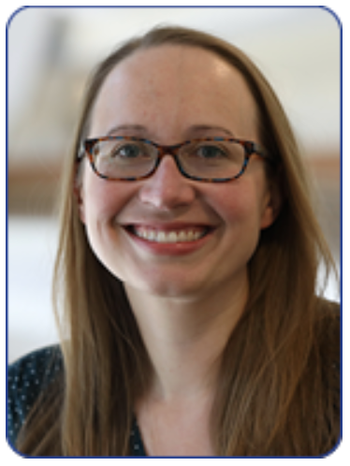
Gallagher will receive the Ron Hites Award at the 2022 ASMS Conference in Minneapolis, Minnesota, which takes place June 5–9.

25 students representing more than 15 universities receive the Student Travel Award to attend the 2022 ASMS Conference, in Minneapolis, Minnesota, from June 5–9.
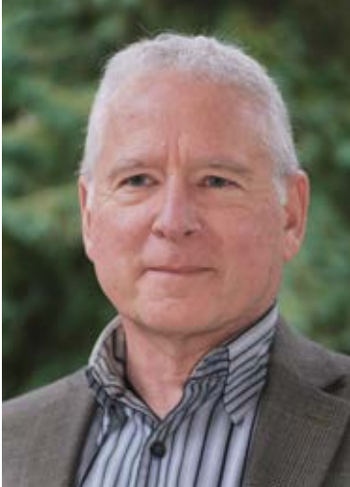
Williams will receive the John B. Fenn Award at the 2022 ASMS Conference in Minneapolis, Minnesota, which takes place June 5–9.
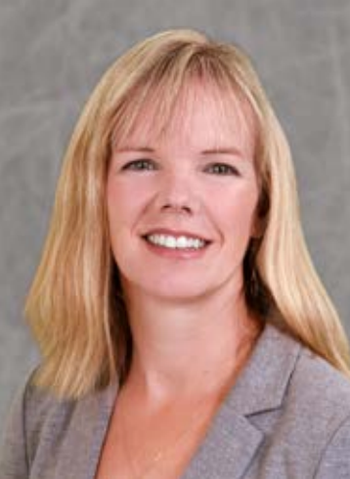
Baker will receive the Biemann Medal at the 2022 ASMS Conference in Minneapolis, Minnesota, which takes place June 5–9.
This Tuesday afternoon oral session, on the subject of artificial intelligence (AI) in MS instrumentation, will be held from 2:30 pm to 2:50 pm in Ballroom B. Jesse G. Meyer of Cedars-Sinai Medical Center will chair and preside over this afternoon session, which includes six talks addressing a variety of approaches and applications of AI in MS.
This Tuesday morning oral session on the subject of Imaging: Spatially Resolved Omics, will be held from 8:30 to 10:30 am in Room 103. The session, chaired and presided by Kristine Glunde of The Johns Hopkins University School of Medicine, includes six talks addressing a variety of approaches and applications of MS imaging measurement technologies.
This awards session will be presided by ASMS President Susan Richardson, in Hall A, from 4:45 pm to 5:30 pm. The session will open with the Biemann Medal Lecture, followed by presentation of the Research Awards and the PUI Research Award.