

At HPLC 2023, Oliver Fiehn of the University of California explained results gathered from a device that can be used during daily digestion.
At HPLC 2023, Oliver Fiehn of the University of California explained results gathered from a device that can be used during daily digestion.

In a session on omics at HPLC 2023, Robert T. Kennedy of the University of Michigan revealed how scientists are taking advantage of new developments and cutting down on analysis time.
At ASMS, Brandon Ruotolo of the University of Michigan will be recognized as the 2023 Biemann Medal recipient. Here's a summary of the award session.

In a talk at ASMS 2023, Stephanie Rankin-Turner of the Johns Hopkins Bloomberg School of Public Health detailed how thermal desorption–gas chromatography–mass spectrometry (TD–GC–MS) analyzed the body odor of humans to quantify mosquitos' attraction to them.

On Tuesday, June 6, from 8:30–10:30 am at ASMS, an oral session on drug metabolism and pharmacokinetics is taking place. We provide a summary about this session here.
On Tuesday, June 6, from 8:30–10:30 am at ASMS, an oral session on exposomics, toxicology, and health outcomes is taking place. We provide a summary about this session here.

On Tuesday, June 6, from 2:30–4:30 am at ASMS, an oral session on plants and natural products is taking place. We provide an overview about this session here.
On Tuesday, June 6, from 8:30–10:30 am at ASMS, an oral session on clinical analysis took place. We provide a summary about this session here.

Here, we summarize the 17 Tuesday evening workshops that took place from 5:45–7:00 pm at ASMS.

At ASMS 2023, Sarah Rogstad of the US Food and Drug Administration reviewed and updated a retrospective analysis originally published in 2016.

The latest research news and news in brief.

Agilent and Metrohm join forces, and Waters Corporation completes acquisition of Wyatt Technology.

Here, we summarize the 17 Monday evening workshops that took place from 5:45–7:00 pm at ASMS.
At ASMS 2023, Tabitha Hambidge of LGC presented a novel method for automating the certification of reference materials with the help of double exact matching isotope dilution mass spectrometry (DEM-IDMS).

On June 5th from 2:30–4:30 pm at ASMS, an oral session on food safety and chemistry took place. We summarize this session here.

In a talk at ASMS 2023, Rebecca L. Beres of the University of North Carolina at Chapel Hill focused on two types of analysis methods: liquid chromatography coupled to tandem mass spectrometry (LC–MS/MS) and a liquid chromatography, ion mobility spectrometry, and mass spectrometry (LC–IMS-MS) platform.
An oral session recognizing the John B. Fenn Distinguished Contribution in Mass Spectrometry Award winner and the Al Yergey MS Scientist Award winners took place on Monday, June 5th, from 4:45–5:30 pm.

On June 5th from 8:30–10:30 am at ASMS, an oral session on small molecules took place. We summarize this session here.
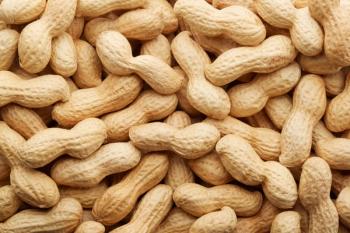
Speaking at ASMS 2023, Sara Schlange of the University of Nebraska-Lincoln discussed a mass spectrometry (MS)-based alternative for matrices problematic in current immunoassays regarding the detection of peanut allergens.
At ASMS 2023, LCGC spoke with Erin Baker of the University of North Carolina at Chapel Hill. This segment previews one of several ASMS interviews that were conducted at the conference.

At ASMS 2023, Bayan Almasri of the University of Lille proposed a combination of techniques for the deciphering of insoluble polyester polymer structure.

Here, we preview the 16 Wednesday evening workshops that will take place from 5:45–7:00 pm at ASMS.

Today from 2:30–4:30 pm, an oral session on non-targeted analysis and emerging environmental contaminants will take place. We preview this session here.

On June 7th from 2:30–4:30 pm, an oral session on GC–MS instrumentation and applications will take place. We preview this session here.

On June 7th from 8:30–10:30 am at ASMS, an oral session on artificial intelligence and mass spectrometry will take place. We preview this session here.

On June 7th from 8:30–10:30 am at ASMS, an oral session on drug discovery and development will take place. We preview this session here.

ASMS 2023 is excited to be hosting its annual conference in Houston, Texas. Here is what to expect on Sunday evening.

We offer a sneak peek at some of the award presentations that will be taking place at the ASMS 2023 Conference this week.

ASMS will conclude its conference at the Houston Museum of Natural Science (HMNS) on Thursday June 8th, from 7:00 to 10:00 pm. The HMNS is known for their paleontology display, giving attendees the opportunity to embark on a one-of-a-kind prehistoric journey while socializing with friends and colleagues.

The upcoming 2023 ASMS Conference will feature two concurrent tutorial sessions on Sunday, June 4, from 5:00–5:45 pm, along with a Special Keynote Section from 5:45–6:30 pm that will feature local activists from the Houston community.