

Because the Covid-19 pandemic of 2020–2023 disrupted yearly face-to-face events, the Dal Nogare Award Symposium at Pittcon 2023 included both the 2021 and 2022 winners. Read more about the symposium here.
Because the Covid-19 pandemic of 2020–2023 disrupted yearly face-to-face events, the Dal Nogare Award Symposium at Pittcon 2023 included both the 2021 and 2022 winners. Read more about the symposium here.
Prof. Emanuela Gionfriddo of the University of Toledo, in Ohio, is the recipient of the ACS Analytical Division 2023 Satinder Ahuja Award for Young Investigators in Separation Science, which was presented to her at Pittcon 2023. The purpose of this award is to recognize and encourage outstanding contributions to the fields of analytical chemistry by a young analytical scientist based on or more of the following criteria: conceptualization and development of unique instrumentation for separations; development of novel and important separation methods or methodologies; elucidation of theory or fundamental processes involved in separations; and other significant contributions to the furtherance of separation science role in the use of chemical instrumentation. Read more about this award session here.

On March 21st, Pittcon 2023 had two afternoon sessions that may pique your interest.

On Tuesday, March 21, at Pittcon 2023, a featured session titled, "JAIMA - Analytical Solutions for Research, Development & CMC of Novel Modalities of Drugs: Comprehensive Understanding of Molecular Structure, Dynamics and Function," took place.

At Pittcon 2023, a Monday afternoon symposium focused on opportunities to utilize compact capillary liquid chromatography (LC) techniques in the exploration of drug development.

A number of networking sessions are offered at Pittcon this year, which will take place March 18–22. Here’s our top picks.

Joanna Aizenberg of Harvard University delivered the 2023 Wallace H. Coulter Lecture at Pittcon. The title of her talk was “Venturing into Analytical Chemistry Using Photonic Crystals.”

Luis A. Colón is 2023's recipient of the Chromatography Forum of Delaware Valley Dal Nogare Award, which recognizes contributions to chromatographic science. The symposium took place at Pittcon 2023, which was held from March 18–22.
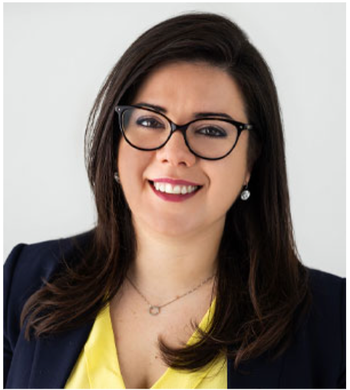
Emanuela Gionfriddo received the Satinder Ahuja Award for Young Investigators in Separation Science, which recognizes the next generation of scientists making advances in analytical chemistry. The ceremony took place at Pittcon 2023, which was held from March 18–22.
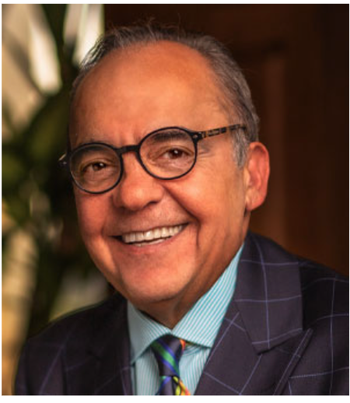
Fasha Mahjoor will receive the 2023 Pittcon Heritage Award, which honors prominent figures in the scientific community. Pittcon 2023 will take place from March 18–22 in Philadelphia, Pennsylvania.

Knauer has announced its gender pay gap across the company, and caused a small commotion.

Jeffrey Dick received the 2023 Pittcon Achievement Award for his contributions to the field of spectroscopy. He was recognized at Pittcon 2023, which took place in Philadelphia, Pennsylvania.

Neil Kelleher received the 2023 Pittsburgh Analytical Chemistry Award for his contributions to analytical chemistry. He was recognized at Pittcon 2023, which took place in Philadelphia, Pennsylvania.
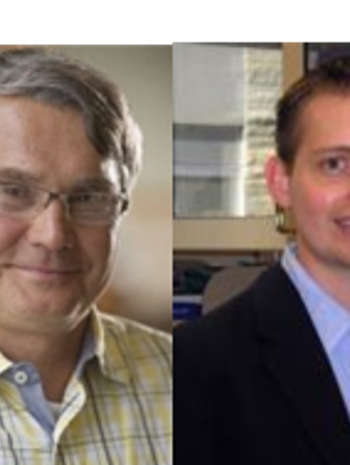
The Chromatographic Society (ChromSoc) is pleased to announce that the 2023 Martin and Silver Jubilee Medals are awarded to Professor Janusz Pawliszyn and Professor Jared L. Anderson, respectively.

Astrea Bioseparations (Cambridge, UK) has announced the acquisition of Delta Precision Ltd. (Stonehouse, UK).

The EuChemS-DAC Sample Preparation Study Group and Network will support one European PhD student working in sample preparation research by covering their early registration fees for HPLC 2023.

Bruker Corporation (Billerica, Massachusetts, USA) and Biognosys AG (Schlieren, Switzerland) have announced a strategic partnership, in which Bruker has made a majority-ownership investment in Biognosys.

Agilent Technologies Inc. (Santa Clara, California, USA) has announced that it has become the first “Angel” level sponsor of My Green Lab, a nonprofit organization devoted to building a global culture of sustainability in science.

Thermo Fisher Scientific is opening a site in Hangzhou, China, as part of its global effort to help companies provide therapies to patients faster.
This co-marketing partnership will focus on non-traditional applications, such as the detection of volatile analytes in a direct mass spectrometry (MS) approach.

Agilent Technologies Inc. (Santa Clara, California, USA) has become a member of How2Recycle, a standardized labelling system that advises the public on recycling. Owned by the Green Blue Institute, Inc., the programme is comprised of brands who want their packaging to be recycled and are empowering consumers to do it through smart packaging labels.

Thermo Fisher Scientific Inc. (Waltham, Massachusetts, USA), along with Society for Science (Washington, D.C., USA), has announced the Thermo Fisher Scientific Junior Innovators Challenge, a middle school science, technology, engineering, and math (STEM) competition in the USA.

Shimadzu (Duisburg, Germany) has announced a collaboration with the University Medical Center Göttingen (UMG) (Germany). The collaboration will focus on the development of new clinical laboratory methods using liquid chromatography–mass spectrometry (LC–MS) for therapeutic drug monitoring (TDM) analysis.

LCGC, the leading resource for separation scientists, is proud to announce that Peter J. Schoenmakers and Emanuela Gionfriddo are the winners of the 16th annual LCGC Lifetime Achievement and Emerging Leader in Chromatography Awards, respectively. Schoenmakers and Gionfriddo will be honoured in a symposium as part of the technical programme at the Pittcon 2023 conference in March 2023.

As HPLC 2023 approaches, The Column spoke with the organizers, Oliver Schmitz and Michael Lämmerhofer, to find out what attendees can expect from the conference, which is a highlight in the chromatography calendar.

LCGC spoke with Elisabeth Bik, PhD, of Harbers Bik LLC about the challenge of preventing scientific and research misconduct in scientific publishing. This segment is Part 6 of 6 and concludes our conversation with Bik.
LCGC spoke with Elisabeth Bik, PhD, of Harbers Bik LLC about the challenge of preventing scientific and research misconduct in scientific publishing. This segment is Part 5 of 6 of our conversation with Bik.
LCGC spoke with Elisabeth Bik, PhD, of Harbers Bik LLC about the challenge of preventing scientific and research misconduct in scientific publishing. This segment is Part 4 of 6 of our conversation with Bik.
LCGC spoke with Elisabeth Bik, PhD, of Harbers Bik LLC about the challenge of preventing scientific and research misconduct in scientific publishing. This segment is Part 3 of 6 of our conversation with Bik.