

A recent study from North Carolina State University explores a new mass spectrometry imaging (MSI) method that can reduce MSI data acquisition time.
A recent study from North Carolina State University explores a new mass spectrometry imaging (MSI) method that can reduce MSI data acquisition time.

In a recent study, the research team introduces a new software tool for proteomic analysis that can analyze both ESI and MALDI mass spectral data.
Starting January 2024, a unified global print version of LCGC will launch, featuring your favorite columnists both in print and online.

In a recent study, researchers outlined the advances in ultralow flow LC over the last decade.

To determine the practical applications of newly synthesized diquat (DQ) derivatives, they must be prepared in an enantiomerically pure form, and effective separation is needed to control that purity.

Divinylbenzene (DVB) monoliths were nested within a melamine-formaldehyde sponge for solid-phase extraction (SPE) of bisphenols from aqueous solutions.

In a recent study, a new instrument configuration suggests an alternative method for investigating polypeptides.

A recent study described how a new secondary ion mass spectrometer coupled with microscope mode detection allows for rapid mass spectral imaging over a larger surface area.

A recent study highlighted a cost-effective, time-efficient method that can extract polycyclic aromatic hydrocarbons (PAHs) from water and fish samples over traditional SPE methods.

A new study proposes a new subtraction model to characterize non-polar stationary phases.

LCGC sat down with Annie Evans, senior director of research at Metabolon, to discuss how the company is using metabolomics to identify inborn errors of metabolism in children.

Markes International has recently entered into a partnership with ExtraTech Analytical Solutions to globally distribute ExtraTech’s vacuum-assisted caps for headspace microextraction.

The fallout from the Covid-19 global pandemic remains in progress in 2023. Because of the current ongoing global recession, we anticipated that many workers would be concerned about their current jobs and how to adjust to rising inflation. In this year’s LCGC Salary Survey, we sought to explore these topics.
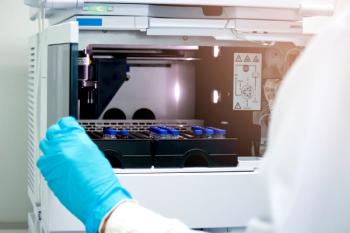
A new report from Meticulous Research attributes the growth to the development of antibody-based therapeutics and biosimilars.

During a presentation at the North America Chemical Residue Workshop, scientists described a method for pesticide analysis using liquid chromatography-tandem mass spectrometry and gas chromatography-tandem mass spectrometry.

In a presentation at NACRW 2023, Yelena Sapozhnikova of the U.S. Department of Agriculture (USDA) explained that even though levels of per- and polyfluoroalkyl substances (PFAS) were found in everything from tomato packaging to cake paper in global samples, values were below the European Food Safety Authority (EFSA)’s maximum tolerable weekly intake (TWI).

Bjorn Berendsen of Wageningen University & Research said at NACRW 2023 that among more than 6,000 suspected per- and polyfluoroalkyl substances (PFAS), detailed information is known about relatively few.
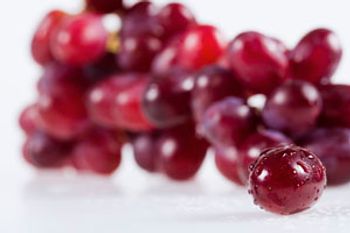
Scientists studied the device for QuEChERSER sample preparation and both GC-MS/MS and LC-MS/MS analysis of pesticides in grapes, watermelon, and green beans.

During a session at the North American Chemical Residue Workshop, researchers discussed a method for detecting small amounts of pesticides in infant food.
Katja Dettmer-Wilde and her team presented their findings at the 2023 HPLC conference in Germany.

At HPLC 2023, Brett Paull of the University of Tasmania in Australia explained how pulsed deep ultraviolet light-emitting diodes (DUV-LED) may open up new and cost-effective avenues in liquid chromatography (LC) analysis.

In a lecture at HPLC 2023, Valérie Pichon of ESPCI Paris and Sorbonne University said these advances address limitations of more traditional extraction techniques.

In a presentation at HPLC 2023, Kevin Pagel of Freie Universität in Berlin, Germany described methods he has found most effective for better understanding the roles of glycans and glycoconjugates in biological processes.

Talks by Dwight R. Stoll, Tadeusz Górecki, André de Villiers, and Andrea Gargano highlighted the after-lunch presentations at HPLC 2023 on June 20.
Davy Guillarme of the University of Geneva said in a talk at HPLC 2023 that short columns have shown promise, but ultrahigh-performance liquid chromatography (UHPLC) instrumentation is not yet optimized to realize their benefits.

Research by Takuya Kubo and Koji Otsuka presented at HPLC 2023 promoted unique liquid chromatography (LC) separation using specific interaction.

A talk by Alberto Cavazzini of the University of Ferrara at HPLC 2023 focused on various types of chiral stationary phases (CSP) in efforts to improve efficiency.

At HPLC 2023, Valerie Gabelica of the Institut Européen de Chimie et Biologie said much is still unknown about this approach to mass spectrometry.

Peter Schoenmakers of the University of Amsterdam presented a talk at HPLC 2023 on multidimensional liquid chromatography (LC).

Award presentations and plenary lectures were some of the attractions as the annual conference got underway on Sunday.