

LCGC spoke with Elisabeth Bik, PhD, of Harbers Bik LLC about the challenge of preventing scientific and research misconduct in scientific publishing. This segment is Part 2 of 6 of our conversation with Bik.
LCGC spoke with Elisabeth Bik, PhD, of Harbers Bik LLC about the challenge of preventing scientific and research misconduct in scientific publishing. This segment is Part 2 of 6 of our conversation with Bik.
LCGC spoke with Dr. Elisabeth Bik, PhD, of Harbers Bik LLC about the greater challenge of preventing scientific and research misconduct in scientific publishing. This segment is the first part of a six-part interview with Bik.

The Eastern Analytical Symposium (EAS) supports a Student Research Awards program to recognize students involved in research in the broad field of analytical chemistry.

Researchers have evaluated three different miniaturized liquid chromatography (LC) instruments for the analysis of caffeine in dietary supplements (1).

Agilent Technologies Inc. (Santa Clara, California, USA) has announced the opening of the Dissolution Center of Excellence (CoE) facility in Craven Arms, United Kingdom.
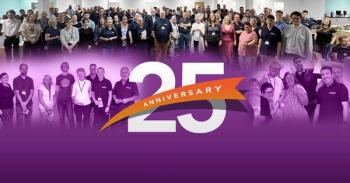
Markes International (Bridgend, UK) has celebrated its silver anniversary with 25 years since its founding in 1997.

LGC (Teddington, UK) has opened a state-of-the-art facility at the Oxford Technology Park (OTP), Oxford, UK.

What’s the fastest way to acquire a new chromatographic skill? The answer lies with those who are just beginning to learn.

Martin F. Jarrold, the Robert & Marjorie Mann Chair in the Department of Chemistry at Indiana University, is the winner of the 2022 Eastern Analytical Symposium (EAS) Award for Outstanding Achievements in Mass Spectrometry.

Fabrice Gritti, a principal research scientist at Waters Corporation, is the winner of the 2022 Eastern Analytical Symposium (EAS) Award for Outstanding Achievements in Separation Science.

Richard M. Crooks, of the University of Texas (Austin, Texas), will receive the 2022 Eastern Analytical Symposium (EAS) Award for Outstanding Achievements in the Fields of Analytical Chemistry on Monday, November 14, in an award session at EAS in Plainsboro, New Jersey.

Simone Sidoli, of the Albert Einstein College of Medicine, and the Einstein Proteomics Core, has been named the winner of the 2022 the Eastern Analytical Symposium (EAS) Young Investigator Award.
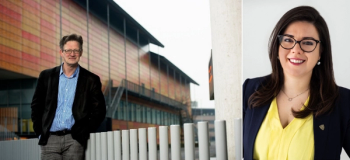
LCGC, the leading resource for separation scientists, is proud to announce that Peter J. Schoenmakers and Emanuela Gionfriddo are the winners of the 16th annual LCGC Lifetime Achievement and Emerging Leader in Chromatography Awards, respectively. Schoenmakers and Gionfriddo will be honored in a symposium as part of the technical program at the Pittcon 2023 conference in March 2023.

Thermo Fisher Scientific Inc. has opened a new biomanufacturing facility in Chelmsford, Massachusetts.

Peter Schoenmakers of the University of Amsterdam is the 2022 recipient of the American Chemical Society (ACS) Award in Chromatography.

Civica, Inc., a nonprofit generic drug company, will invest $27.8 million to establish a new laboratory testing facility at Meadowville Technology Park in Chesterfield County, Virginia.

Researchers from “The Peppermint Initiative” have published their first results using GC–IMS supporting its use in breath analysis and beginning the process of standardization of breath analysis methods.

Scitara (Massachusetts, USA) has announced a partnership with Agilent towards the integration of Scitara’s Scientific Integration Platform (SIP) with Agilent’s Software and Informatics Division portfolio of products.

Agilent Technologies (Santa Clara, California) is launching a partnership with Delaware State University (DSU) (Dover, Delaware), a prominent historically Black university, to increase the share of underrepresented students entering science, technology, engineering, and math (STEM) fields.

A new $215 million precision chemical manufacturing facility built by Waters Corporation recently achieved Leadership in Energy and Environmental Design (LEED) certification by the U.S. Green Building Council.

Agilent Technologies has announced the acquisition of Polymer Standards Service GmbH (PSS).

Chiron AS has announced new North American distribution partnerships with Ibis Scientific, LLC and Chromatographic Specialties Inc.

Researchers have developed a novel microfluidic chip for the study of extracellular vesicles using miniaturized size-exclusion chromatography.
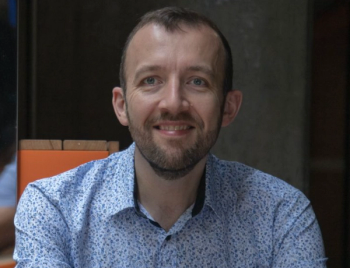
Oliver Jones has been awarded the 2022 Barry Inglis Medal for his extended and careful development of analytical measurement techniques at the recent National Measurement Institute’s (NMI) 2022 Metrology Awards.

Miniaturized LC systems offer the analyst the scope to use less organic solvent and consume less energy. As the demand for green chemistry techniques and methods continues to grow there is demand for smaller and more portable liquid chromatography (LC) analytical instruments.

The Berlin-based manufacturer of high-tech laboratory measuring instruments, Knauer, celebrated the company’s 60th anniversary in July.

Agilent Technologies Inc., has announced that the company’s customer demonstration laboratory in Waldbronn, Germany, has received the highest level of Green Lab Certification, the gold standard in laboratory sustainability best practices.
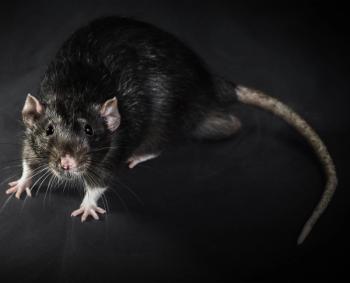
Researchers from Hannover, Germany, have developed a LC–MS/MS multi-target screening strategy for use in ante-mortem and post-mortem rodenticide analysis in forensic toxicology.
Knauer Wissenschaftliche Geräte has announced the acquisition of ModuVision BV, an automation focused company based in Vlissingen, the Netherlands.

Peter Schoenmakers has been named “Knight of the Order of the Netherlands Lion” in a ceremony on 28 June 2022.