

Katelynn Perrault will receive the Satinder Ahuja Award for Young Investigators in Separation Science during a session that starts at 8:30 am in Room W181B.
Katelynn Perrault will receive the Satinder Ahuja Award for Young Investigators in Separation Science during a session that starts at 8:30 am in Room W181B.
This afternoon session takes place in Room W176C. Zack Gurard-Levin of SAMDI Tech, will kick off the session with a talk describing the combination of high-density biochip arrays presenting self-assembled monolayers (SAMS) of alkanethiolates on gold with matrix-assisted laser desorption ionization (MALDI) MS to create a technique, referred to as SAMDI.
Dr. Ziva Cooper of the University of California, Los Angeles, will present the plenary lecture this afternoon at 5:00 pm in the Skyline Ballroom at McCormick Place.
Special Issues
Click the title above to open the Current Trends In Mass Spectrometry March 2020 special issue in an interactive PDF format.
LCGC North America
Click the title above to open the LCGC North America March 2020 issue, Volume 38, Number 3, in an interactive PDF format.

LCGC North America
This review addresses recent ideas on the separation mechanism of HILIC, the advantages and disadvantages of the technique, and new applications.
LCGC North America
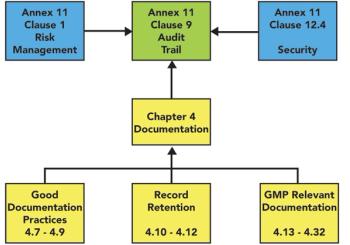
Examination of audit trail entries is a key part of the second-person review. What do regulatory documents say about this topic, and how can we speed up review?

LCGC North America
Our interview explores Dan Armstrong’s career of contributions, spanning enantiomeric separations, molecular recognition, ionic liquids, ordered media, mass spectrometry, drug development, environmental research, and food analysis.

LCGC North America
Szabolcs Fekete tells us about his work characterizing therapeutic proteins, studying liquid chromatography column technology, and optimizing methods.

Special Issues
Analysis of the compositional variation in living cells is essential for understanding biological processes. Single-cell elemental analysis by triple-quadrupole ICP-MS is emerging as a selective, highly sensitive, and potentially high-throughput technique for the study of constitutive elements, and uptake of metallodrugs (or metal-containing nanomaterials) in single cells.

Special Issues
The presence of per- and polyfluoralkyl substances (PFAS) in water is an important health and environmental concern. Liquid chromatography–mass spectrometry (LC–MS) has been established as the most suitable technology for monitoring these substances. A method is described, using EPA 8327, for PFAS analysis in groundwater, surface water, and wastewater.
Special Issues
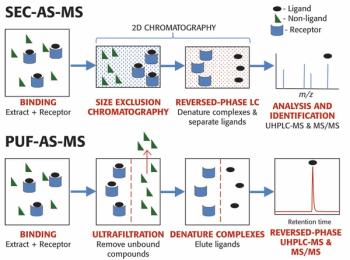
Drug discovery using high-throughput screening of discreet compounds, and the discovery of natural products with pharmacological mechanisms of action, rely on bioassay-guided fractionation analysis. Recent applications of affinity selection–mass spectrometry (AS-MS) are useful for exploring the discovery of ligands to membrane-bound proteins and RNA targets.
Special Issues
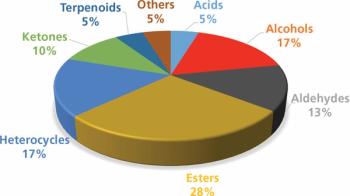
Food quality differences are dependent on botanical and geographical origins of primary food ingredients as well as storage and handling. Quality assessment for food materials, including cocoa and olive oil, is demonstrated by applying two-dimensional gas chromatography (GC×GC) combined with time-of-flight mass spectrometry (TOF-MS) and pattern recognition.

LCGC Asia Pacific
This instalment of “GC Connections” dives into temperature programming. First, the differences in peak widths and retention times between temperature programmed and isothermal chromatograms are examined. Why are all the peaks so sharp in temperature programmed GC, yet they get broader (and shorter) in isothermal GC? Next, we explore some early ideas about temperature programming and peak broadening that explain why the peaks are so sharp in temperature-programmed GC, and why the peak spacing is different from isothermal GC. Finally, we examine an important consequence of our ability to program temperature: the need for temperature programming in splitless and other injections that use “solvent effects” and other peak focusing mechanisms. These points are illustrated using several historical figures and chromatograms from the early days of GC.

LCGC Asia Pacific
This article presents possible uses of ion chromatography and related techniques combined with various detection methods for clinical and pharmaceutical analysis of common inorganic and organic anions and cations. An overview of achievements in this area from the past 10 years is presented and the most important trends and development perspectives for ion chromatography are described.

LCGC Asia Pacific
Isabelle Kohler from Leiden University, in Leiden, The Netherlands, spoke to LCGC Europe about the latest trends in clinical metabolomics using chromatography and how the field is likely to evolve in the future.
LCGC Asia Pacific
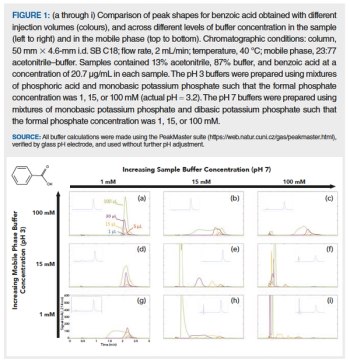
What concentration of aqueous buffer should I use in the mobile phase when developing a re-versed‑phase liquid chromatography (LC) method for the analysis of ionogenic compounds?
Nancy L. Allbritton of the University of Washington in Seattle is the 2020 winner of the Ralph N. Adams Award in Bioanalytical Chemistry, which is presented by the Pittsburgh Conference. The award recognizes significant contributions to the field of bioanalytical chemistry, broadly defined.
Livia Schiavinato Eberlin of the University of Texas at Austin has won the 2020 Pittsburgh Conference Achievement Award. The award, given by the Society for Analytical Chemists of Pittsburgh, recognizes individuals for outstanding achievements in the fields of analytical chemistry and applied spectroscopy within 10 years after completion of their PhD work.
Katelynn A. Perrault, an assistant professor of forensic sciences and chemistry at Chaminade University of Honolulu in Hawaii the winner of the Satinder Ahuja Award for Young Investigators in Separation Science. This award, presented by the American Chemical Society’s Division of Analytical Chemistry, recognizes and encourages outstanding contributions to the field of separation science by a young chemist or chemical engineer.
Ron Majors is the 2020 winner of the Dal Nogare Award, which is presented by the Chromatography Forum of the Delaware Valley. This award is given to an outstanding scientist in the field of chromatography. Awardees are selected on the basis of their contributions to the fundamental understanding of the chromatographic process.
Milan Mrksich of Northwestern University has won the 2020 Pittsburgh Analytical Chemistry Award, which is presented annually by the Society for Analytical Chemists of Pittsburgh, one of the co-founders of the Pittcon conference. The award honors an individual’s impact in the field of analytical chemistry, including the introduction of a substantial technique, theory, or instrument.

Daniel W. Armstrong, of the University of Texas at Arlington, is the winner of the 2020 LCGC Lifetime Achievement in Chromatography Award, which honors an outstanding and seasoned professional for a lifetime of contributions to the advancement of chromatographic techniques and applications. He recently spoke to us about his work and his career.


LCGC Europe
This information is supplementary to the article “The Effect of Carrier Liquid Composition on the Molecular Properties of Caseinate Solutions Studied by AF4” that was published in the March 2020 issue of LCGC Europe.
LCGC Europe
Click the title above to open the LCGC Europe February 2020 regular issue, Volume 33, Number 2, in an interactive PDF format.

The selectivity (α) of an analytical system describes the ability to discriminate between sample components based on differences in chemical and physical-chemical properties.

It was a pretty significant fight to get our most recent paper into the scientific literature. But, after five reviewers opining and four submitted revisions later, we were able to publish a very unique piece of work characterizing anecdotal claims of groundwater contamination in shale energy basins across the United States.