A snapshot of key trends and developments in the sample preparation sector according to selected panelists from companies exhibiting at Analytica 2018.

A snapshot of key trends and developments in the sample preparation sector according to selected panelists from companies exhibiting at Analytica 2018.

A snapshot of key trends and developments in the GC/GC–MS sector according to selected panelists from companies exhibiting at Analytica 2018.

A snapshot of key trends and developments in the data handling sector according to selected panelists from companies exhibiting at Analytica 2018.

Incognito demands that we aim high when presenting our work on chromatography.

The American Chemical Society (ACS) 2018 National Awards will be presented at a ceremony on 20 March in conjunction with the 255th ACS National Meeting in New Orleans, USA.

Agilent Technologies has announced a strategic scientific collaboration with the University of Southern California (USC) Michelson Center for Convergent Bioscience with the aim of creating an Agilent Center of Excellence (CoE) in biomolecular characterization.

Knauer (Berlin, Germany) has joined the United Nations Global Compact movement, underlining their commitment to responsible corporate governance on an international level.

Researchers from Lincoln University, Lincoln, New Zealand, have investigated the potential of VOC analysis using GC–MS to identify the presence of the agricultural and urban pest the brown marmorated stink bug.

This article presents a novel approach for toxicology and pharmacology laboratories that combines multi-compound screening followed by multi-compound determination in a single method. The multi-compound assay developed allows 90 molecules including benzodiazepines, cocaine and related stimulants, amphetamines, and opioids to be measured. The multi-targeted screening (MTS) method was developed using a spectra library containing over 1200 compounds. The approach was evaluated in a routine clinical toxicology laboratory to detect and quantify compounds in unknown samples.

The 2nd Copenhagen Symposium on Separation Sciences (CSSS 2018) will be held on 26–27 June 2018 at the DGI-byen in Copenhagen, Denmark. The preliminary programme of the 2nd CSSS is summarized below and gives an idea of what can be expected.

Sometimes troubleshooting a separation can rely upon the end user spotting subtle clues within the chromatogram, and at other times the visual signs can be much more obvious.

When preparing buffers for hydrophilic interaction chromatography (HILIC) separations, is the buffer concentration considered relative to the aqueous portion of the eluent only, or to the aqueous-organic mixture?

Analytica will take place from 10–13 April 2018 at the Messe München, in Munich, Germany. The Analytica conference is a highlight of Analytica and will take place at the International Congress Center (ICM) from 10–12 April 2018.

Because not all laboratories have UHPLC systems, reverse scaling of methods from UHPLC to HPLC is often needed, particularly in the pharmaceutical industry. The use of superficially porous particles can facilitate this process.

This article, the first in a series on chromatography fundamentals, discusses the cornerstone of all chromatographic techniques-the distribution or coefficient-and its influence on liquid chromatographic separations.

A summary of the findings presented at the HPLC 2017 Jeju conference, reviewing how they fit into overall liquid-phase separation trends and the outlook for the future of these technologies

Gas chromatography makes use of a wide variety of detection methods. In addition to the most often used flame-ionization detection (FID), electron-capture detection (ECD), thermal conductivity detection (TCD), and mass-selective detection (MSD), the list of other detection methods is long. They really shine when deployed properly, but their properties and applications can be a bewildering alphabet soup. This instalment presents a compendium of gas chromatography (GC) detection methods, both past and vanished as well as those that are current and relevant to today’s separation challenges.

Click the title above to open the LCGC Asia Pacific February/March 2018 regular issue, Vol 21, No 1, in an interactive PDF format.

Click the title above to open the LCGC Europe March 2018 regular issue, Vol 31, No 3, in an interactive PDF format.

Click the title above to open the LCGC North America March 2018 regular issue, Vol 36 No 3, in an interactive PDF format.

Click the title above to open the March 2018 issue of Current Trends in Mass Spectrometry, Volume 16, Number 1, in an interactive PDF format.

The 2017 Chromatography Forum of the Delaware Valley Dal Nogare Award will be presented Monday morning at Pittcon 2018 to Professor Robert Kennedy from the University of Michigan. The award will be presented by Mary Ellen McNally of EI DuPont de Nemours and Company.

Di Jiang of the University of Connecticut will kick off this session with a talk on direct liquid chromatography–tandem mass spectrometry (LC–MS/MS) detection of guanine oxidations in a tumor suppression gene.

This symposium will honor Zachary Breitbach of AbbVie, the winner of the 2018 Satinder Ahuja Award for Young Investigators in Separation Science. This award is given by the Subdivision of Chromatography and Separations Chemistry of the Analytical Division of the American Chemical Society.

In this Tuesday morning symposium, speakers will present novel analytical strategies focused mainly on real-time, in vivo, and in situ tissue analysis.

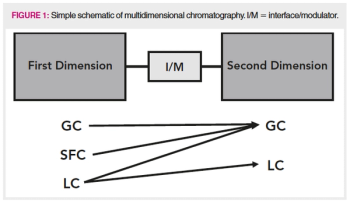
The first presentation in this Tuesday morning session will be given by Tadeusz Gorecki of the University of Waterloo and is titled “Comprehensive Multidimensional Separations: Can They Get Better?” Gorecki will discuss both GCxGC and LCxLC separations and will present examples of both approaches.

This Wednesday afternoon session was organized by Gregory D. Smith of the Indianapolis Museum of Art at Newfields and covers the latest chromatographic, mass spectrometric, and spectroscopic methods of analyzing natural and synthetic dyes in museum textiles to determine the dye sources, technology, history, and condition of these artifacts.

Eight presentations comprise this Wednesday afternoon session on gas chromatography/mass spectrometry – environmental analysis.

This Thursday afternoon session features eight presentations on the topic of liquid chromatography used in bioanalytical analysis.

This Tuesday afternoon session opens with a presentation by Joan Stevens of Agilent Technologies, titled “Multiresidue Analysis of Pesticides in Cannabis-Infused Oil and Edibles by Various Extractions and Enhanced Matrix Removal Lipid Cleanup.” Stevens will discuss a method for selectively removing lipids from cannabis-infused food products for the analysis of pesticides.