All News

LCGC2_i1.jpg

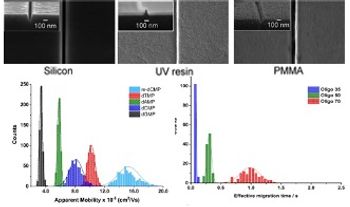
The packed particle bed format still rules LC columns, but advances continue in monoliths. Meanwhile, newer formats are on the horizon, including microfabricated columns and 3D printed columns. This article provides a critical review of all these technologies and demonstrates how further development of chromatographic columns will be of paramount importance in the future.

Rivers.jpg

Researchers from the Université de Pau et des Pays de l’Adour, in France, have developed a large volume injection method using a programmed temperature vaporization (PTV) injector for the simultaneous determination of mercury, tin, and lead at ultra-trace levels in natural waters using GC–ICP-MS.

One of the initiatives that the SCSC oversees is the nomination process and awarding of the Satinder Ahuja Award for Young Investigators in Separation Science. Where are all of the young investigators in separation science? Certainly, those that have been honored to date have been worthy; however, there must be more eligible parties out there.

LCGC2_i1.jpg

Matrix-assisted laser desorption–ionization (MALDI) imaging mass spectrometry allows direct, in situ, label-free measurement of proteins, peptides, lipids, small-molecule drugs and their metabolites, and other chemicals in tissues. In a range of applications, the unique information generated by MALDI imaging can make a significant contribution to understanding factors such as molecular and metabolic mechanisms and the transport and localization of compounds or metabolites with human, animal, or plant species.

LCGC4_i1.gif

For lipid-containing food products like mayonnaise, determining nonvolatile lipid oxidation products, the precursor compounds for rancidity, makes it possible to predict product shelf life at an earlier stage in product development. A method based on normal-phase liquid chromatography with atmospheric pressure photoionization-mass spectrometry (LC–APPI-MS) was developed for this purpose.