

The 2022 HTC Innovation Award was launched to celebrate the work of scientists who are innovatively evolving the field of hyphenated separation techniques. The winner will be selected by the HTC-17 Scientific Committee.
The 2022 HTC Innovation Award was launched to celebrate the work of scientists who are innovatively evolving the field of hyphenated separation techniques. The winner will be selected by the HTC-17 Scientific Committee.

The 2021 Eastern Analytical Symposium (EAS) Award for Outstanding Achievements in Separation Science will be presented to Mary Ellen McNally at the EAS Symposium taking place November 15–17, 2021, in Plainsboro, New Jersey.
News
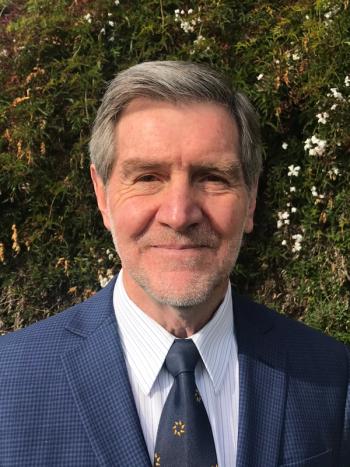
Paul Haddad, of the University of Tasmania, is well known for developing mathematical models to improve fundamental understanding of chromatographic techniques. He recently spoke to us about his research work and career.


LCGC Europe
This information is supplementary to the article “Non-aqueous Ion-Exchange Chromatography Using High Acid‑base Concentration: A Strategy for Purifying Non-crystalline Pharmaceutical Intermediates” that was published in the March 2021 issue of LCGC Europe.

Kevin A. Schug suggests that now is the time to fast-track industry–academic partnerships for greater sustainability.
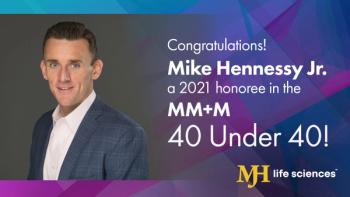
Michael J. Hennessy Jr., president and CEO of MJH Life Sciences™, parent company to LCGC, was named to MM&M’s second annual 40 Under 40 list.


Paul Haddad and Erik L. Regalado are the winners of the 14th annual LCGC Lifetime Achievement and Emerging Leader in Chromatography Awards, respectively. We review their achievements.

In this installment of The LCGC Blog, Michelle L. Kovarik shows how we can each take steps to ensure the diverse talent in our separation science community is fully represented and celebrated in industry awards.
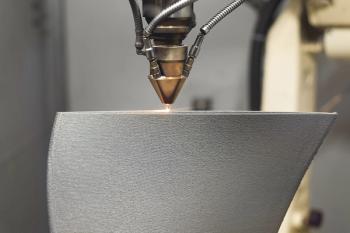
Utilizing 3D-printing technology, researchers have produced a metal column for use in micro-gas chromatography (GC) and examined its properties and ability to perform gas separations.


Professor Anurag Rathore, a scientist at the Indian Institute of Technology (IIT) in Delhi, is the first researcher based in India to receive this award.

LCGC is seeking contributed manuscripts for an April 2021 supplement on food and beverage analysis.

A recent study has applied retention modelling and QbD practices to the process of reverse‑phase LC method development for a NCE.
Agilent Technologies has announced that their collaboration with SGS has resulted in a new GC-TQ method.
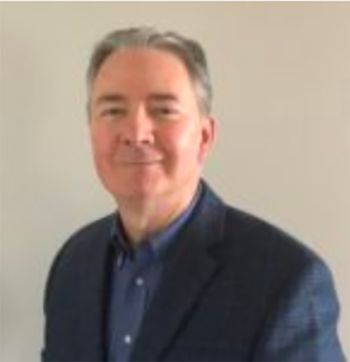
The 2020 Eastern Analytical Symposium (EAS) Award for Outstanding Achievements in Separation Science will be presented to Joe Foley on November 18.
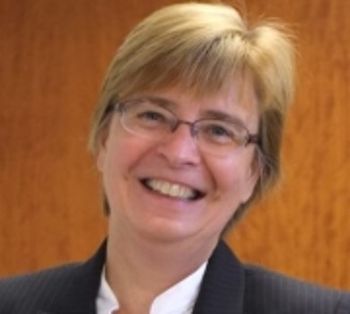
The Eastern Analytical Symposium (EAS) Award for Outstanding Achievements in the Fields of Analytical Chemistry will be presented to Susan Olesik at this year’s virtual conference.

Researchers from Baylor University have identified the toxins responsible for fish deaths in Prymnesium parvum algal blooms using liquid chromatography–high resolution mass spectrometry (LC–HRMS).
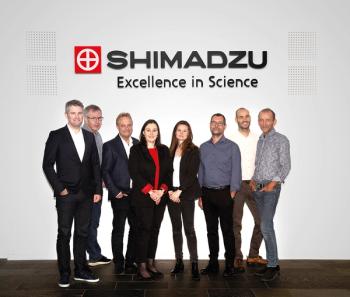
Shimadzu Corporation have opened a new branch in Greater Copenhagen, the country’s economic and scientific heartland.
The Eastern Analytical Symposium (EAS) 2020 Young Investigator Award will be presented to Dajana Vuckovic on Monday, November 16.

Data systems are important in ensuring data integrity, but what should laboratories do beyond looking at data systems—with respect to people, processes, and culture? To understand more, we spoke to Mark Newton, of Heartland QA, in Lebanon, Indiana, in a podcast interview.
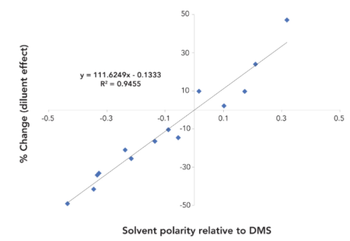
In static headspace gas chromatography (HS-GC) sample diluents and sample matrices can affect analytical method sensitivity, accuracy, and interferences. By applying the rules revealed by this study, these problems can be avoided.